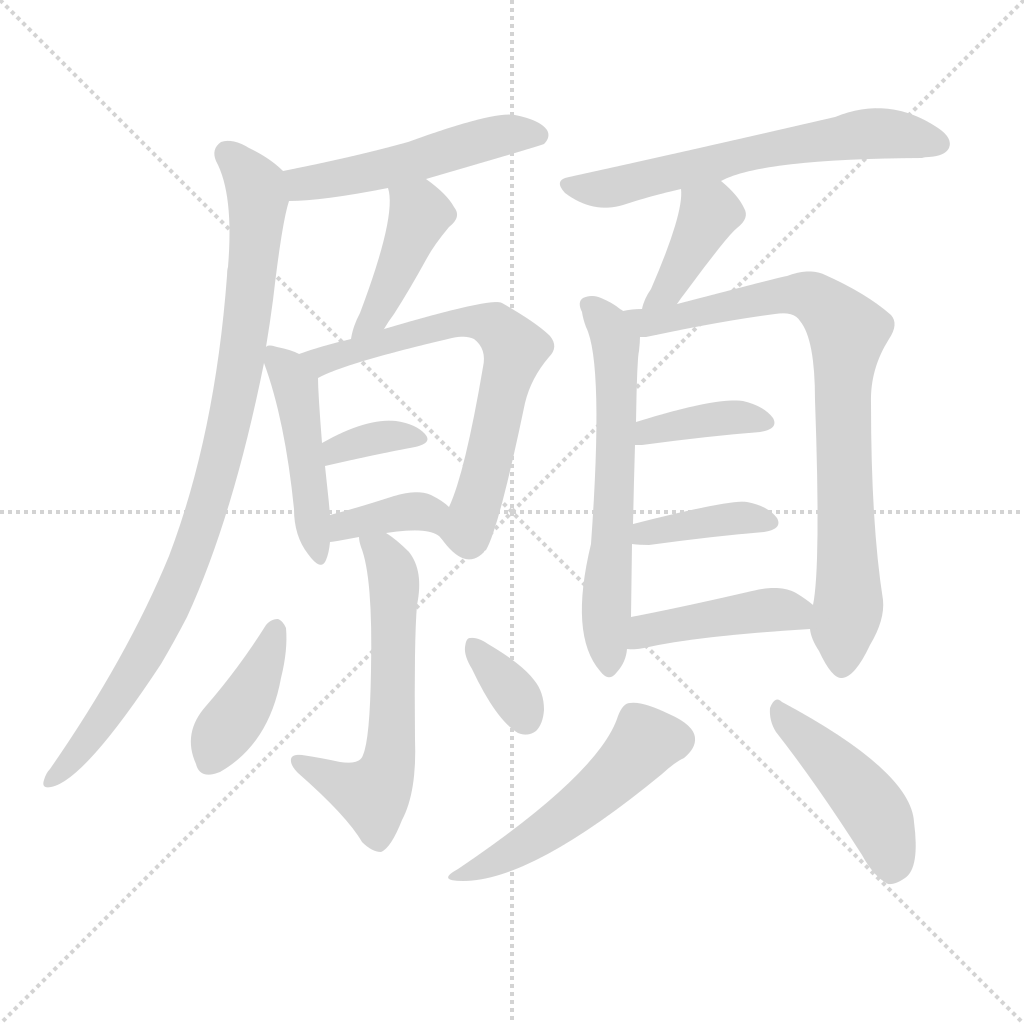
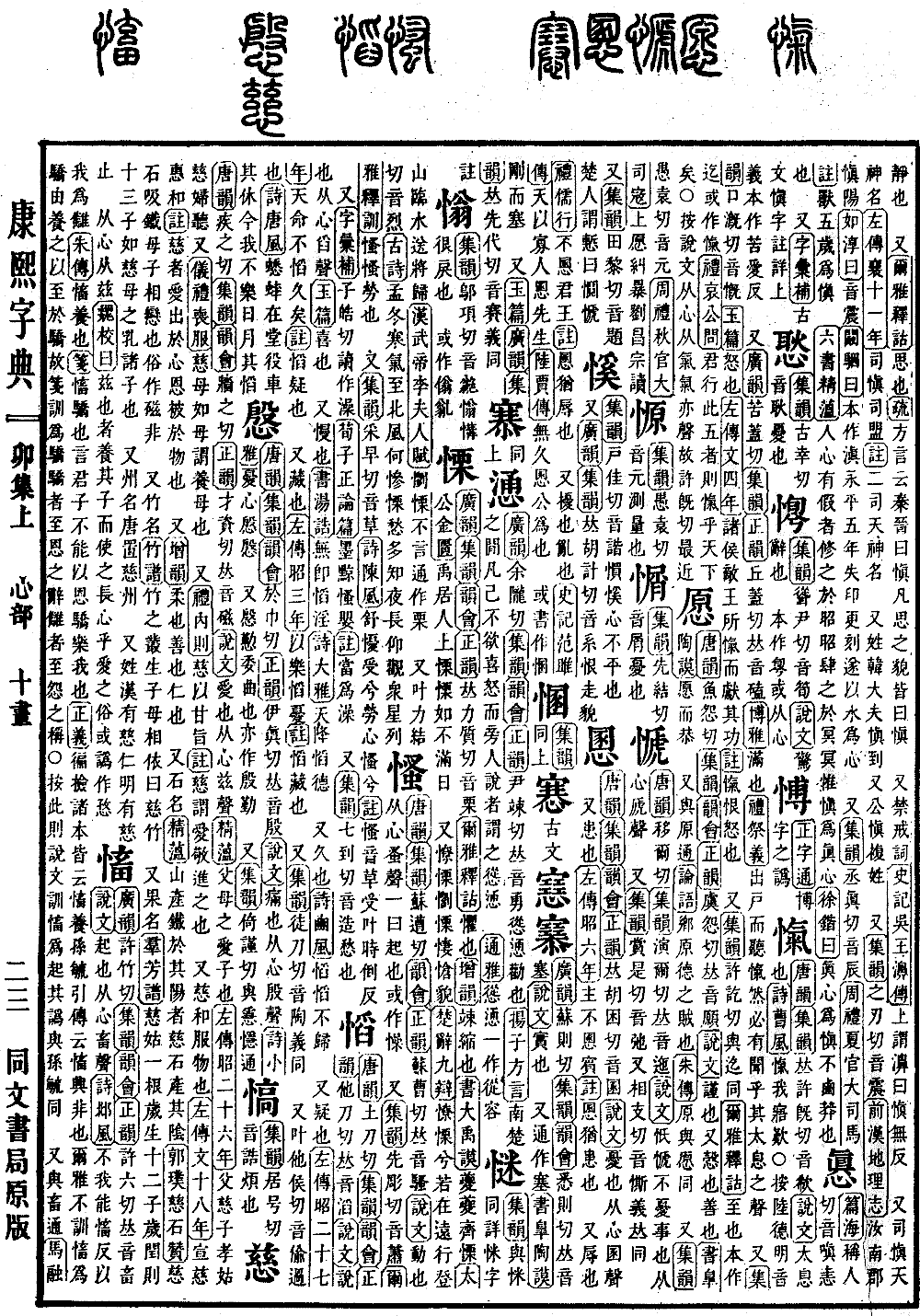
Xu Collection, Lower Volume
Radical: Page (yè)
Kangxi Strokes: 19
Page 397, Entry 01
Ancient form. Pronounced yuan (falling tone).
In the Shuowen Jiezi (Shuowen), it means a large head.
Also, in the Erya, Erudite Interpretations (Erya), it means to think. The commentary states it means to desire or think of. The Guangya, Expanded Interpretations (Guangya), defines it as desire. In the Book of Documents, Counsels of the Great Yu (Shujing), it is written: Respectfully cultivate what is desirable.
Also, in the Zheng Yun (Zheng Yun), it means to hope or gaze. In the Book of Rites, Lesser Ceremonies (Liji), it is written: Do not covet the wealth of great families. The commentary explains this as seeing their great wealth and not desiring to emulate it.
Also, it means to admire or envy. In the Book of Rites, Meaning of Sacrifices (Liji), it is written: The people of the state expressed their admiration, saying: How fortunate! To have a son like this is what is called filial piety.
Also, it means every or often. In the Book of Odes, Odes of Bei (Shijing), it is written: I often think of you, my heart restless. The commentary states: Yuan means often. The sub-commentary explains: Often when one speaks, one thinks of these two, and the heart is restless and unsettled.
Also, per the Jiyun, Pronounced ruan (rising tone). It describes a face that is short.
Also, it rhymes with the rising tone. In the Book of Odes, Odes of Zheng (Shijing), it is written: There is a beautiful person, with clear eyes and fine brows. Meeting by chance, it satisfies my wish. Also, in Liu Xiang’s Nine Laments (Jiutan): The Yellow River flows continuously, a desire of the heart. Looking back at the road to Ying, I shall never return. Note: The character Yuan belongs to the falling tone, but here it rhymes with the rising tone. As for the definition regarding a short face, it carries only the ruan pronunciation.
Textual Correction: In the Book of Rites, Meaning of Sacrifices (Liji), the original text said Meaning of Sacrifices, which has been corrected from Ceremonies of Sacrifice according to the original text.