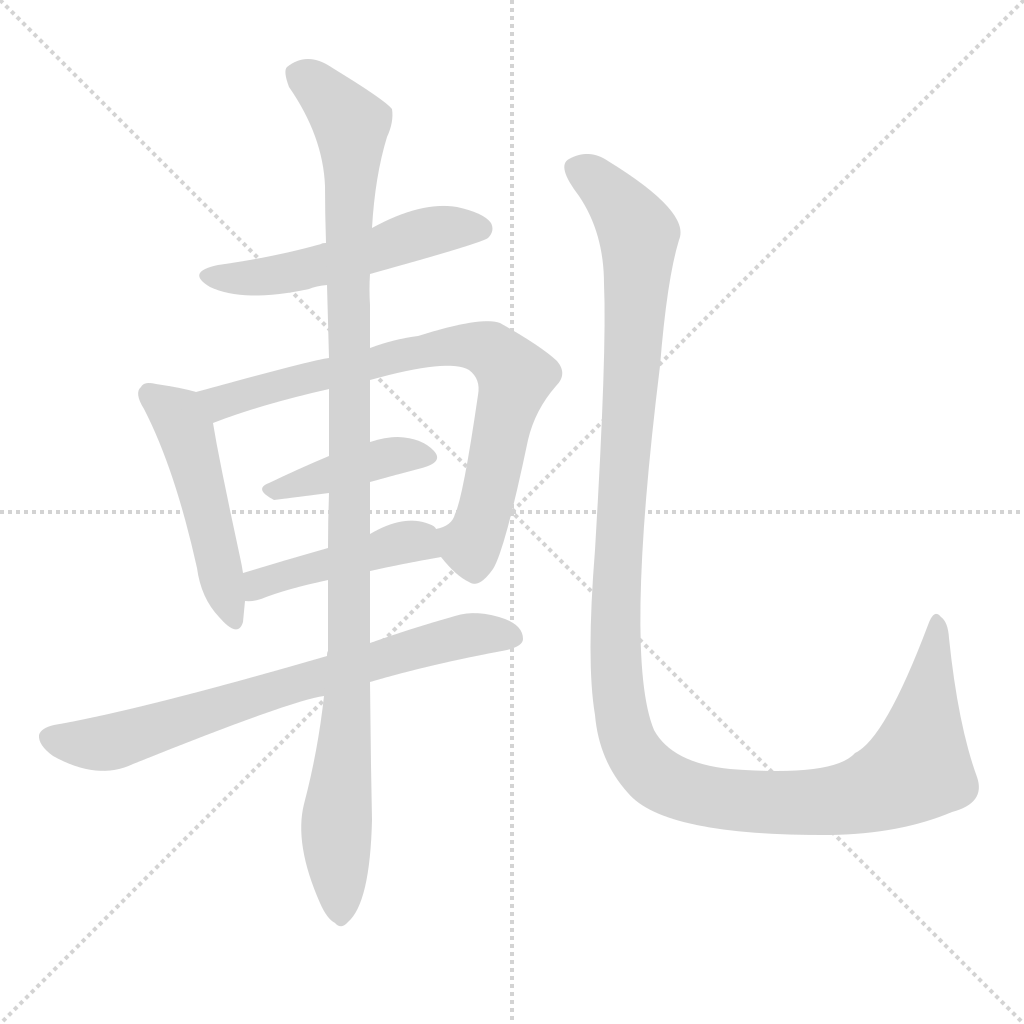
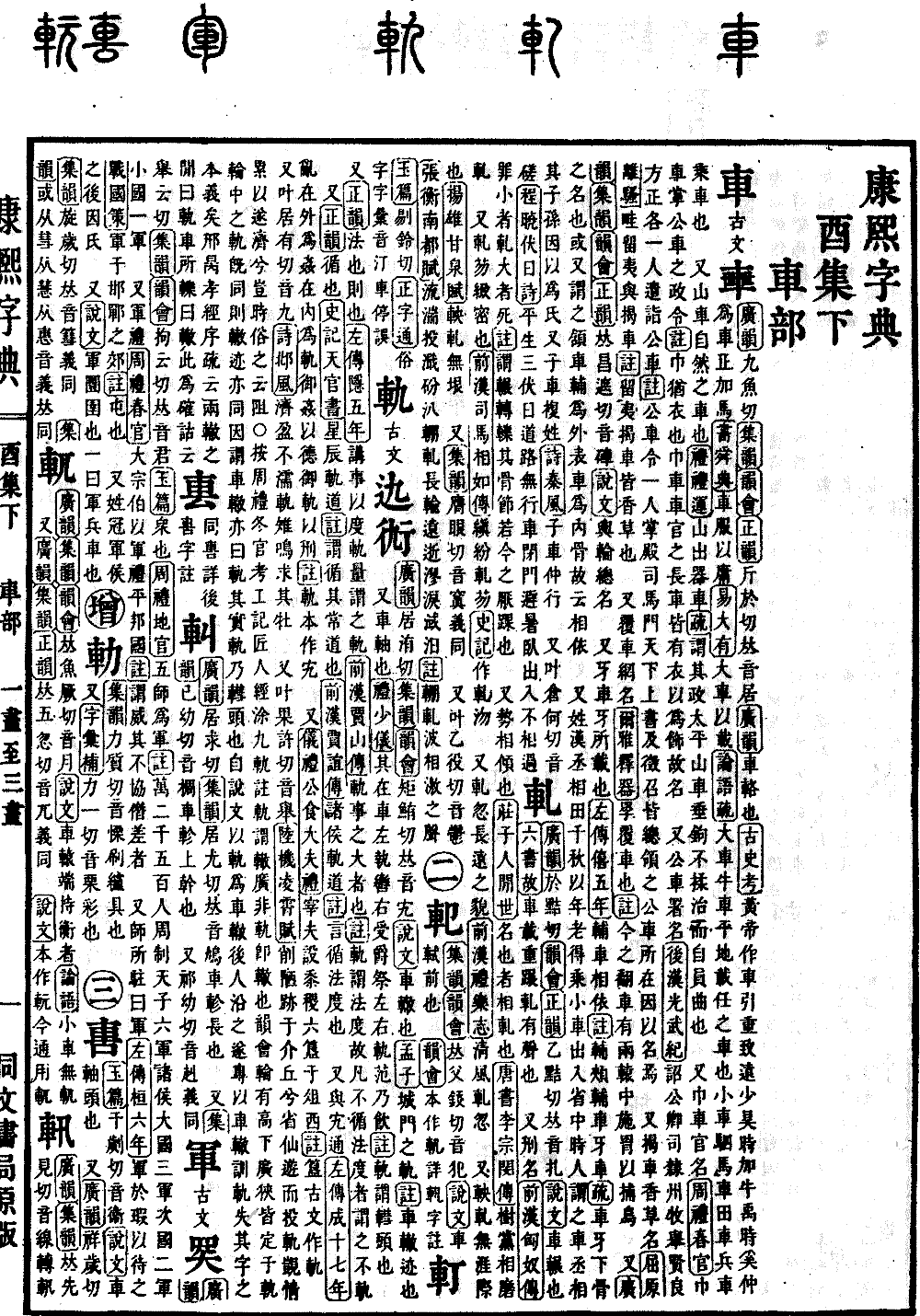
You Collection, Lower Volume
Radical: Carriage (chē)
Pronounced zha
Page 1239, Entry 03
Broad Rimes (Guangyun), Rime Collection (Yunhui), and Correct Rimes (Zhengyun): Pronounced zha.
According to the Explaining Graphs and Analyzing Characters (Shuowen): The crushing of a carriage.
According to the Explaining the Six Scripts (Liushu gu): The sound made when a carriage carries a heavy load and crushes the ground.
Also denotes a punishment.
History of the Former Han (Qianhan Shu), Biography of the Xiongnu: Those with minor crimes are crushed, those with major crimes are put to death.
Commentary: This refers to grinding and crushing the joints of the bones, similar to modern methods of crushing the ankles.
Also refers to factions competing against one another.
Zhuangzi, In the World of Men: Names are that which cause people to clash.
Old History of Tang (Tangshu), Biography of Li Zongmin: Forming parties and grinding against one another.
Also zha-wu, meaning dense or fine.
History of the Former Han, Biography of Sima Xiangru: Dense and fine.
Records of the Grand Historian (Shiji) writes this as zha-wu.
Also zha-hu, the appearance of being long and distant.
History of the Former Han, Treatise on Rites and Music: The clear wind is long and distant.
Also yang-zha, meaning without limit or boundary.
Yang Xiong, Rhapsody on Sweet Spring (Ganquan Fu): Boundless and without edge.
According to the Collected Rimes (Jiyun): Pronounced yan. The meaning is the same.
Also follows the rhyme yue (rising tone).
Zhang Heng, Rhapsody on the Southern Capital (Nandu Fu): The flowing rapids plunge and gather, crashing and grinding. Flowing long and far away, rushing and swirling.
Commentary: peng-zha is the sound of waves crashing against each other.