You Collection, Upper Volume
Radical: Speech (yán)
Kangxi Strokes: 11
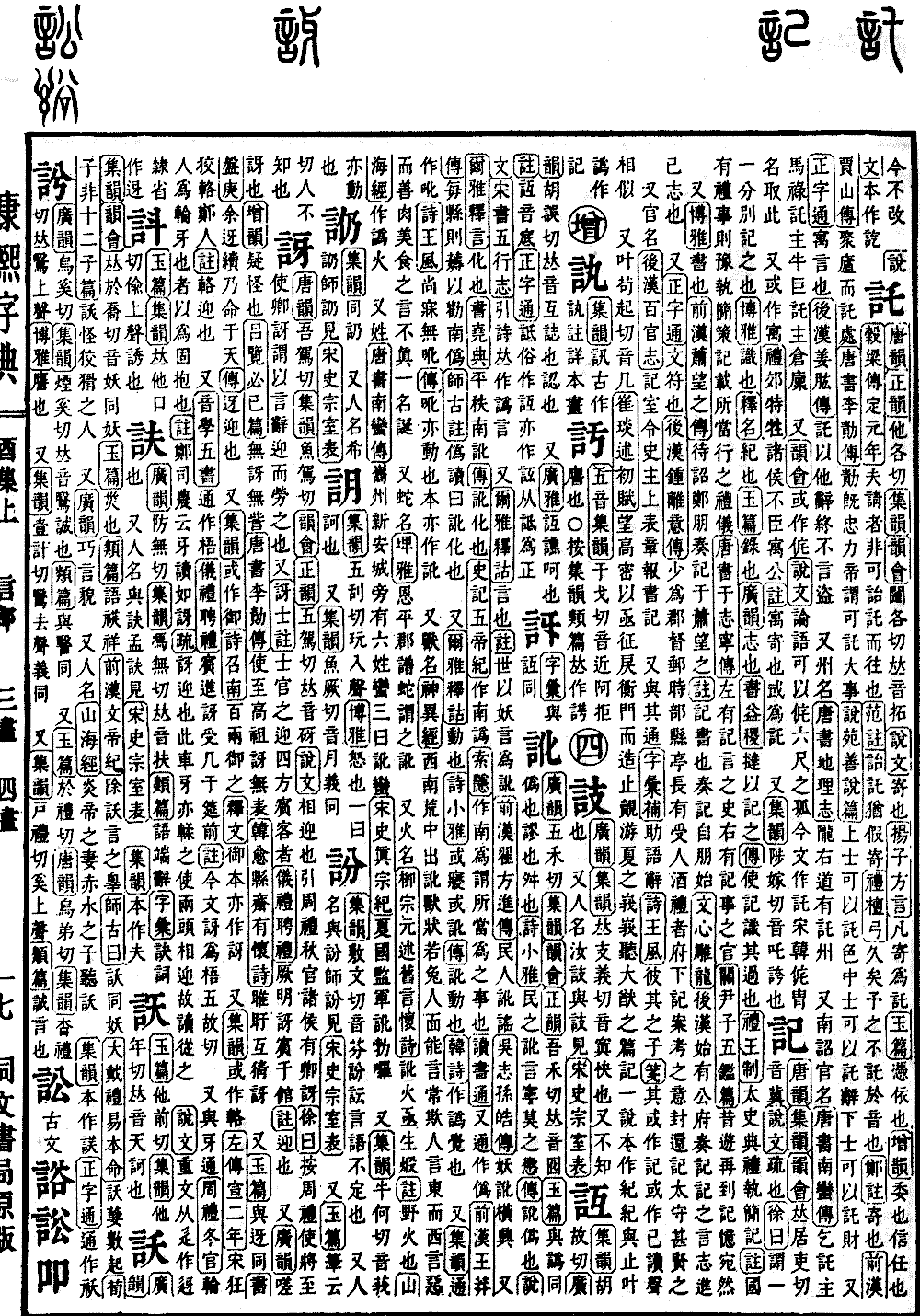
Page 1149, Entry 12
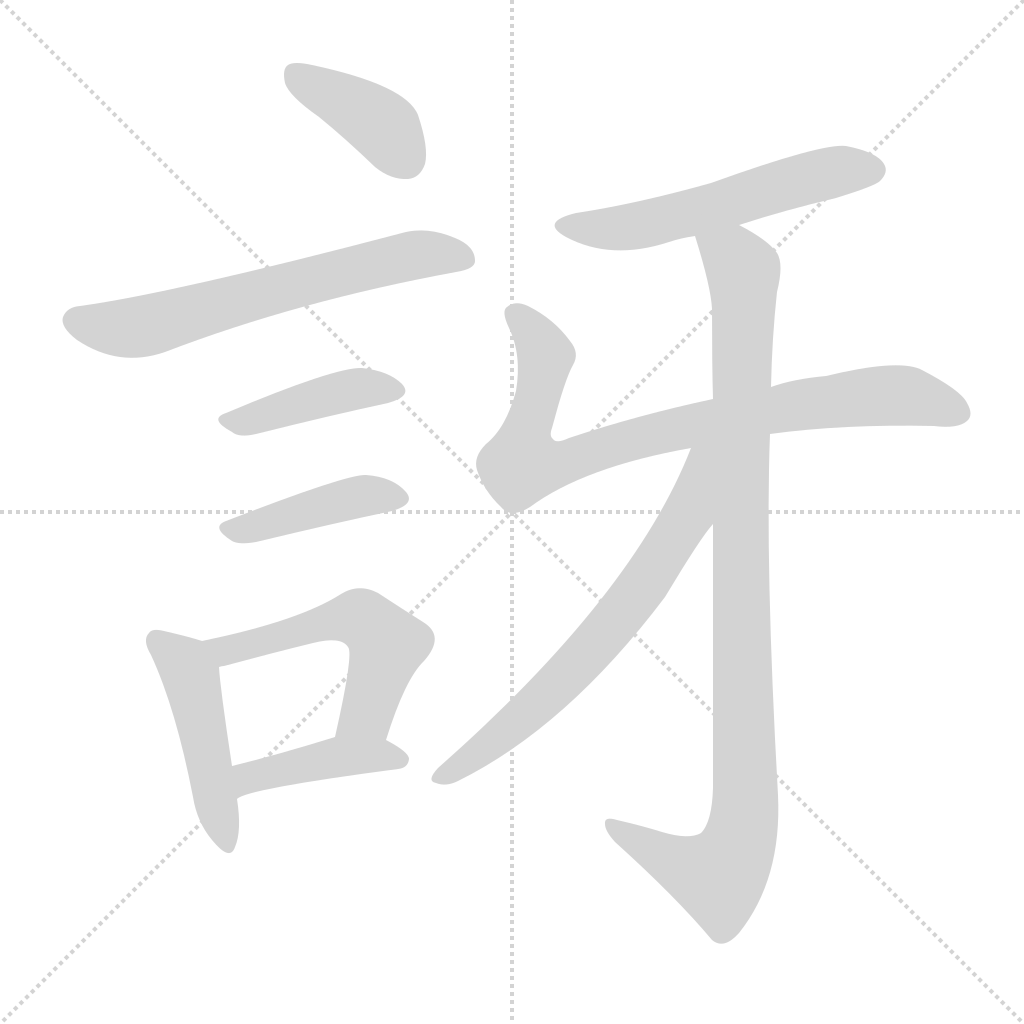
Pronounced yà.
According to the Explaining Graphs and Analyzing Characters (Shuowen), it means to welcome one another. It cites the Rites of Zhou (Zhouli), Autumn Offices, stating that among the feudal lords, there are officials who perform the welcome. Xu says, according to the Rites of Zhou, when an envoy arrives, the minister performs the welcome, meaning to receive and comfort them with speech. Also, in the notes for officials of welcome, it refers to the officials who receive guests from the four directions. In the Ceremonial and Rituals (Yili), Employment Rites, it says at daybreak they welcomed the guests at the lodge. The note says this means to welcome.
Also, it means to sigh in astonishment. It means to doubt or suspect. In the Master Lu's Spring and Autumn Annals (Lushi Chunqiu), Biyi chapter, it says do not feel astonishment or slander. In the Old Book of Tang (Tangshu), Biography of Li Ji, it says when the envoy arrived, the Gaozu Emperor was astonished that there was no report. In Han Yu's poem Composed in the County Office, it mentions mutual suspicion and astonishment.
Also, it is the same as the character for welcome (yà). In the Book of Documents (Shangshu), Panggeng chapter, it says I welcome and continue your mandate from heaven. The commentary says this means to welcome.
Also, sometimes written as the character for imperial (yù). In the Book of Odes (Shijing), Shaonan, it says a hundred carriages welcome her. The explanation of the text says that for this character, the original also appears as the character for welcome (yà).
Also, sometimes written as the character for carriage passage (lù). In the Zuo Tradition (Zuozhuan), second year of Duke Xuan, it says Song Kuangjiao welcomed the people of Zheng. The note says this means to welcome.
Also, in the Five Books on Phonology (Yinxue Wushu), it is used interchangeably with the character for wu (wú). In the Ceremonial and Rituals (Yili), Employment Rites, it says the guest advances to welcome and receive the armrest before the mat. The note says in current texts the character for welcome (yà) is written as the character for wu (wú), pronounced wu.
Also, it is interchangeable with the character for tooth (yá). In the Rites of Zhou (Zhouli), Winter Offices, it says the wheel-maker makes the rim of the wheel. The note by Zheng Sinong says the character for tooth (yá) should be read as the character for welcome (yà). The commentary explains that this means to welcome, and since the tooth of the carriage also curves to make the two ends meet and welcome each other, the pronunciation follows this.
The Explaining Graphs and Analyzing Characters (Shuowen) contains a variant form using the radical for walk (chuò), written as the character for welcome (yà), with the clerical script simplified to the character for welcome (yà). The character for welcome (yà) is formed by the radical for walk (chuò) and the character for tooth (yá).