You Collection, Upper Volume
Radical: Speech (yán)
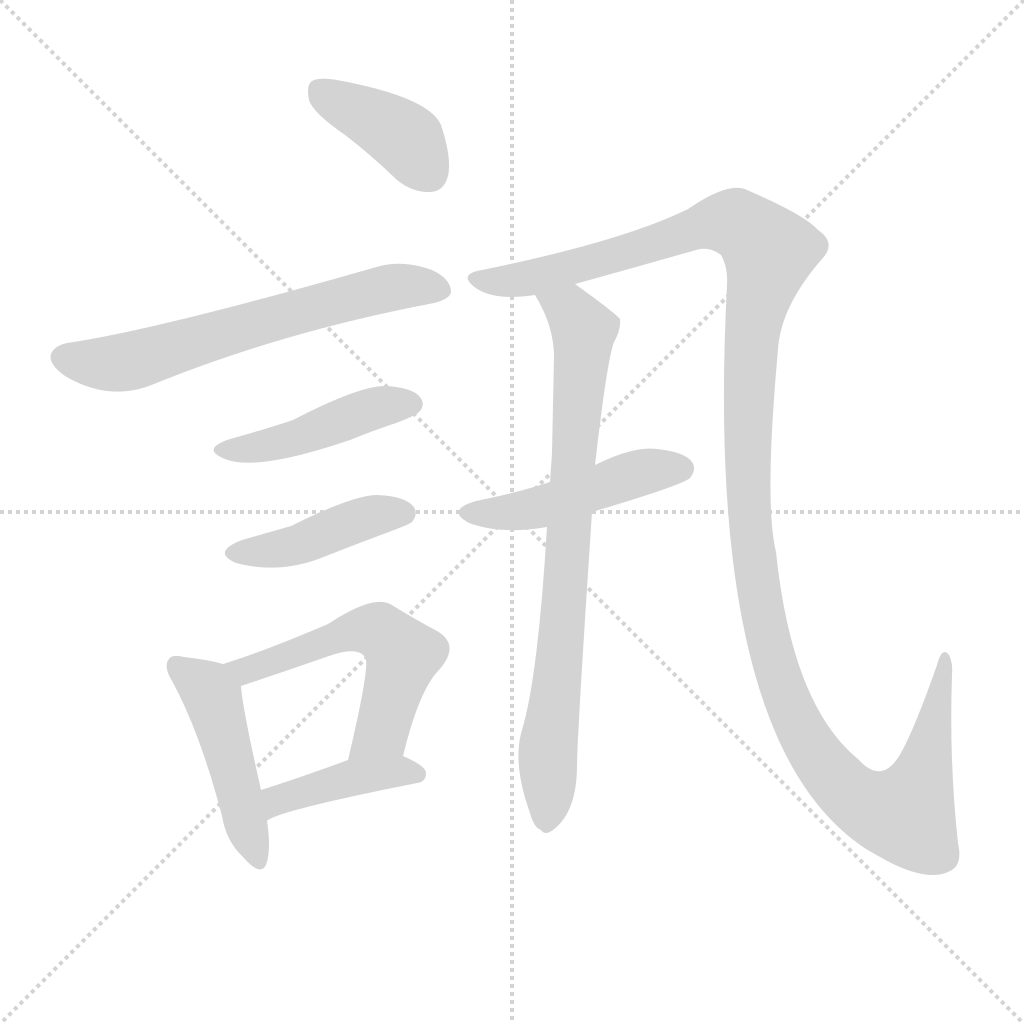
Xùn; Kangxi stroke count: 10; Page 1147, Entry 04
Ancient character form: Xùn
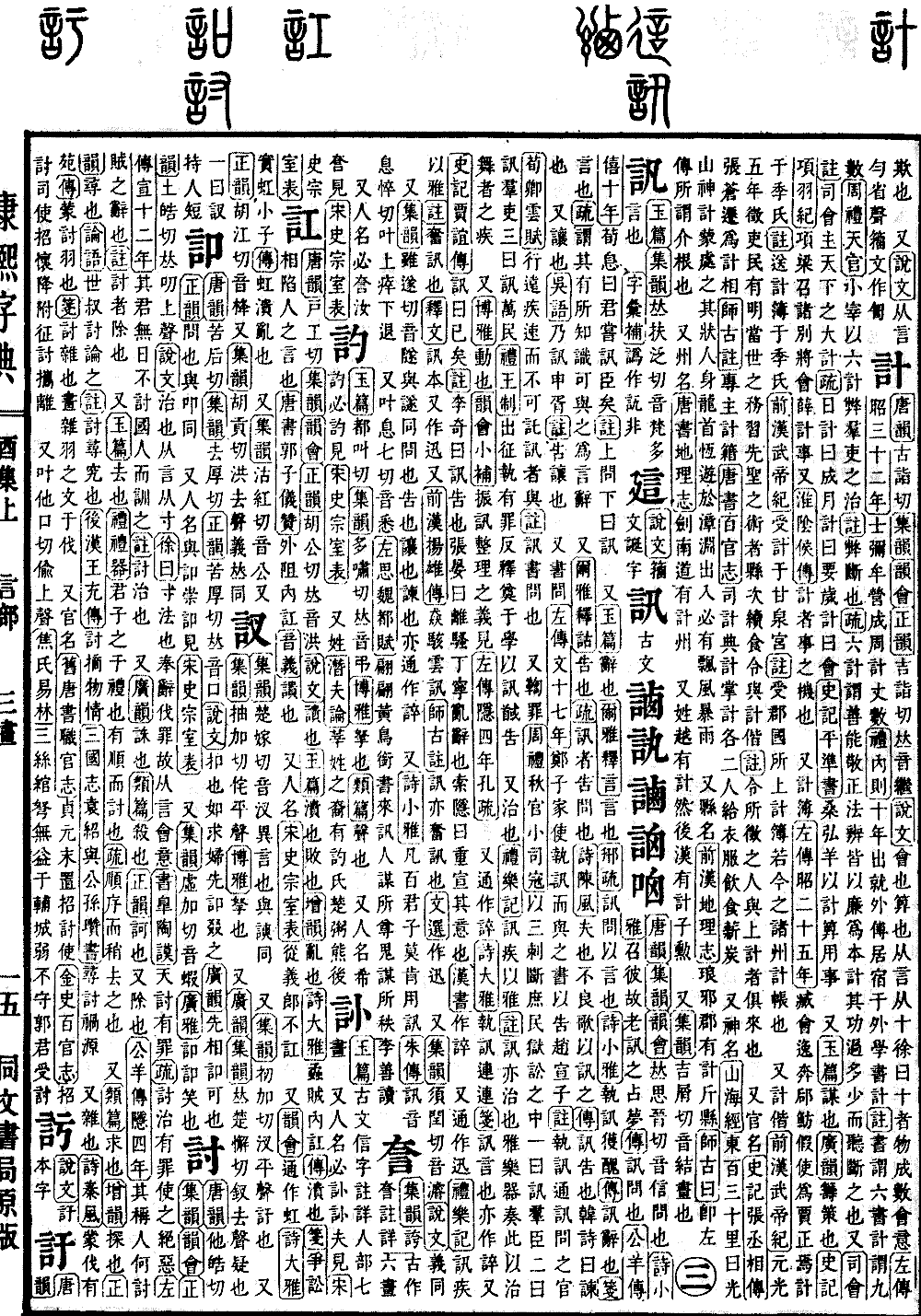
According to the Tang Dynasty Rhyme Dictionary (Tangyun), the Collection of Rhymes (Jiyun), and the Collection of Rhymes and Explanations (Yunhui), the pronunciation is xìn. It means to ask. Book of Odes (Shijing), Lesser Odes: Summon those elders and ask them to interpret dreams. Commentary: Xùn means to ask. Commentary on the Spring and Autumn Annals (Gongyang Zhuan), 10th year of Duke Xi: Xun Xi said: The ruler has once asked the ministers. Annotation: When a superior asks a subordinate, it is called xùn. Also, according to the Jade Chapters (Yupian), it means words. In the Progressions of Terms (Erya), it means speech. Commentary: Xùn refers to questioning through speech. Book of Odes (Shijing), Lesser Odes: Capture those questioned and seize the captives. Commentary: Xùn means words. Annotation: It means speech. Commentary: This refers to those who possess knowledge with whom one can engage in dialogue. Also, in the Progressions of Terms (Erya), it means to announce. Commentary: Xùn refers to announcing and asking. Book of Odes (Shijing), Airs of the States: That man is not good, I sing to warn him. Commentary: Xùn means to warn. The Han version of the Odes states it means to remonstrate. Also means to reprimand. In the Discourses of the States (Wu Yu): Then reprimanded Shen Xu. Annotation: To announce a reprimand. Also refers to written inquiry. Commentary on the Zuo Tradition (Zuo Zhuan), 17th year of Duke Wen: Zheng Zijia dispatched an official in charge of inquiries to deliver a letter to Zhao Xuanzi. Annotation: The official in charge of inquiries is an official who handles communications and questions. Xunzi, Cloud Rhapsody: If one travels far and fast, can one entrust them with an inquiry? Annotation: Xùn refers to a written inquiry. Also refers to interrogation for crimes. Rites of Zhou (Zhouli), Autumn Official: Use the three investigations to settle lawsuits among the common people: first, interrogate the ministers; second, interrogate the officials; third, interrogate the populace. Book of Rites (Liji), Royal Regulations: When returning from a military campaign having captured those with crimes, offer sacrifices at the school to announce the interrogations and the trophy ears. Also means to regulate. Book of Rites (Liji), Record of Music: Regulate the speed with a ya instrument. Annotation: Xùn also means to regulate. The ya is a musical instrument, played to regulate the tempo of the dancers. Also, according to the Broadening of Terms (Boya), it means to move. In the Supplement to the Collection of Rhymes (Yunhui Xiaobu): The term zhèn xùn refers to the meaning of organizing and tidying, as seen in the Commentary on the Zuo Tradition (Zuo Zhuan), 4th year of Duke Yin. Also interchangeably used with suì. Book of Odes (Shijing), Lesser Odes: Capture the captives in succession. Annotation: Xùn means speech. Also written as suì. Also, in the Records of the Grand Historian (Shiji), Biography of Jia Yi: The inquiry states, it is finished. Annotation: Li Qi says: Xùn means to announce. Zhang Yan says: It is a concluding phrase in the Encountering Sorrow (Lisao). Commentary: It means to reiterate the meaning. In the Book of Han (Hanshu), it is written as suì. Also interchangeably used with xùn. Book of Rites (Liji), Record of Music: To move quickly with a ya instrument. Annotation: It means to exert oneself and move. Textual Explanation: The original text also used xùn. Also, in the Book of Han (Hanshu), Biography of Yang Xiong: The gale frightens the clouds and causes them to surge. Annotation: Xùn also means to surge. In the Selections of Refined Literature (Wenxuan), it is written as xùn. Also, according to the Collection of Rhymes (Jiyun), the pronunciation is jùn. According to the Origin of Chinese Characters (Shuowen), the meaning is the same. Also, according to the Collection of Rhymes (Jiyun), the pronunciation is suì. It is identical to suì. It means to ask, to announce, to reprimand, and to remonstrate. Also interchangeably used with suì. Also, in the Book of Odes (Shijing), Lesser Odes: Of all these gentlemen, none are willing to use these words. Commentary: Xùn is pronounced xì. Rhymes with cui and tùi. Also rhymes with xī, pronounced xī. Zuo Si, Rhapsody on the Capital of Wei: The fluttering yellow birds bring a message in their beaks. The plans of men are honored, and the rankings of ghosts are ordered. Li Shan reads it this way.