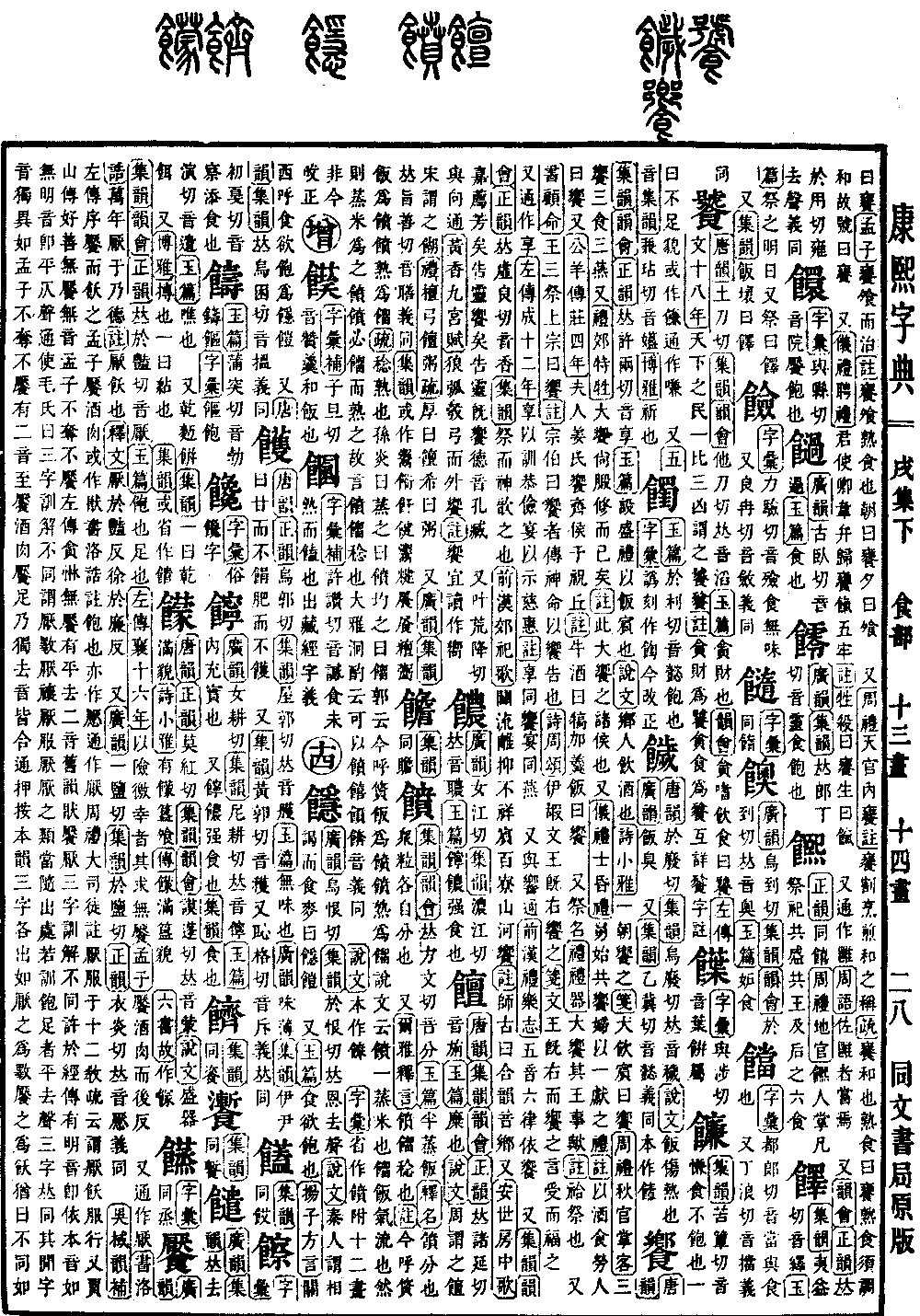
Xu Collection, Lower Volume
Radical: Food (shí)
Kangxi Strokes: 22
Page 1426, Entry 15
Pronounced xiǎng
Yupian: To provide an elaborate ceremony to feast guests.
Shuowen: Villagers drinking wine together.
Book of Odes (Shijing), Lesser Odes: To feast them in a single morning.
Commentary: A grand banquet for guests is called xiang.
Rites of Zhou (Zhouli), Office of Autumn, Chief of Protocol: Three xiang, three meals, three banquets.
Book of Rites (Liji), Suburban Sacrificial Animals: A grand xiang should merely prioritize dried meat.
Note: This refers to a grand xiang for the feudal lords.
Book of Etiquette and Ceremonial (Yili), Marriage Rites for Scholars: Parents-in-law together feast the bride, using the rite of one offering.
Note: To reward someone with wine and food is called xiang.
Gongyang Commentary (Gongyangzhuan), Year 4 of Duke Zhuang: Lady Jiang feasted the Duke of Qi at Zhuqiu.
Note: Beef and wine is called kao; adding soup and rice is called xiang.
A name for a sacrifice.
Book of Rites (Liji), Treatise on Ceremonial Usages: Is the grand xiang the business of the king?
Note: A joint ancestral sacrifice.
Book of Documents (Shujing), Testamentary Charge: The king makes three sacrifices; the High Minister says xiang.
Note: The Minister of Rites says xiang, meaning to transmit the command of the spirits to announce the sacrifice.
Book of Odes (Shijing), Odes of Zhou: Great King Wen, he has already favored and accepted the sacrifice.
Commentary: King Wen has already favored and accepted the sacrifice, meaning he received it and blessed it.
Also used interchangeably with xiang (to offer).
Zuo Commentary (Zuozhuan), Year 12 of Duke Cheng: Using offerings to instruct in respect and frugality, and using banquets to demonstrate kindness and benevolence.
Note: Xiang is the same as xiang. Banquets are the same as yan.
Also used interchangeably with xiang (echo).
History of the Former Han Dynasty (Qianhan shu), Treatise on Rites and Music: The five tones and six pitch pipes, according to the harmonious resonance.
Pronounced xiāng
Jiyun: To sacrifice and have the spirits accept it.
History of the Former Han Dynasty (Qianhan shu), Suburban Sacrifice Songs: Avoid wandering, suppress the inauspicious. The hundred officials are guests, the mountains and rivers accept the sacrifice.
Note: Shigu says: The rhyming pronunciation is xiang.
Anshi Chamber Songs: The fine offerings are fragrant, the spirits are informed and accept them. The spirits having been informed and having accepted, the virtuous reputation is very good.
Also rhymes with xiang (direction/towards); used interchangeably with xiang.
Huang Xiang, Rhapsody on the Nine Palaces: The wolf-star bow is drawn and aimed outward.
Note: Xiang should be read as xiang (direction).
Textual Research:
Book of Rites (Liji), Suburban Sacrificial Animals: A grand xiang should merely prioritize dried meat.
Note: This refers to a grand xiang for the feudal lords.
The original text has been corrected to refer to xiang for the feudal lords.
Book of Etiquette and Ceremonial (Yili), Marriage Rites for Scholars: Parents-in-law together feast the bride, using the rite of one offering.
The original text has been corrected from uncle to parents-in-law.
History of the Former Han Dynasty (Qianhan shu), Treatise on Rites and Music: The five tones and six pitch pipes.
Note: The original text of the Suburban Sacrifice Songs is five tones and six pitch pipes according to the harmonious resonance. The character for harmonious and the character for resonance have been added to the original text.