Shen Collection, Lower Volume
Radical: Clothing (yī)
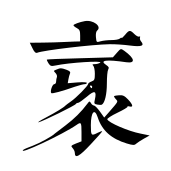
Character: xie
Kangxi stroke count: 10
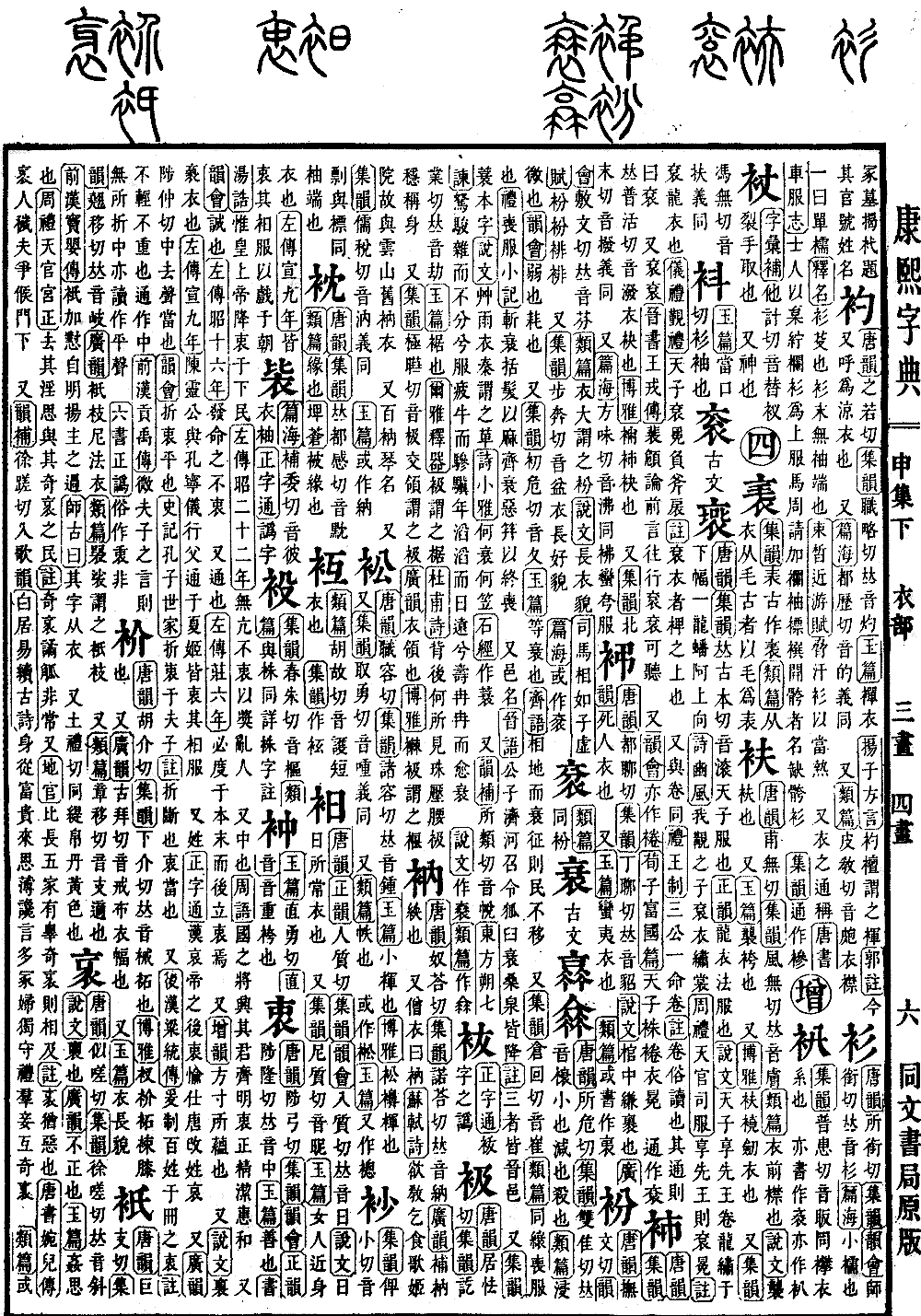
Page 1112, Entry 31
Pronounced xie
As defined in the Tangyun (Tang rhyme dictionary) and Jiyun (Collected rhymes): pronounced xie.
According to the Shuowen Jiezi (Explaining graphs and analyzing characters): it signifies the same.
According to the Guangyun (Expanded rhymes): not upright.
According to the Yupian (Jade chapters): evil thoughts.
According to the Rites of Zhou (Zhouli), Heaven Officials, Palace Administrator: Remove those who are indulgent and idle, and those whose behavior is strange and not upright.
Commentary: The term refers to deviance, meaning treacherous, strange, and eccentric behavior that does not conform to common reason.
Also in the Rites of Zhou, Earth Officials: If among a group of five families someone commits a crime or acts in a wicked manner, they shall be held mutually accountable.
Commentary: The term means the same as evil.
According to the Book of Tang (Tangshu), Biography of Wan'er: Treacherous and wicked people, along with those who are corrupt, vied to seek refuge under her patronage.
Also found in the Yunbu (Rhyme supplements): Pronounced cuo, entering the ge rhyme.
According to Bai Juyi, Continued Ancient Poems: Born into a family of wealth and status, affection is thin and slanders are many. The legitimate wife alone strictly observes ritual propriety, while the concubines vie with one another in strangeness and wickedness.
According to the Leipian (Classified chapters): Sometimes written in a variant form.
According to the Jiyun: Generally written as the character for slanting.
Textual research note: In the citation from the Rites of Zhou, Heaven Officials, Palace Administrator, the original text reads to remove their indulgent thoughts; the text has been corrected to indulgent and idle based on the original.