Wei Collection, Lower Volume
Radical: Meat (ròu)
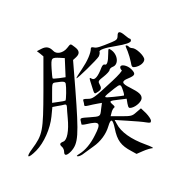
Xie
Kangxi strokes: 16
Page 991, Entry 29
Pronounced gui.
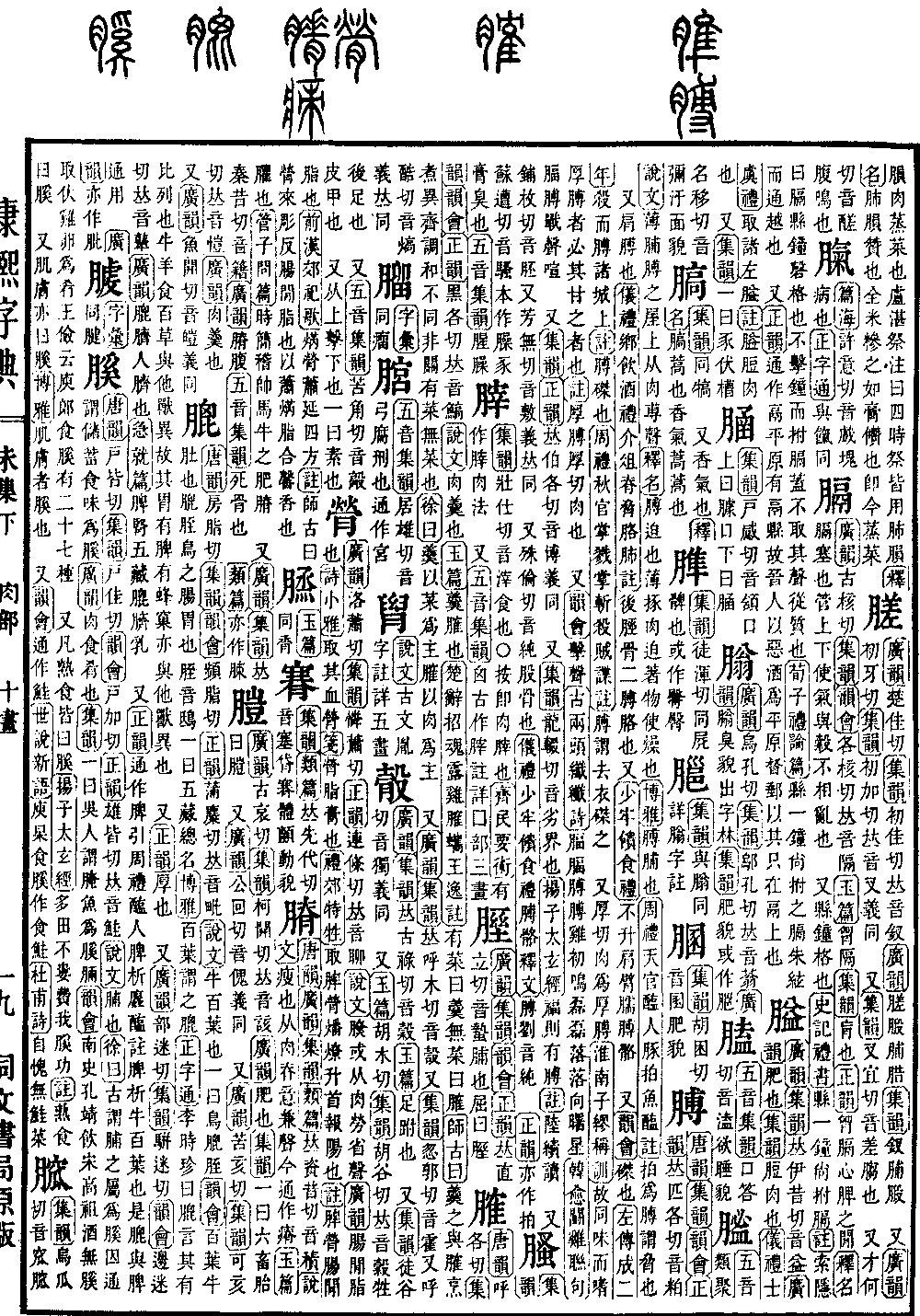
According to the Explaining Graphs and Analyzing Characters (Shuowen), it refers to dried meat. Xu states that in ancient times, food such as dried meat was called xie, and therefore, stored food flavors were generally called xie. According to the Extensive Rhymes (Guangyun), it refers to meat-based foods and side dishes. According to the Collected Rhymes (Jiyun), one source notes that people in the Wu region call pickled fish xie-nao. According to the Rhyme Treasury (Yunhui), the History of the Southern Dynasties (Nan Shi) records that when Kong Jing entertained Emperor Gao of Song with wine, there were no side dishes, so he served boiled eggs instead. Wang Jian remarked that Minister Yu had twenty-seven ways of eating xie. Furthermore, all cooked food can be called xie. According to Yang Zi's Supreme Mystery (Taixuanjing), if fields are numerous but not cultivated, it wastes the effort put into preparing cooked food. The commentary states that cooked food is called xie. Also, skin and flesh can be called xie. According to the Broad Elegance (Boya), skin and flesh are xie. According to the Rhyme Treasury (Yunhui), it is used interchangeably with the character for salted fish (gui). According to A New Account of Tales of the World (Shishuo Xinyu), Yu Gao ate xie, written as gui. In the poetry of Du Fu, it is written as: I am ashamed to have no salted fish or vegetables.