Zi Collection, Page Position: Lower
Radical: Open Box (kǎn)
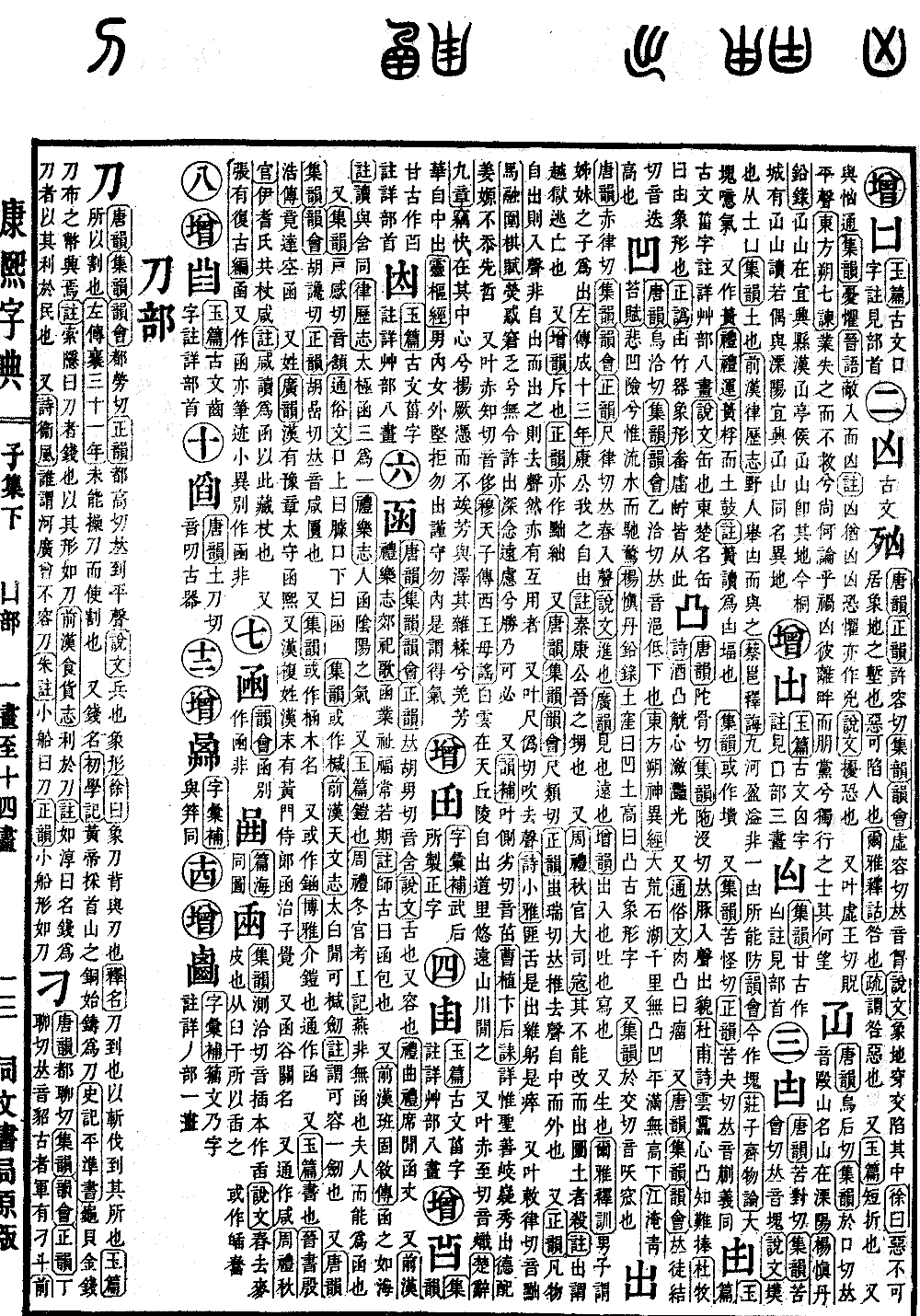
兇
Kangxi strokes: 6
Page 135, entry 2
Classical text. Pronounced xiōng. Shuowen Jiezi (Shuōwén Jiězì) explains: It resembles the ground being pierced and crossed, falling into it. Xu Yue states: Evil and uninhabitable. It resembles a pit in the ground, evil that can trap people. Erya (Ěryǎ), Explanation of Words, says: It is guilt. The commentary states: It refers to guilt and evil. Also in Yupian (Yùpiān): Short-lived. Also interchangeable with xiong (汹). Ji Yun (Jí Yùn) says: Worried and fearful. Guoyu (Guóyǔ), 'Discourses of Jin', says: When the enemy enters, there is misfortune. The commentary explains: xiong (凶) is like xiongxiong, meaning fear. Also written as 兇. Shuowen Jiezi says: Disturbed and fearful. Also rhymes with xū wáng qiè, with a level tone like kuàng. Dongfang Shuo's (Dōngfāng Shuò) 'Seven Admonitions' states: 'When the endeavor is lost and cannot be saved, what more can be said about disaster and misfortune? When they abandon and form factions, what hope is there for the solitary person?'
兇. Pronounced xiōng. Shuowen Jiezi explains: Disturbed and fearful. Formed from the character for 'person' (rén) beneath xiong (凶). Zuo Zhuan (Zuǒ Zhuàn), Duke Xi, 28th year, states: 'The people of Cao were disturbed and afraid.' Yupian says: The sound of fear. Also in Zeng Yun (Zēng Yùn): xiong (凶) is interchangeable with 兇. A Tang poem (Táng Shī) states: 'Eliminating misfortune is rewarded for a thousand ages.' Ji Yun also states: Sometimes written as xiong (恟) or xiong (汹). Also, pronounced xiōng with a rising tone. The meaning is the same.