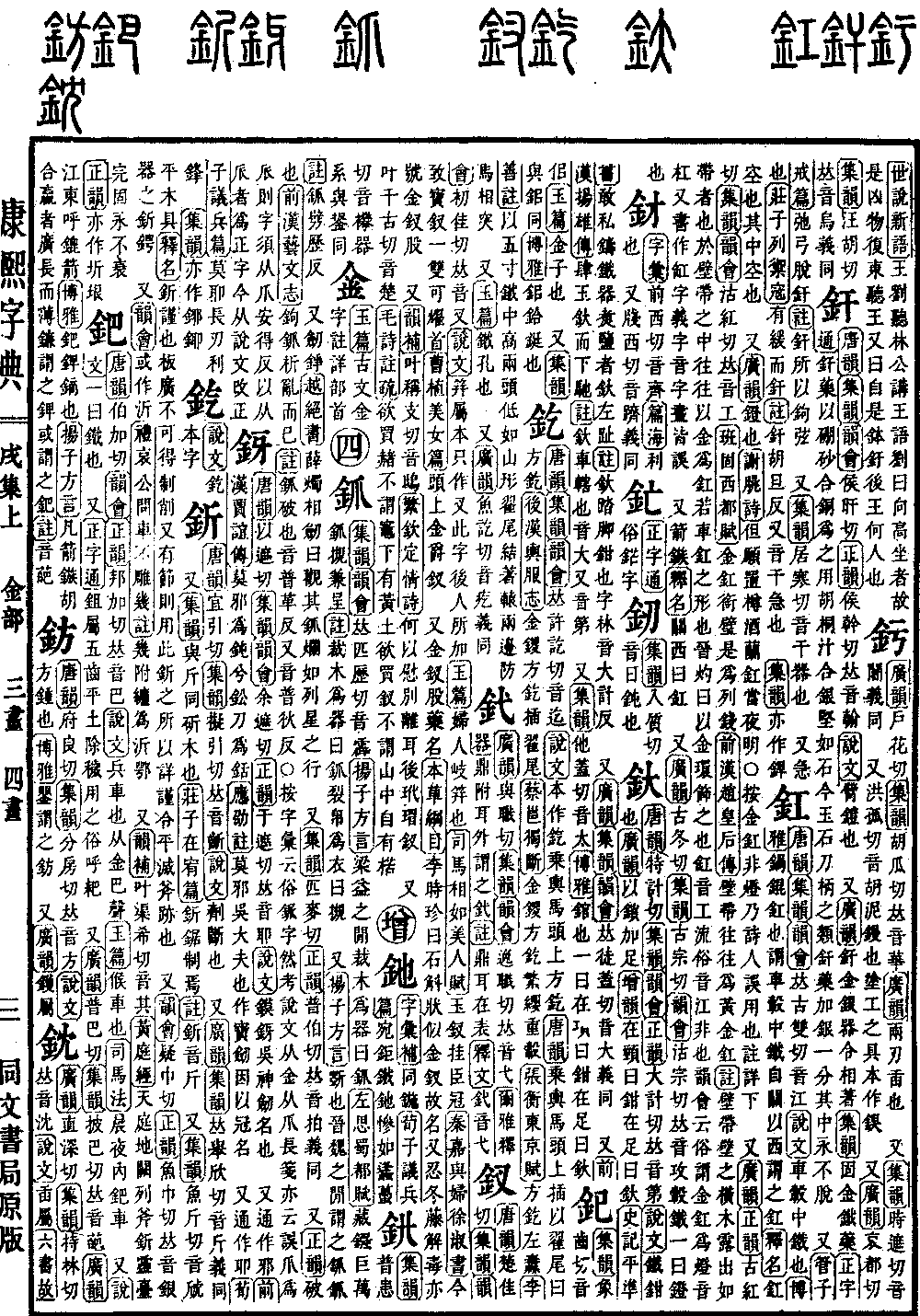
Xu Collection, Upper Volume
Radical: Metal (jīn)
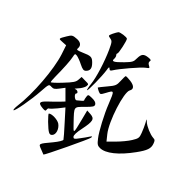
Character: Xi
Kangxi strokes: 11
Page 1297, Entry 09
Tang Dynasty Rhymes (Tangyun), Collected Rhymes (Jiyun), and Dictionary of Rhymes (Yunhui) record the pronunciation as qi (falling tone).
According to the Explaining Graphs and Analyzing Characters (Shuowen), it was originally written as the character appearing below. It refers to a metal ornament on the head of an imperial carriage horse.
Tang Dynasty Rhymes (Tangyun) states: On the head of an imperial carriage horse, a pheasant tail is inserted; this is called a fangxi.
History of the Later Han (Hou Hanshu): Records of Carriages and Attire: The metal fan and the fangxi are used to insert the pheasant tail.
Cai Yong, Sole Determination (Duduan): The metal fan, the fangxi, and the decorative horse breast straps with heavy axle-ends.
Zhang Heng, Rhapsody on the Eastern Capital (Dongjing Fu): The fangxi and the left banner.
Li Shan commentary: Using five-inch iron, high in the middle and low at the two ends, shaped like a mountain. The pheasant tail is knotted and attached to both sides of the shaft to prevent the horses from colliding.
Also, Jade Chapters (Yupian) defines it as an iron aperture.
Also, Wide Rhymes (Guangyun) records the pronunciation as ge (entering tone). The meaning is the same.