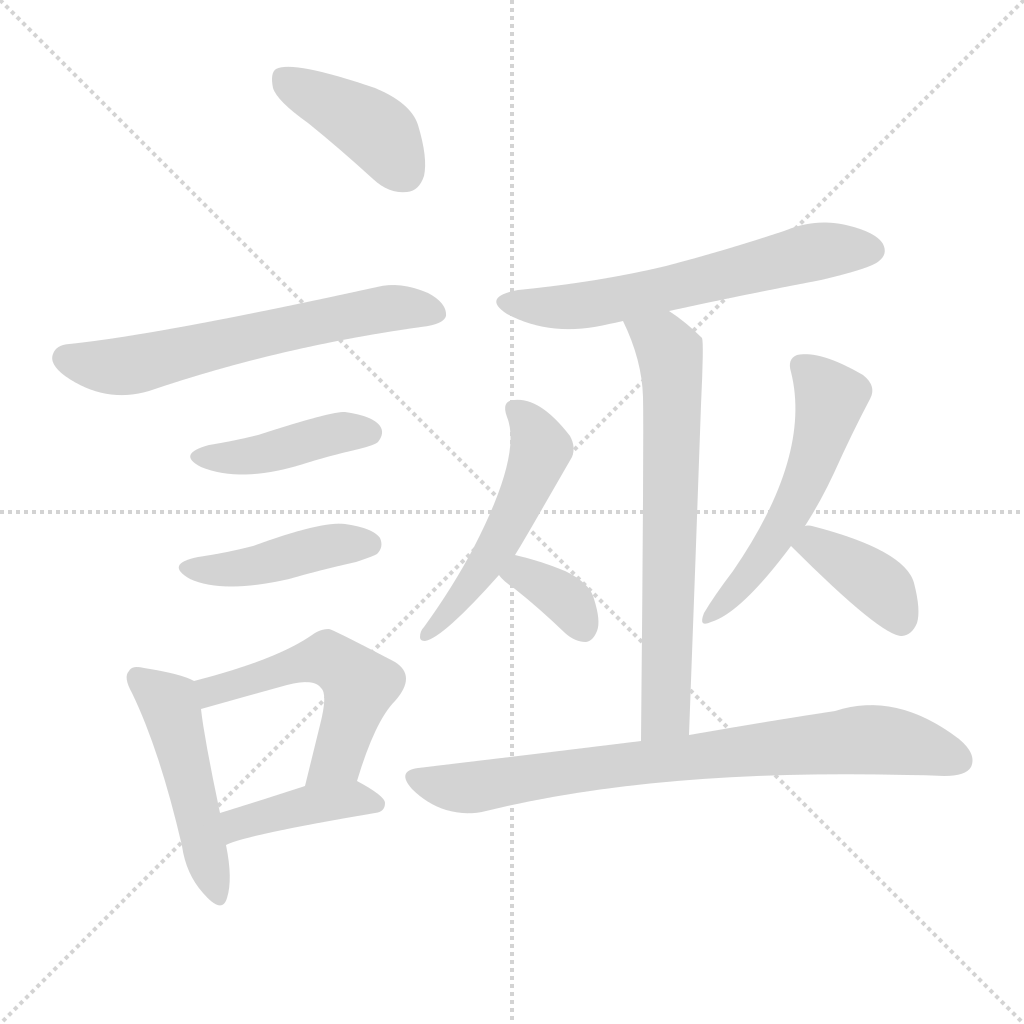
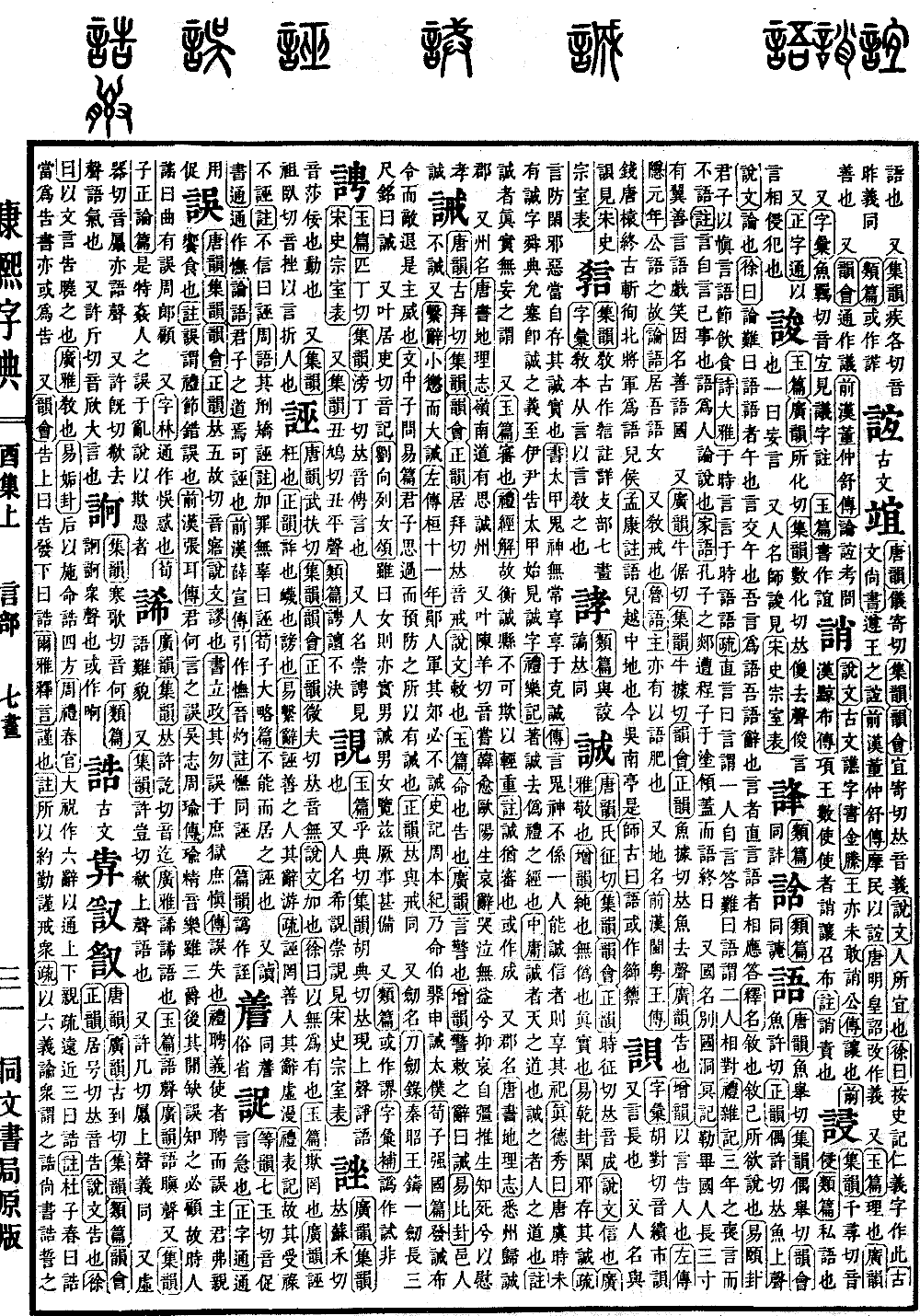
You Collection, Upper Volume
Radical: Speech (yán)
Kangxi Strokes: 14
Page 1163, Entry 17
Pronounced wu.
Shuowen Jiezi (Shuowen): To add or to impose upon.
Xu states: This refers to describing that which does not exist as if it does.
Yupian: To deceive or to hoodwink.
Guangyun: To distort the facts.
Zhengyun: To defraud, to slander, or to defame.
Book of Changes (Yijing), Commentary on the Appended Phrases: The words of those who falsely accuse good people are slippery and insincere.
Commentary: To slander a good person is to use words that are empty, frivolous, and undisciplined.
Book of Rites (Liji), Exposition of Clothing: Thus, the reception of a salary shall not be falsified.
Annotation: That which is not truthful is termed false (wu).
Discourses of the States (Guoyu): Those who falsely represent and slander.
Annotation: To force a criminal charge upon an innocent person is termed false (wu).
Xunzi, General Outline: To occupy a position without having the ability to perform the duties is to practice deception.
Also, according to the Dushu Tong (Comprehensive Readings), it is sometimes written as a variant form (wu).
Analects of Confucius (Lunyu): How can the way of the gentleman be distorted?
History of the Former Han Dynasty (Qianhan Shu), Biography of Xue Xuan: It is cited here as (wu).
Jin Zhuo annotation: (wu) and (wu) are identical in meaning.
Pian Yun: Erroneously written as the variant form (gao).