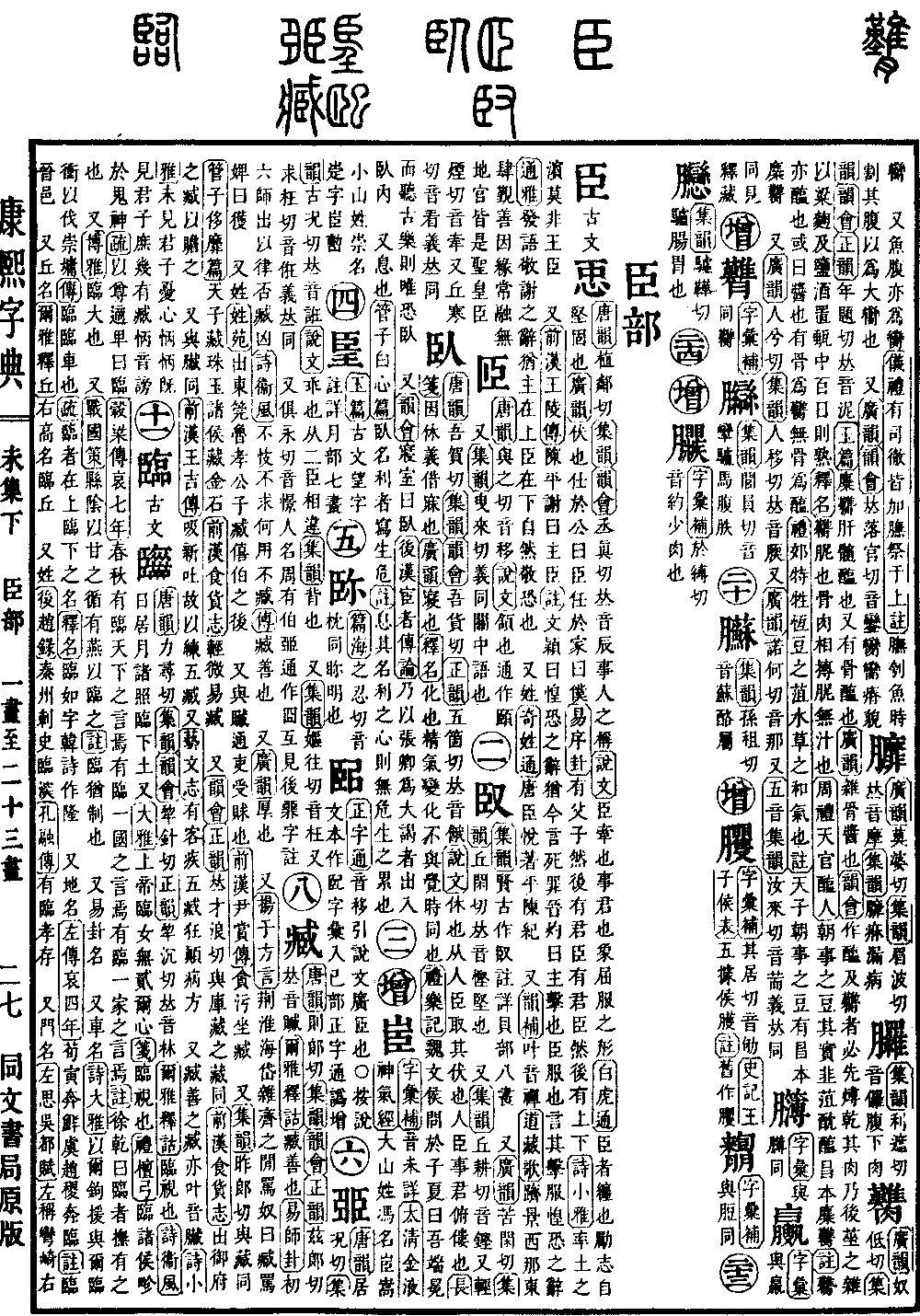
Wei Collection, Lower Volume
Radical: Minister (chén)
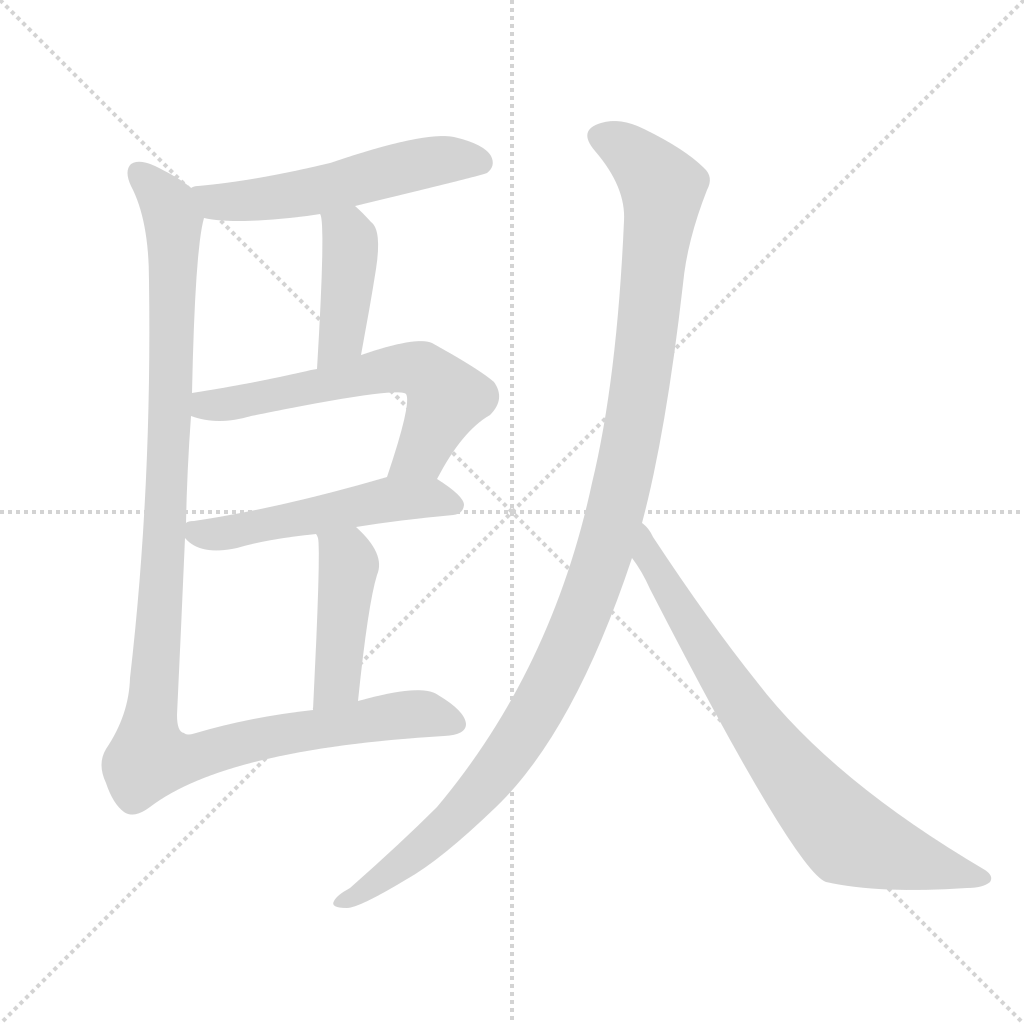
Entry: Wo (to lie down)
Kangxi stroke count: 8
Page 999, Entry 17
Pronounced e (falling tone)
According to the Explaining Graphs and Analyzing Characters (Shuowen Jiezi), it means to rest. It is composed of the characters for person and minister, implying a posture of prostration, as a minister bows low in service to a ruler.
According to the Long Notes (Changjian), the meaning of sleep is borrowed from the sense of resting.
According to the Broad Rhymes (Guangyun), it means to sleep.
According to the Explaining Names (Shiming), it means to transform, as the vital energy undergoes changes that are unlike those experienced while awake.
The Book of Rites (Liji), Record of Music (Yueji) states: Duke Wen of Wei asked Zixia, saying: When I wear my formal robes and cap to listen to ancient music, I fear only that I will fall asleep.
According to the Rhyme Collection (Yunhui), a sleeping chamber is called a wo.
The Book of the Later Han (Hou Hanshu), Treatise on Eunuchs states: Therefore, Zhang Qing was made Grand Usher, with access to the inner sleeping quarters.
It also means to cease. The Guanzi, White Heart (Baixin) chapter states: Those who cease their pursuit of fame and profit preserve their lives from danger. The commentary notes: To cease the desire for fame and profit is to be free from the anxieties that endanger life.