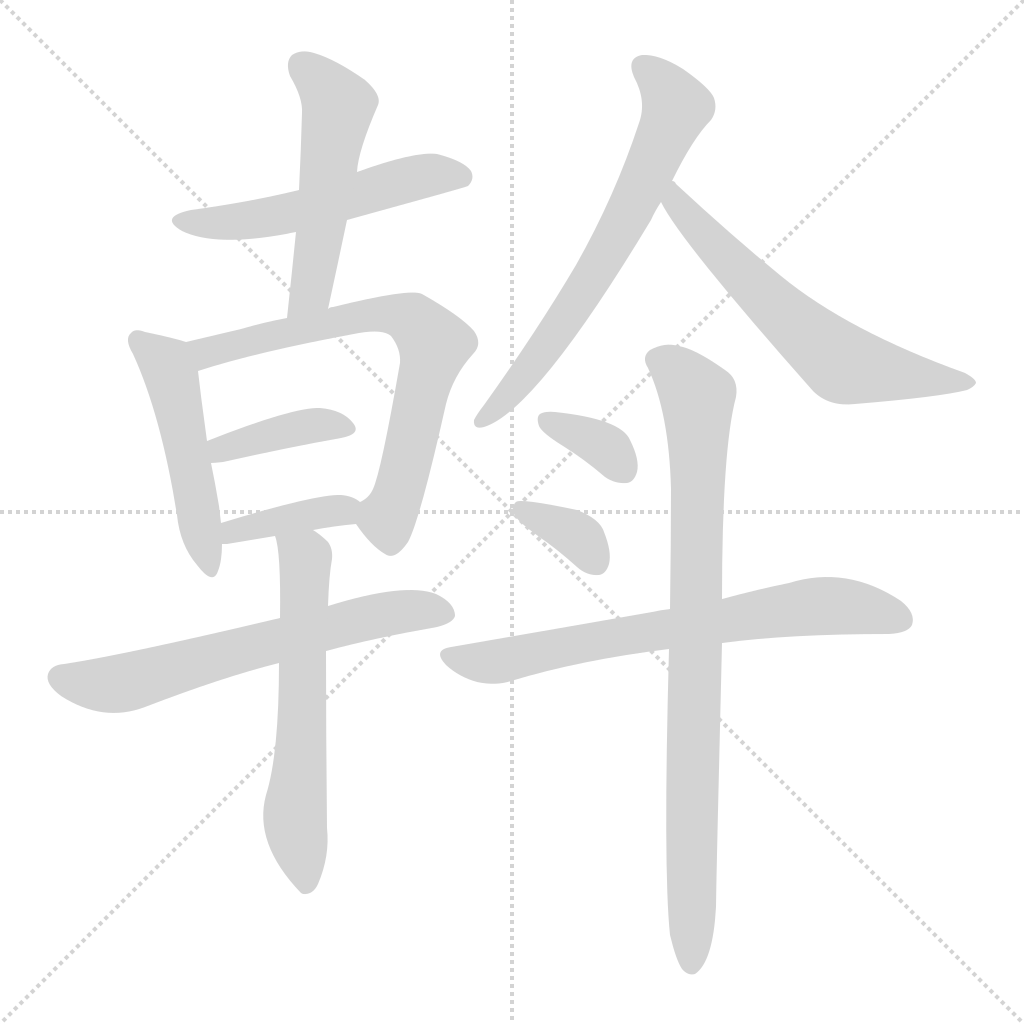
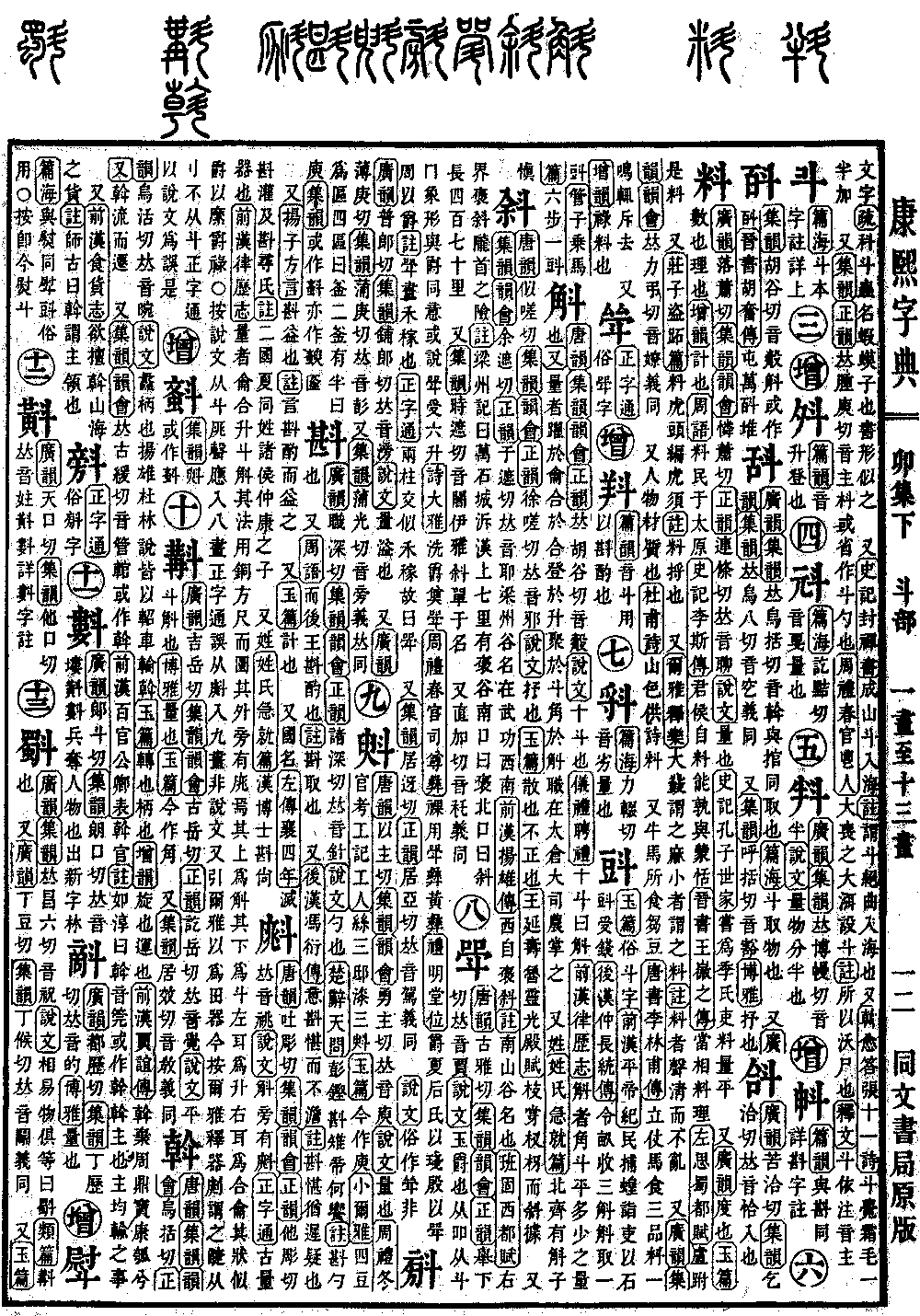
Mao Collection, Lower Volume
Radical: Dipper (dǒu)
Kangxi Strokes: 14
Page 478, Entry 23
Tang Rhymes (Tangyun), Collection Rhymes (Jiyun), Rhyme Compendium (Yunhui): Pronounced wo. Correct Rhymes (Zhengyun): Pronounced wo. The pronunciation is the same as wan.
Exposition of Texts (Shuowen): Refers to the handle of a ladle or scoop. The explanations of Yang Xiong and Du Lin both consider it the axle of a small carriage wheel.
Jade Chapters (Yupian): Means to rotate or a handle.
Expanded Rhymes (Zengyun): Means to rotate or to operate.
Former Han (Qianhan), Biography of Jia Yi: To discard the precious cauldron of the Zhou Dynasty, while treating a broken tile pot as a treasure.
Also: To rotate, flow, and change.
Also Collection Rhymes (Jiyun), Rhyme Compendium (Yunhui): Pronounced guan. Guan is sometimes written as wo.
Former Han (Qianhan), Table of Officials: Official of management (wo guan).
Note: Ru Chun states that wo is pronounced the same as guan, and is sometimes written as gan. Wo means to manage or oversee. It refers to managing the affairs of the uniform tax transport system (junshu).
Also Former Han (Qianhan), Treatise on Food and Money (Shihuozhi): Wishing to monopolize the management of products from mountains and seas.
Note: Yan Shigu states that wo means to manage or control.