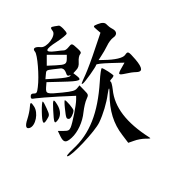
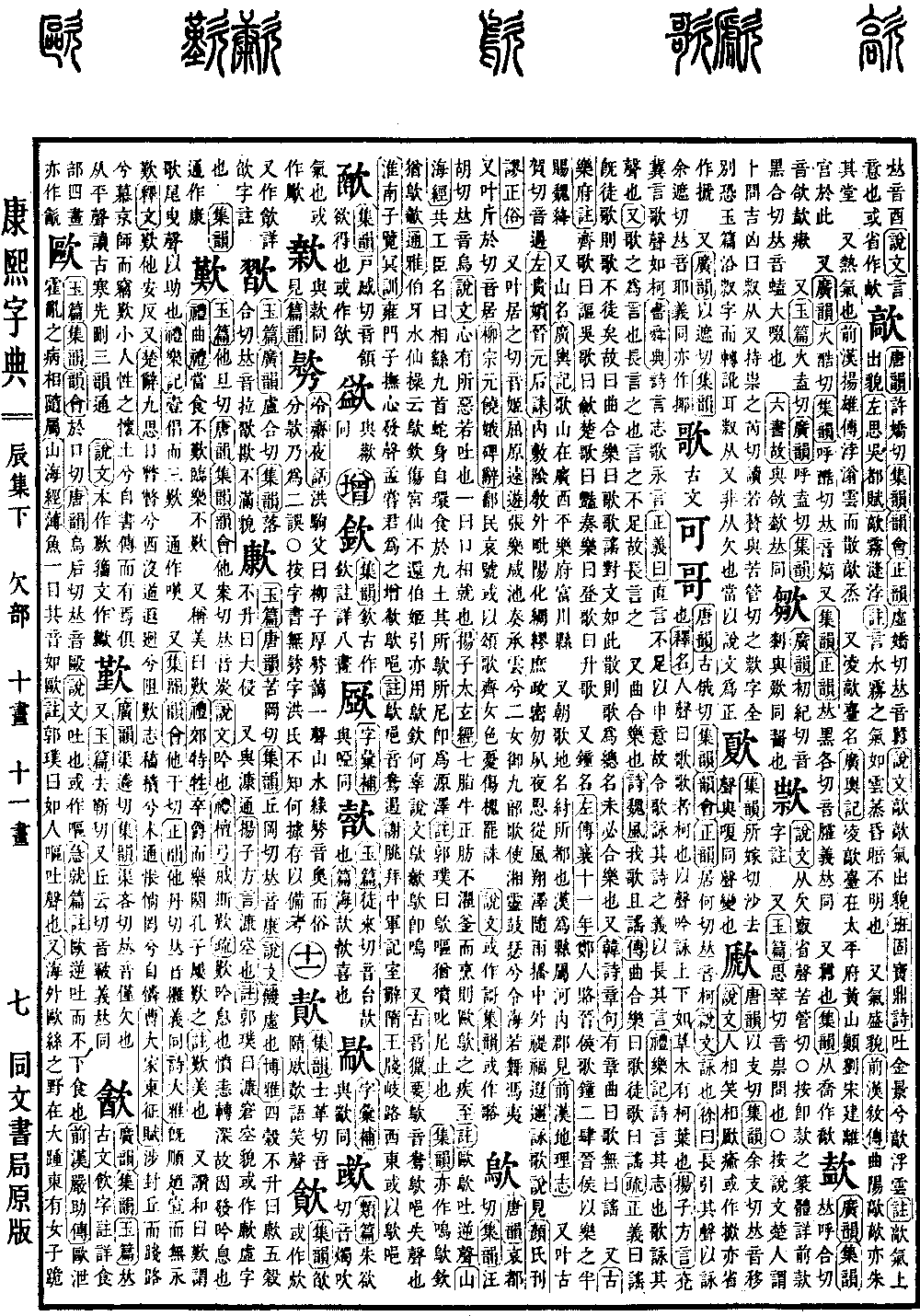
Chen Collection, Lower Volume
Radical: Lack (qiàn)
Kangxi Strokes: 14
Page 571, Entry 10
Pronounced wu.
According to the Shuo Wen Jie Zi (Explaining Graphs and Analyzing Characters), it describes a feeling of disgust in the heart, as if one is about to vomit. Another interpretation is the bringing of mouths close together.
From the Tai Xuan Jing (Great Mystery) by Yangzi: Use seven pieces of pure fat from a fatty ox, cook without washing the pot, and the ailment of vomiting will arrive.
Note: Ouwu refers to the sound of vomiting.
From the Classic of Mountains and Seas (Shanhaijing): Gonggong had a minister named Xiangyao, who possessed nine heads and the body of a snake, curling himself around nine territories to devour. Wherever he vomited or stayed, the land turned into water sources and marshes.
Note: Guo Pu says: Wu means to vomit, like spitting out or shouting. Ni means to stop.
The Jiyun (Collection of Rhymes) also writes it as wu. Wuqin is the same as wu.
From the Tong Ya (Comprehensive Elegance): The Bo Ya Shui Xian Cao (Bo Ya's Water Immortal Melody) states: Wuqin are sorrowful, the immortal does not return. The Bo Ji Yin (Lament of the Eldest Lady Bo) also uses the phrase wuqin he gu. The Shuo Wen Jie Zi says: Wu, is the same as wu.
Also, according to the Gu Yin Lie Yao (Essentials of Ancient Sounds), the character is pronounced yang. Wuyi refers to sobbing until one cannot speak.
From the Huainanzi (Masters of Huainan): When Yongmenzi struck his chest and let out a sorrowful sound, Lord Mengchang heard it and sighed and sobbed even more.
Note: Wuyi is pronounced yang'e.
From Xie Tiao's Letter Declining the Position of Recording Secretary for the Middle Army to the Prince of Sui: At the crossroads, we each went our separate ways, and some were therefore sorrowful and choked with sobs.