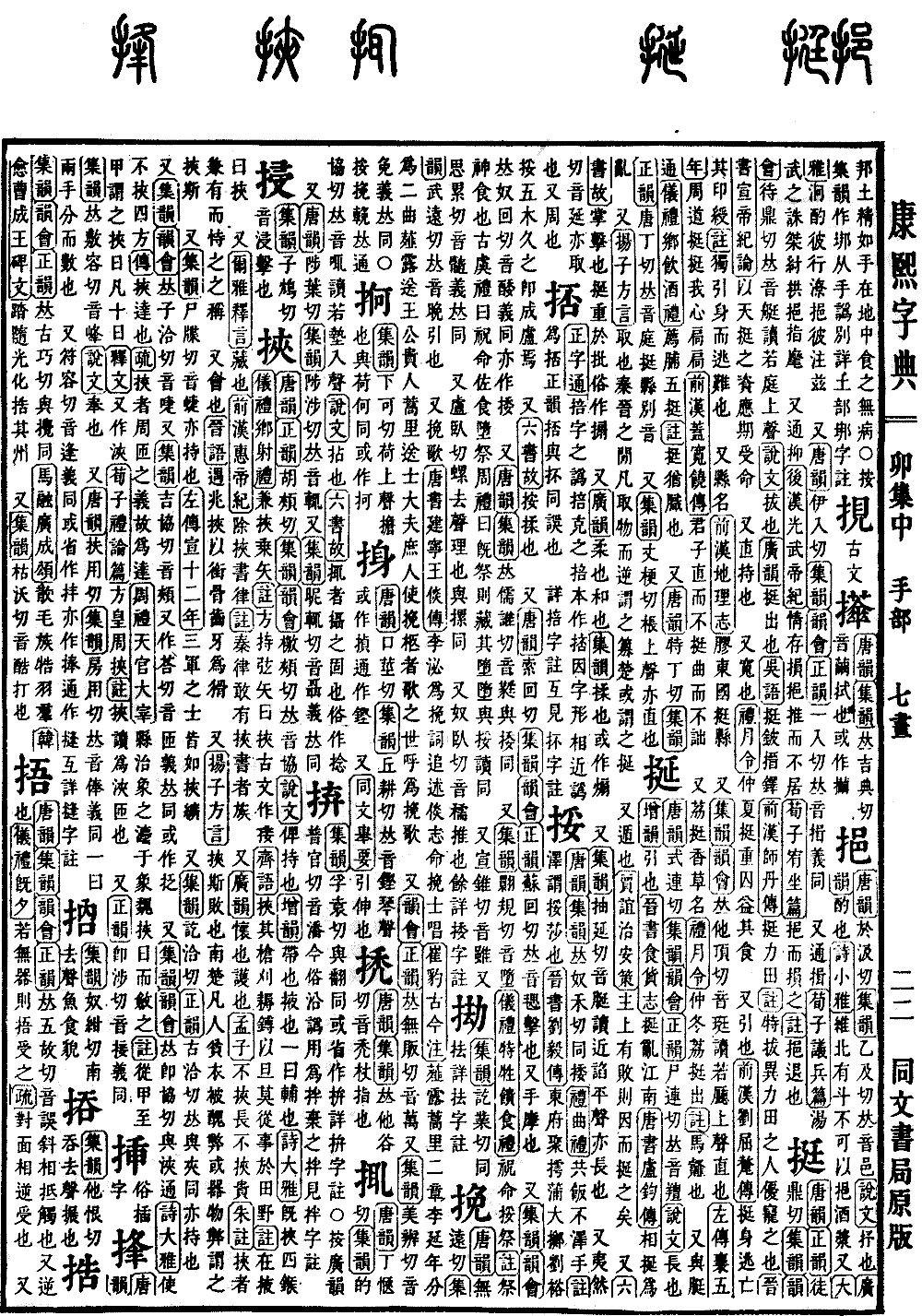
Mao Collection, Middle Volume
Radical: Hand (shǒu)
Kangxi stroke count: 11
Page 432, Entry 22
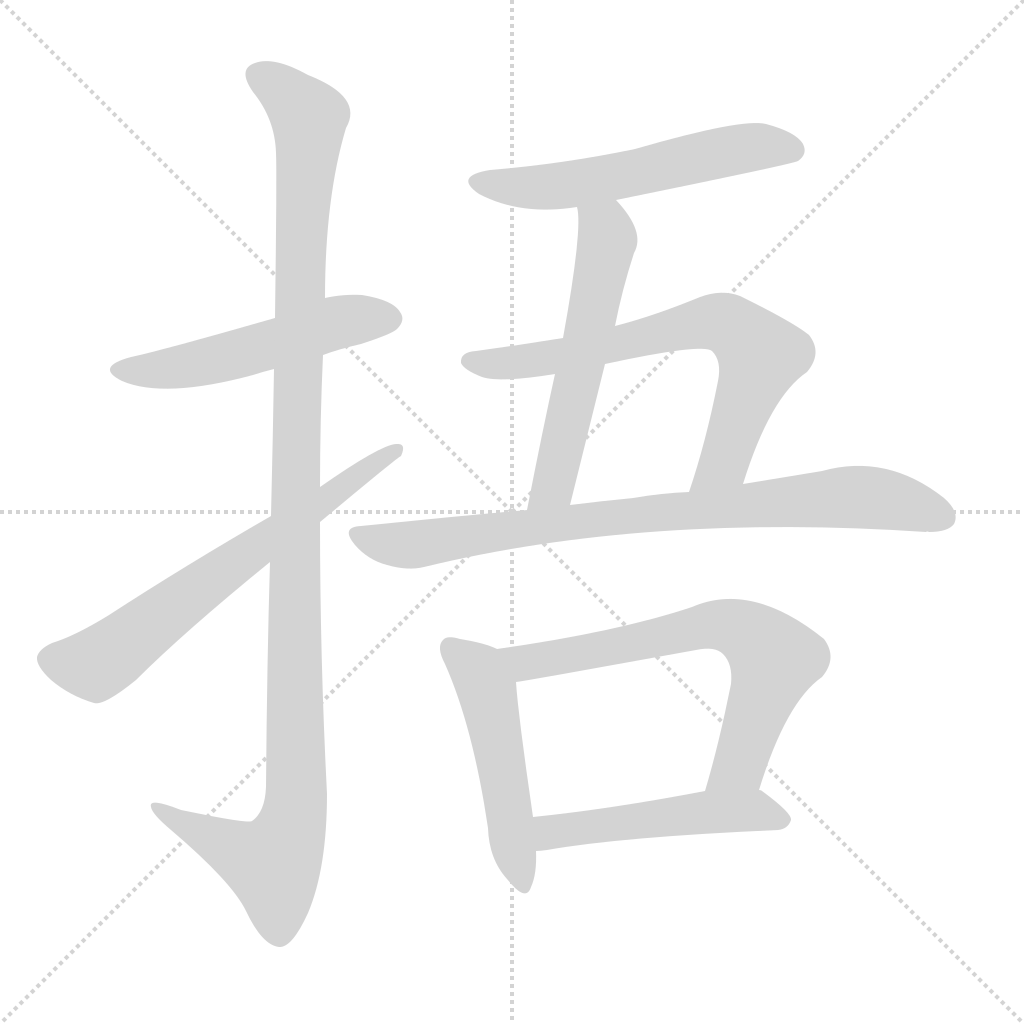
Pronounced wu (falling tone). To clash obliquely. Also, to go against or oppose. In the Book of Etiquette and Ceremonial (Yili), under the section on mourning rites (Jixi): If there are no vessels, then receive them with opposing hands. The commentary notes: This means to receive something while facing it in opposition. It also means to prop up at an angle. In the General Refinements (Tongya), it is stated: Zhiwu means to prop up or support, similar to resisting or opposing. The Records of the Grand Historian (Shiji), in the biography of Xiang Ji, states: None dared to resist. The commentary notes: To prop with a small pillar is zhi, to prop at an angle is wu; it should be written as wu. Also, in the Book of Han (Hanshu), in the appraisal for the biography of Sima Qian, it is stated: Or there is resistance. The commentary notes: Di means to touch or strike; wu means to prop up and feel uneasy. It is also common for the term for resisting or opposing to be erroneously written as diwu. For further details, see the entry for the character wu. In the Collected Rhymes (Jiyun), it is sometimes written as the variant form.