Shen Collection, Lower Volume
Radical: Clothing (yī)
Kangxi stroke count: 11
Page 1114, Entry 10
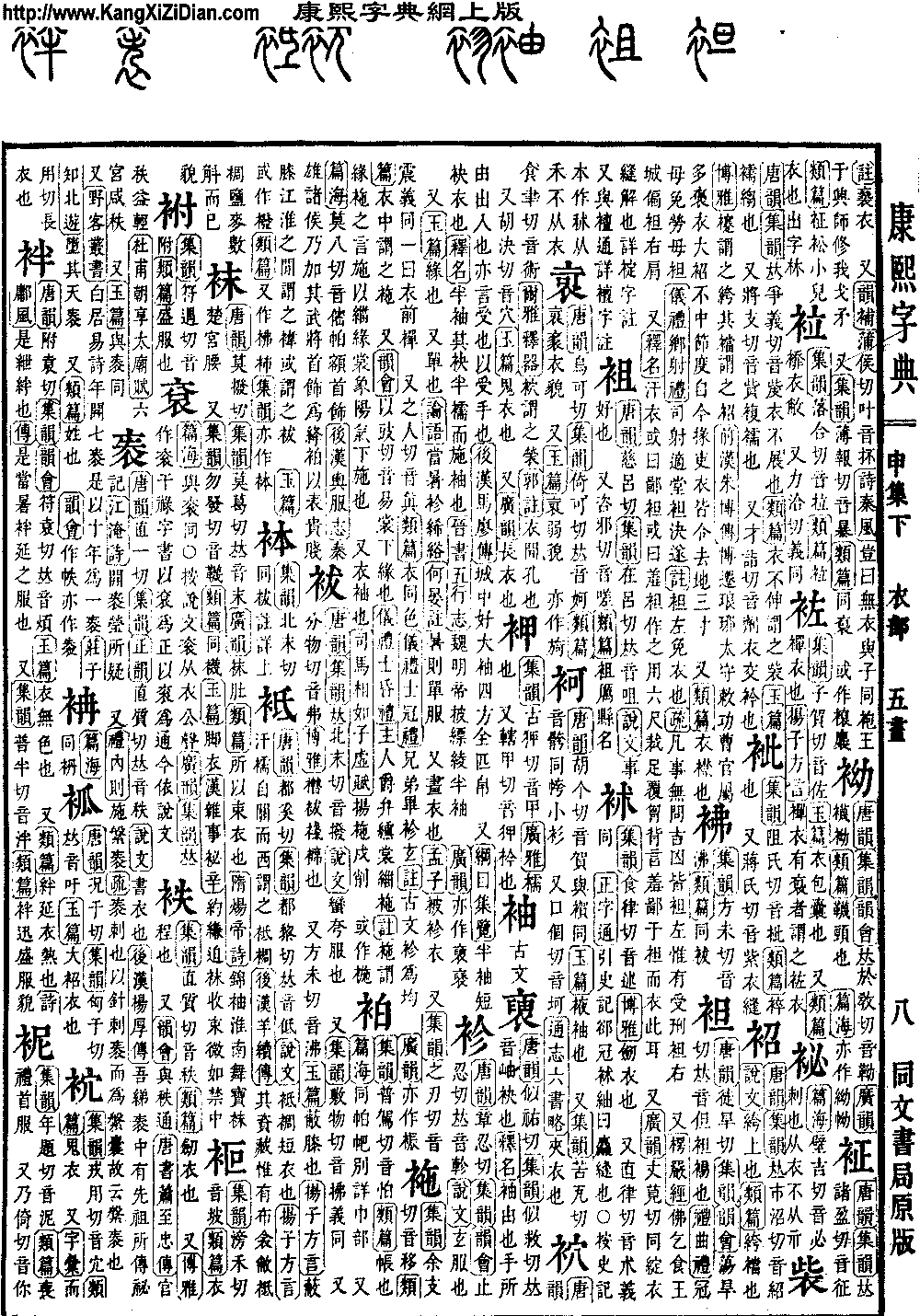
Pronounced dan (falling tone). Pronounced dan (falling tone). The reading is the same as dan (falling tone). It refers to exposing the body. Book of Rites (Liji), Rites of the Music Bureau: When wearing mourning clothes, one does not remove the cap; when performing labor, one does not expose the body. Ceremonial Rites (Yili), Archery Rites of the Localities: The archery master walks to the west of the hall, exposes the left arm, puts on a thumb ring, and wears sleeve protectors. Commentary: Tan refers to removing the left sleeve. Sub-commentary: In all formal activities, whether auspicious or inauspicious, one exposes the left arm; only when undergoing punishment does one expose the right arm. Also, in the Shurangama Sutra: When the Buddha was begging for food in the city, he specifically exposed his right shoulder. Also, Explaining Names (Shiming): An undershirt (hanyi) is called by some a shame-covering garment (bitan) and by others a shame-garment (xiutan); it is made by cutting six feet of cloth to cover the chest and back, implying that one wears it because one is ashamed to be exposed. Also, Pronounced zhan (falling tone). Same as zhan (to burst/unravel), referring to clothing seams splitting. See the detailed entry for the character zhan. Also synonymous with tan. See the detailed entry for the character tan.
Textual Research Note: Ceremonial Rites (Yili), Archery Rites of the Localities: The archery master walks to the hall, exposes the left arm, puts on a thumb ring, and wears sleeve protectors. Commentary: Tan refers to removing the left sleeve. Note: According to the original text, the word west should be added after the word hall.