Wei Collection, Middle Volume
Radical: Ear (ěr)
Kangxi Strokes: 22
Page 178, Entry 01
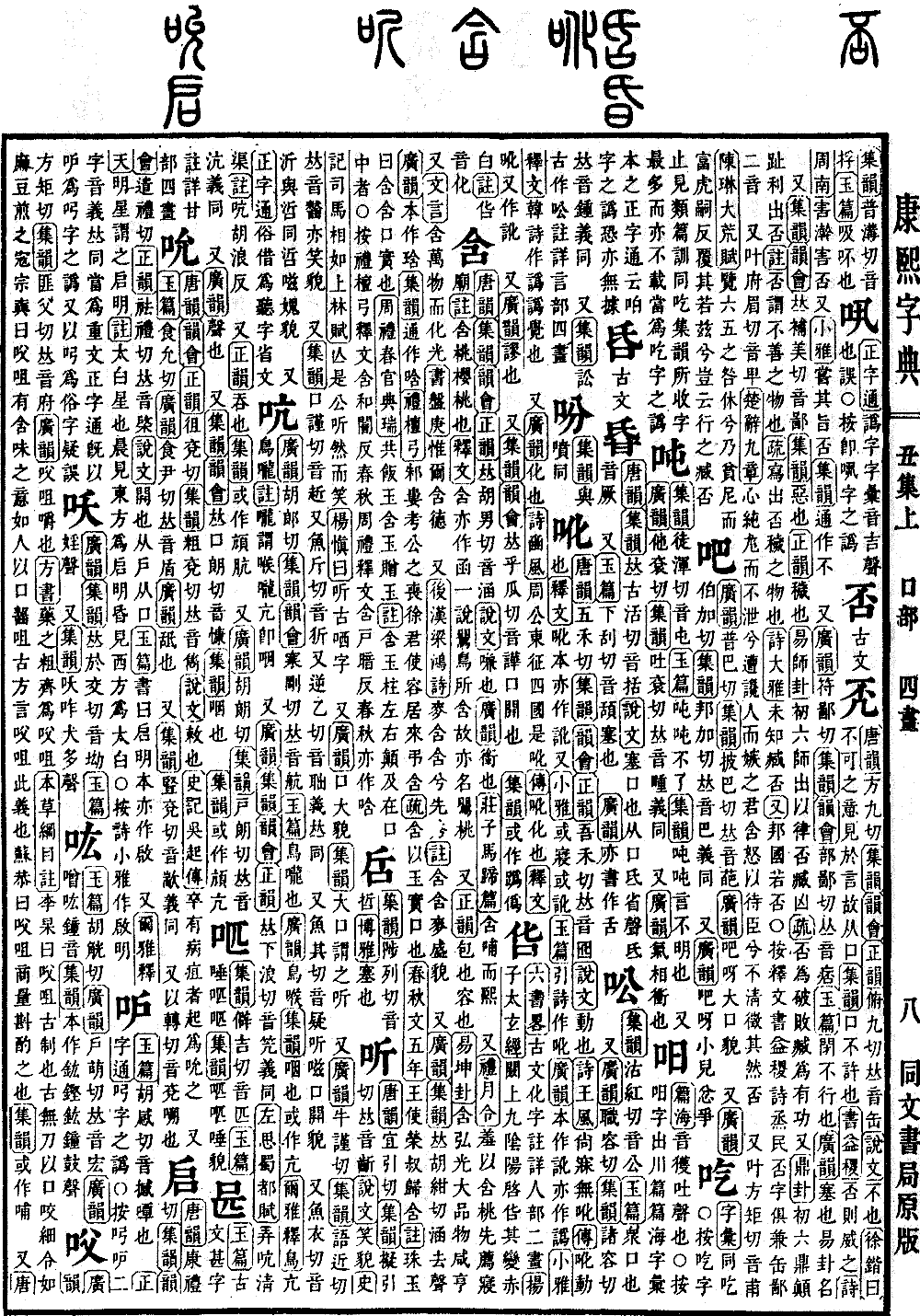
Ancient form. Wide Rhymes (Guangyun), Collection of Rhymes (Jiyun), Rhyme Meetings (Yunhui), and Correct Rhymes (Zhengyun) state the pronunciation is ting. According to the Explaining Graphs and Analyzing Characters (Shuowen Jiezi), it means to listen. According to the Definitions of Names (Shiming), to listen is to be still; only when one is still can what is heard be accurate. According to the Book of Documents (Shangshu), when listening to virtue, one must be perceptive. According to the Book of Etiquette and Ceremonial (Yili), the instruction is given: respectfully and reverently listen to the words of your parents. Also, according to the Wide Rhymes (Guangyun), it means to wait for. It also means to accept. According to the Zuo Commentary (Zuozhuan), the Earl of Zheng went to Jin to accept the peace settlement; the commentary notes that to listen here means to accept. It also means to follow. According to the Book of Changes (Yijing), if one does not rescue those who follow, they will not withdraw and follow; the commentary explains that to listen means to follow. According to the Zuo Commentary (Zuozhuan), the daughter-in-law is affectionate and the wife is compliant. It also means to judge. According to the Book of Rites (Liji), the Minister of Justice clarifies the law to hear legal cases. According to the Rites of Zhou (Zhouli), for all minor administrative affairs of the state, the Grand Minister manages them. According to the History of the Former Han Dynasty (Qianshan Shu), there are five methods of judgment: the judgment of speech, the judgment of expression, the judgment of temperament, the judgment of the ears, and the judgment of the eyes. It also means to allow. According to the History of the Former Han Dynasty (Qianshan Shu), regarding the proposal for the people to move to vast lands, allow them to do so. It also means to spy. According to the Strategies of the Warring States (Zhanguoce), I request to spy on the situation in the east for the King; the commentary notes that to listen means to spy. Also, according to the Tang Rhymes (Tangyun), the Jiyun, and the Yunhui, it is pronounced ting. According to the Jiyun, it means to hear or to accept. The area in the middle of a courtyard is called a hall of affairs, meaning it is where affairs are received and legal cases are examined. The common form is written differently. Master Mao states that in the Han and Jin dynasties, the character was always written as listen; it was only from the Six Dynasties period onward that the radical for cliff was added. Also, in the Rhyme Supplements (Yunbu), it rhymes with the sound tang. In the poem by Su Zhe on reading the Daoist Canon, it is written: In the past when Huizi died, Zhuangzi laughed and mourned himself; the subtle words are no longer understood, and to whom should I speak so they might listen.