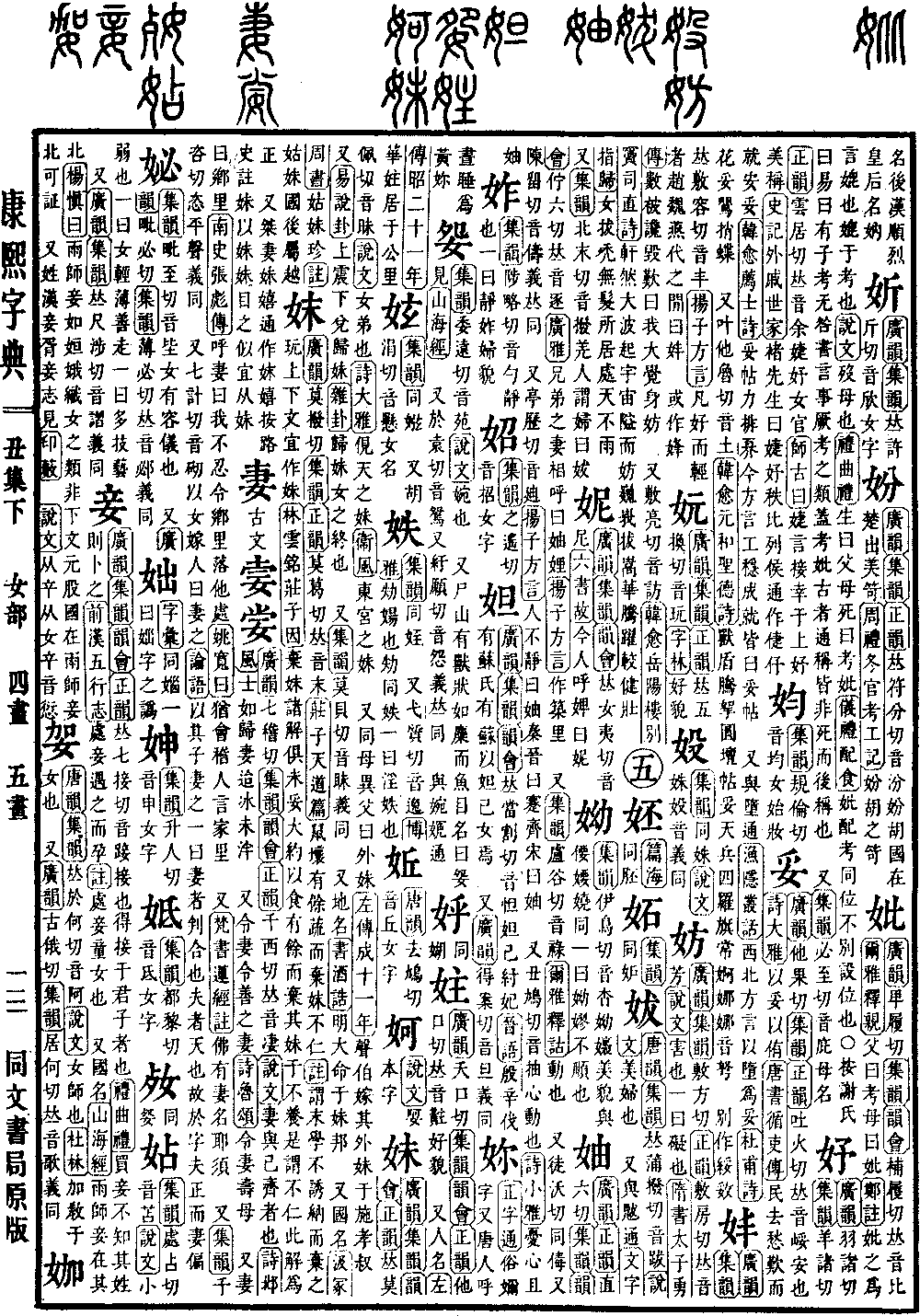
Chou Collection, Lower Volume
Radical: Woman (nǚ)
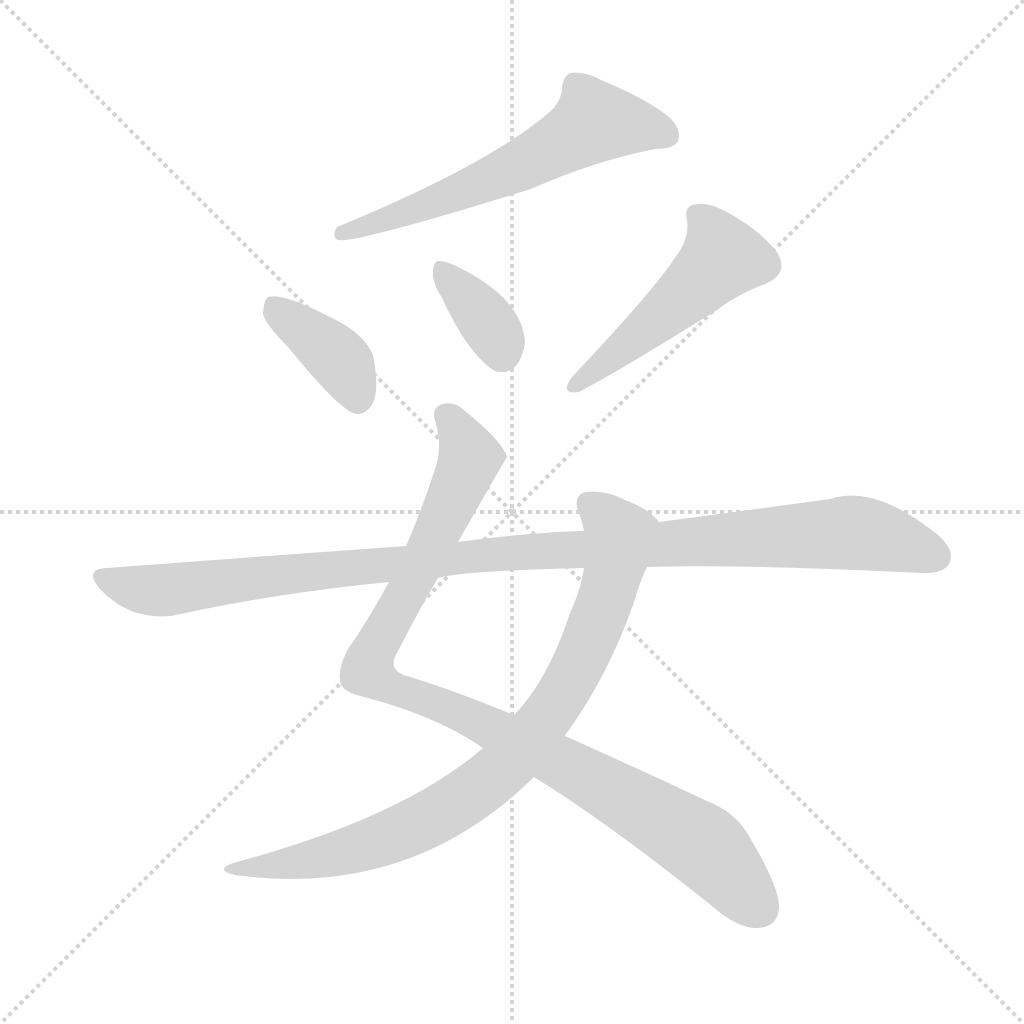
妥
Kangxi strokes: 7
Page 257, Entry 06
Guangyun: Pronounced tuo. Jiyun and Zhengyun: Pronounced tuo.
Peaceful or secure.
Book of Odes (Shijing): To be secure and to provide assistance.
History of the Tang (Tangshu), Biography of Benevolent Officials: The people moved from sighs of sorrow toward peace and security.
Han Yu, Poem on Recommending Scholars: Firm, stable, and powerful, pushing aside the arrogant.
In modern dialect, being skilled, stable, or completed is referred to as tuotie.
Also used interchangeably with the character for fall (duo).
Yuyin Conghua: In the northwest dialect, fall is written as tuo.
Du Fu, Poetry: The flower is secure, the oriole brushes against the butterfly.
Also rhyming as tu, pronounced tu.
Han Yu, Yuanhe Shengde Poetry: The beasts’ shields leap and grapple, the circular altar is stable and secure. The heavenly troops are arrayed on all sides, the banners wave gracefully. Na is pronounced nu.
Also written as sui.
The character originally followed the radical for tap (pu), which is the same.
Textual research:
Book of Odes (Shijing), Lesser Odes (Xiaoya): To be secure and to provide assistance. In accordance with the original text, Lesser Odes (Xiaoya) has been corrected from Greater Odes (Daya).