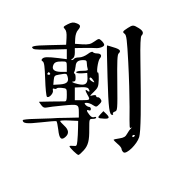
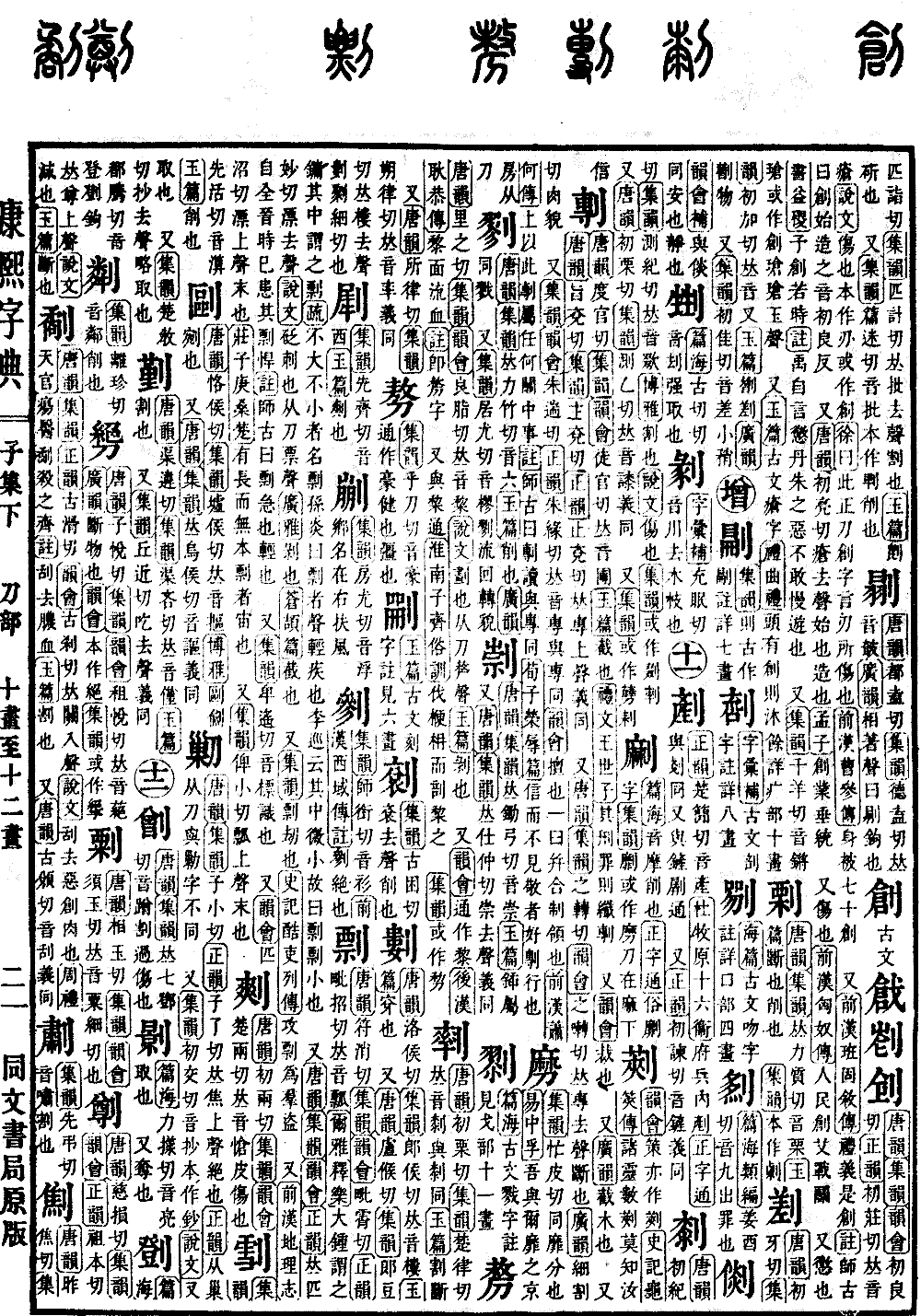
Zi Collection, Page Position: Lower. Radical: Knife (dao). Character: tuan. Kangxi stroke count: 13. Page 143, Number 19.
According to the Tang Phonology (Tangyun), Collected Rhymes (Jiyun), and Rhyme Collection (Yunhui), the pronunciation is the same as tuan. The Jade Chapters (Yupian) defines it as meaning to cut off or sever. As recorded in the Book of Rites (Liji): His offense is then finely severed.
Also, according to the Rhyme Collection (Yunhui), it means to judge or decide.
Also, according to the Broad Rhymes (Guangyun), it means to cut wood.
Also, according to the Tang Phonology (Tangyun), Collected Rhymes (Jiyun), and Correct Rhymes (Zhengyun), the pronunciation is the same as the rising tone of zhuan. The meaning is the same.
Also, according to the Tang Phonology (Tangyun), Collected Rhymes (Jiyun), and Rhyme Collection (Yunhui), the pronunciation is the same as the departing tone of zhuan. It means to hack or chop off. The Broad Rhymes (Guangyun) describes it as the appearance of cutting meat into fine pieces.
Also, according to the Collected Rhymes (Jiyun), Rhyme Collection (Yunhui), and Correct Rhymes (Zhengyun), the pronunciation is the same as zhuan. It is identical to the character zhuan. The Rhyme Collection (Yunhui) states it means to act on one's own authority. Another interpretation is to manage things collectively. As recorded in the Biography of Xiao He in the Book of Han (Hanshu): The Emperor thereby entrusted all matters of Guanzhong to him. A commentary by Yan Shigu states that the pronunciation is the same as zhuan. Also, as written in the Xunzi: One who is trustworthy but not respected is one who likes to act on their own authority.