Notes
Chou Collection
Radical: Enclosure (wéi)
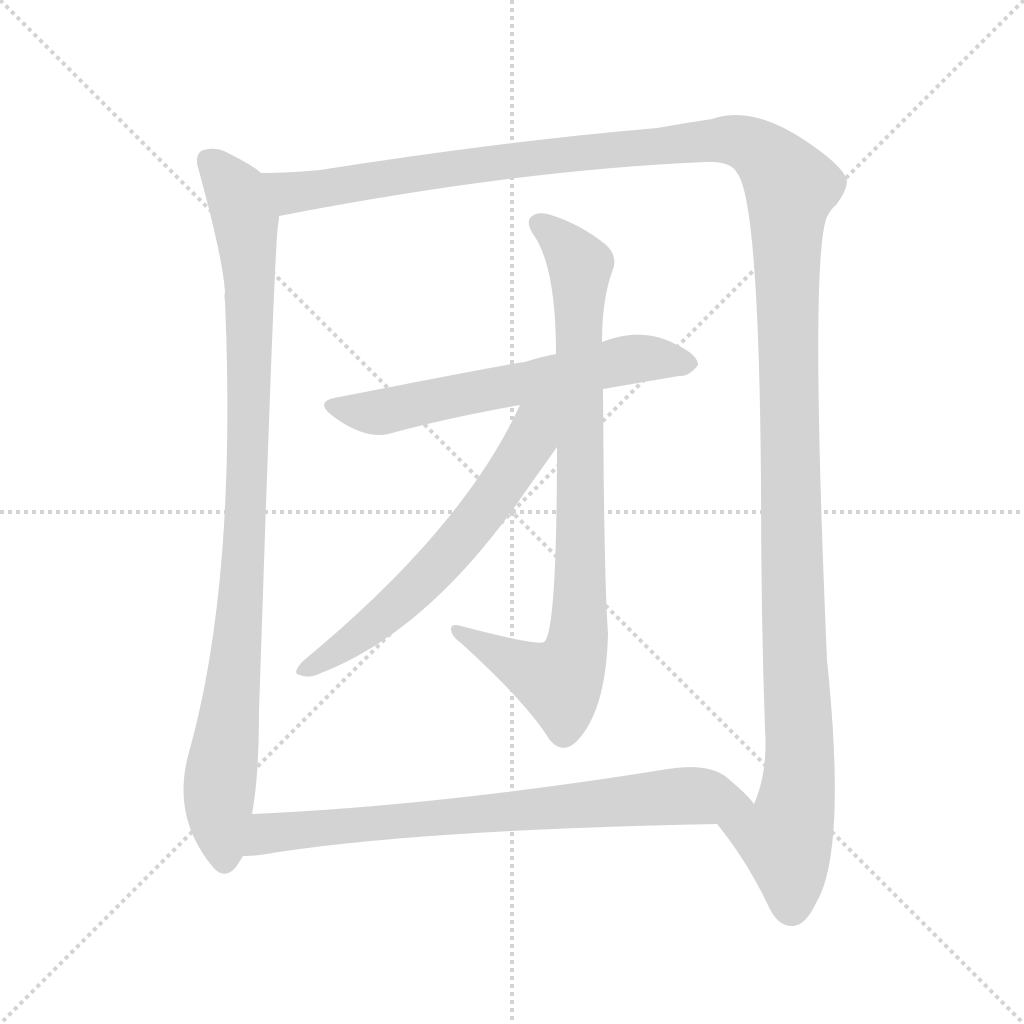
Tuán
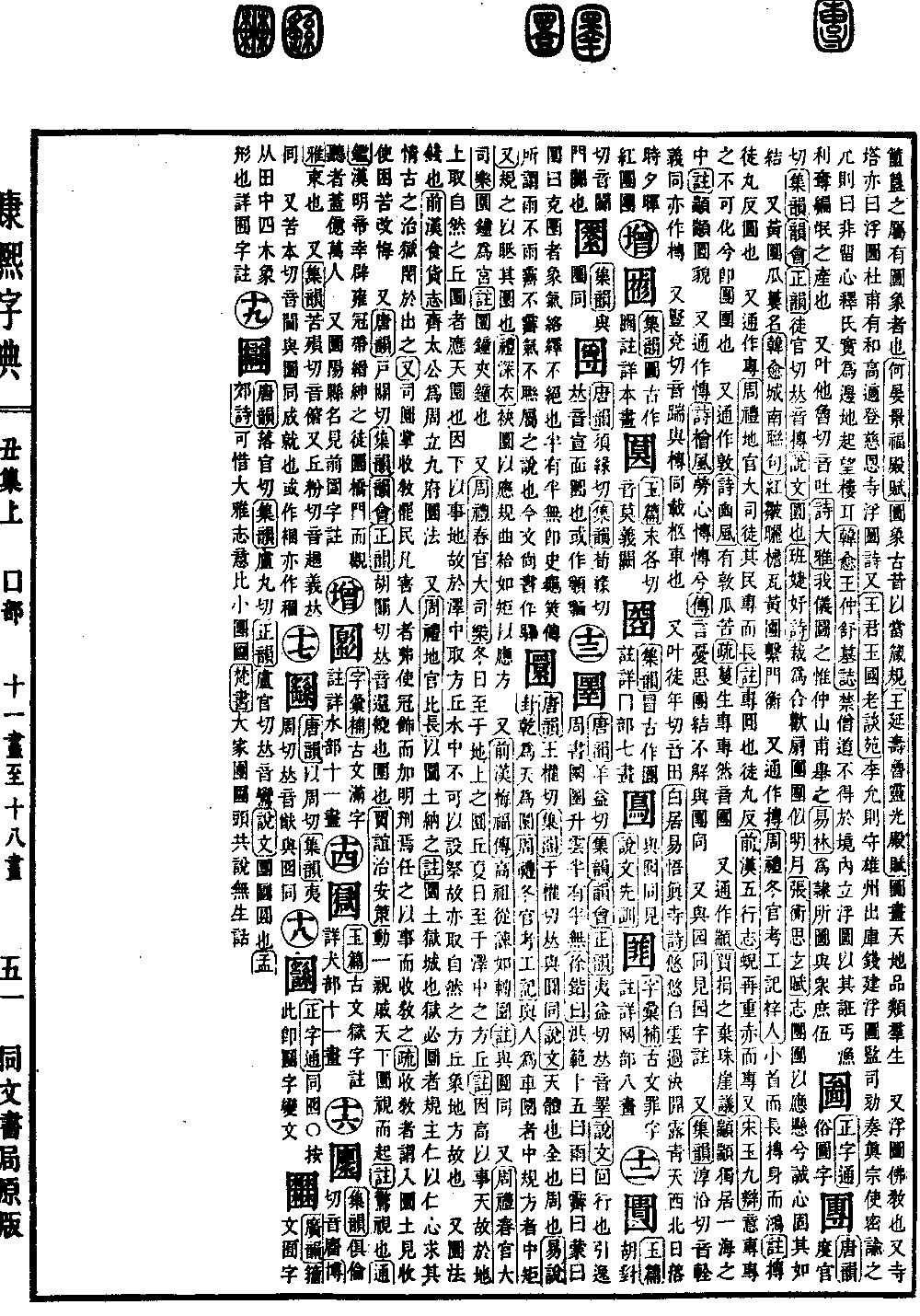
Kangxi Dictionary Strokes: 14
Page 221, Entry 01
Longkan
Pronounced qiú.
Tuán
Tangyun: Pronounced tuán.
Jiyun, Yunhui, Zhengyun: Pronounced bó.
Shuowen: To be round.
Ban Jieyu Poetry: Cut into the shape of a fan of joy, round like the bright moon.
Zhang Heng, Si Fu: Intentions are rounded like something suspended, sincerity is as firm as a knot.
Also, Huangtuán is an alias for the snake gourd.
Han Yu, Chengnan Lianju: Red wrinkled ones drying on the eaves tiles, yellow round ones hanging on the door frame.
Also used interchangeably with tuán (to knead).
Book of Rites, Winter Officer, Record of Tradesmen (Zhouli): The head is small and long, the body is round and large.
Commentary: The character is pronounced tuán. It means round.
Also used interchangeably with zhuān.
Book of Rites, Earth Officer, Great Director of Land (Zhouli): The people there are round and tall.
Commentary: Zhuān means round. It is pronounced tuán.
History of the Former Han, Treatise on the Five Elements: A rainbow with two layers, red and round.
Song Yu, Nine Arguments (Jiubian): The heart is focused and cannot be changed. This means round and concentrated.
Also used interchangeably with dūn.
Book of Odes, Odes of Bin (Shijing): There are round bitter gourds.
Commentary: The appearance of the vine growing in a round shape. Pronounced tuán.
Also used interchangeably with zhuān.
Jia Juanzhi, Proposal to Abandon Zhuya: Being round and isolated alone in the middle of the great sea.
Commentary: Zhuānzhuān means the appearance of being round.
Also used interchangeably with tuán (worried).
Book of Odes, Odes of Kuai (Shijing): The worried heart is rounded and knotted.
Commentary: Refers to worries and thoughts being gathered and unresolved. Same as tuán.
Also the same as yuán (garden/round). See the entry for the character yuán.
Jiyun: Pronounced quán. Meaning is the same. Also written as tuán.
Also pronounced chuài. Same as tuán. It refers to a carriage used for transporting coffins.
Also rhyming as tián.
Bai Juyi, Wuzhen Temple Poem: Floating white clouds drift past, breaking open to reveal the blue sky. When the sun sets in the northwest, the evening clouds are red and rounded.