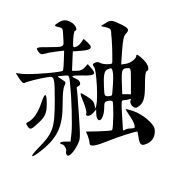
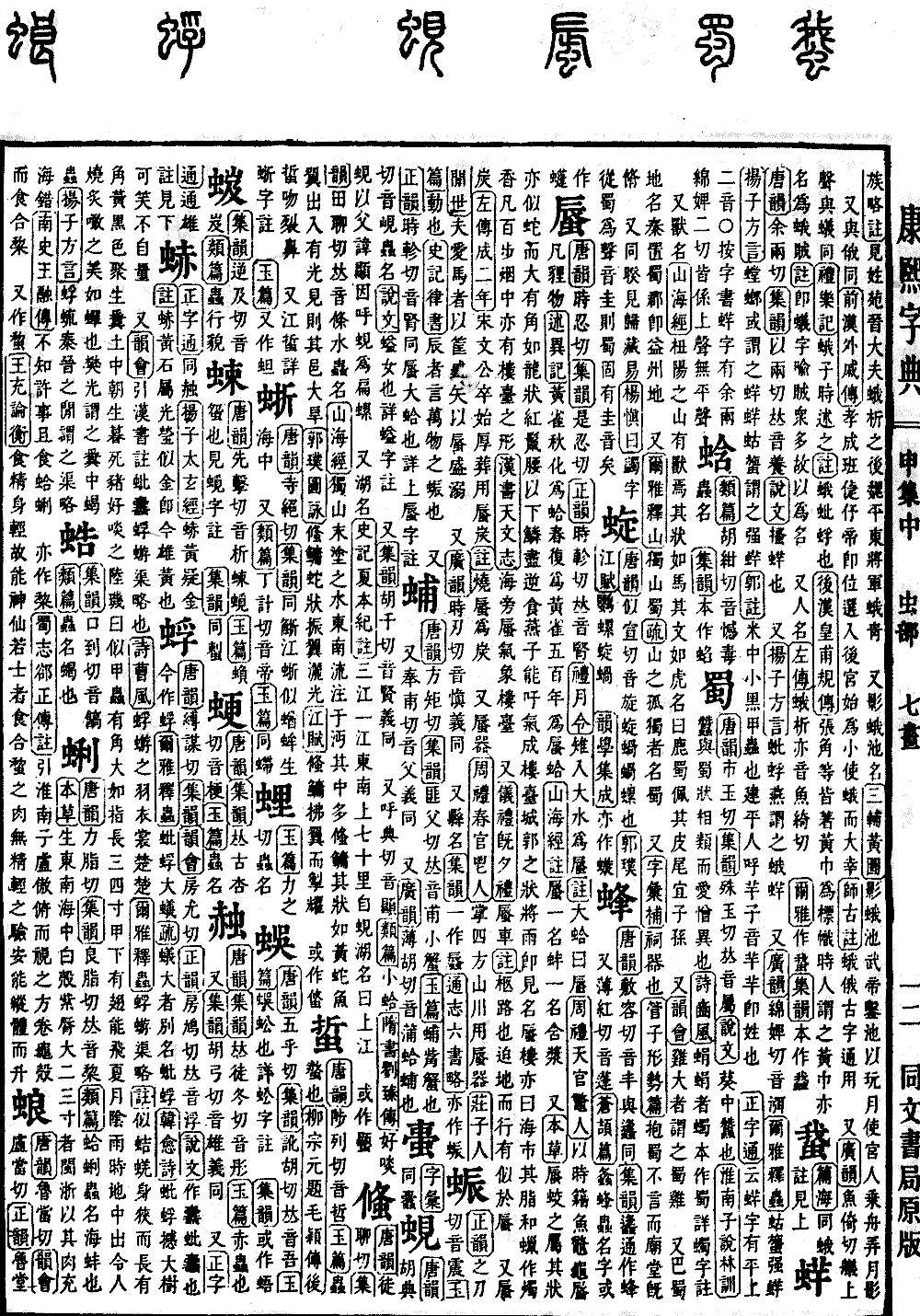
Shen Collection, Middle Volume. Radical: Insect (chóng). Kangxi Stroke Count: 13. Page 1084, Entry 01.
According to the Tang Dynasty Rhyme Dictionary (Tangyun) and the Collection of Rhymes (Jiyun), it is pronounced tong. According to the Jade Chapters (Yupian), it refers to a red insect. Furthermore, according to the Collection of Rhymes (Jiyun), it is pronounced xiong, with the same meaning. According to the Correct Meaning Through (Zhengzitong), it is a variant of the character for male (xiong). See the relevant entry for details.
According to the Broad Rhyme (Guangyun) and the Collection of Rhymes (Jiyun), it is pronounced tong. According to the Explaining Graphs and Analyzing Characters (Shuowen), it means red. According to the Pipe Master (Guanzi), Chapter on Earth Components (Diyuan Pian), the varieties include large sprouts and small sprouts, red stems with black ears, and long stalks. The commentary notes that this refers to a red color. According to the Jade Chapters (Yupian), it is the same as the previous entry. Furthermore, according to the Collection of Rhymes (Jiyun), it is pronounced rong. According to the Classified Compilation (Leipian), it refers to a red insect. Furthermore, according to the Collection of Rhymes (Jiyun), it is pronounced xiong, with the same meaning. According to the Supplement to the Dictionary (Zihui bu), it is an ancient form of the character for male (xiong). See the entry under Radical: Short-tailed bird (zhuī), four strokes, for detailed notes.