Si Collection, Lower Volume
Radical: Ox (niú)
Kangxi strokes: 16
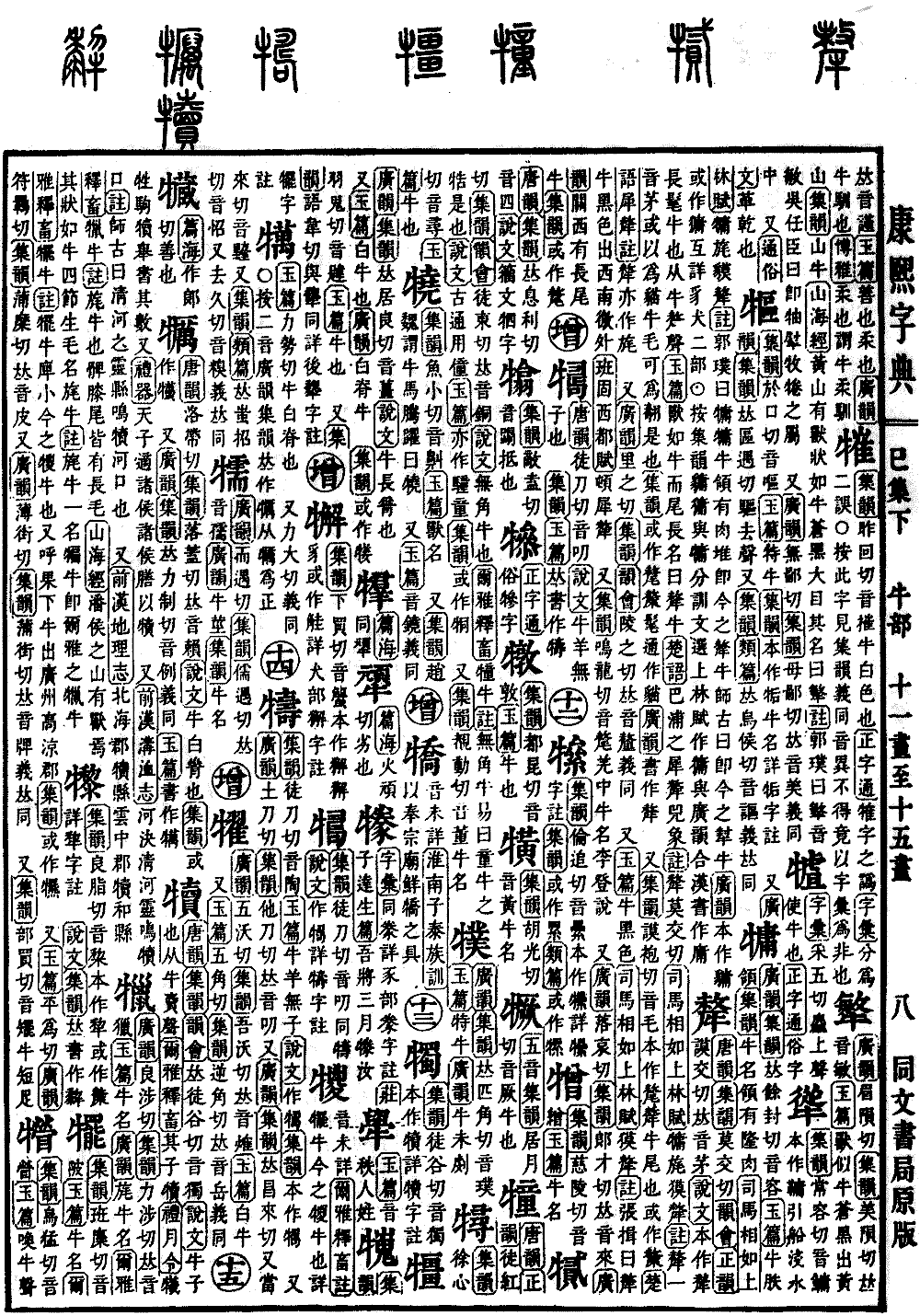
Page 704, Entry 17
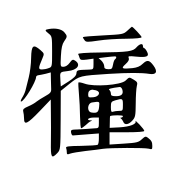
Pronounced tóng.
According to the Explanations of Characters and Phrases (Shuowen Jiezi), it refers to an ox without horns.
In the Erya (Erya), it is recorded as a hornless ox. The commentary notes that this refers to an ox lacking horns. The reference in the Book of Changes (Yijing) to a young ox with a wooden crossbar on its horns refers to this type of animal.
The Explanations of Characters and Phrases (Shuowen Jiezi) notes that in ancient times it was also commonly written as the character pronounced tóng.
According to the Jade Chapters (Yupian), it is also written as the character pronounced tóng.
The Collected Rhymes (Jiyun) notes that some editions record it with a variant character form.
Additionally, according to the Collected Rhymes (Jiyun), it is pronounced dǒng. This also refers to a specific name for an ox.