Wu Collection, Upper Volume
Radical: Jade (yù)
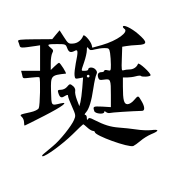
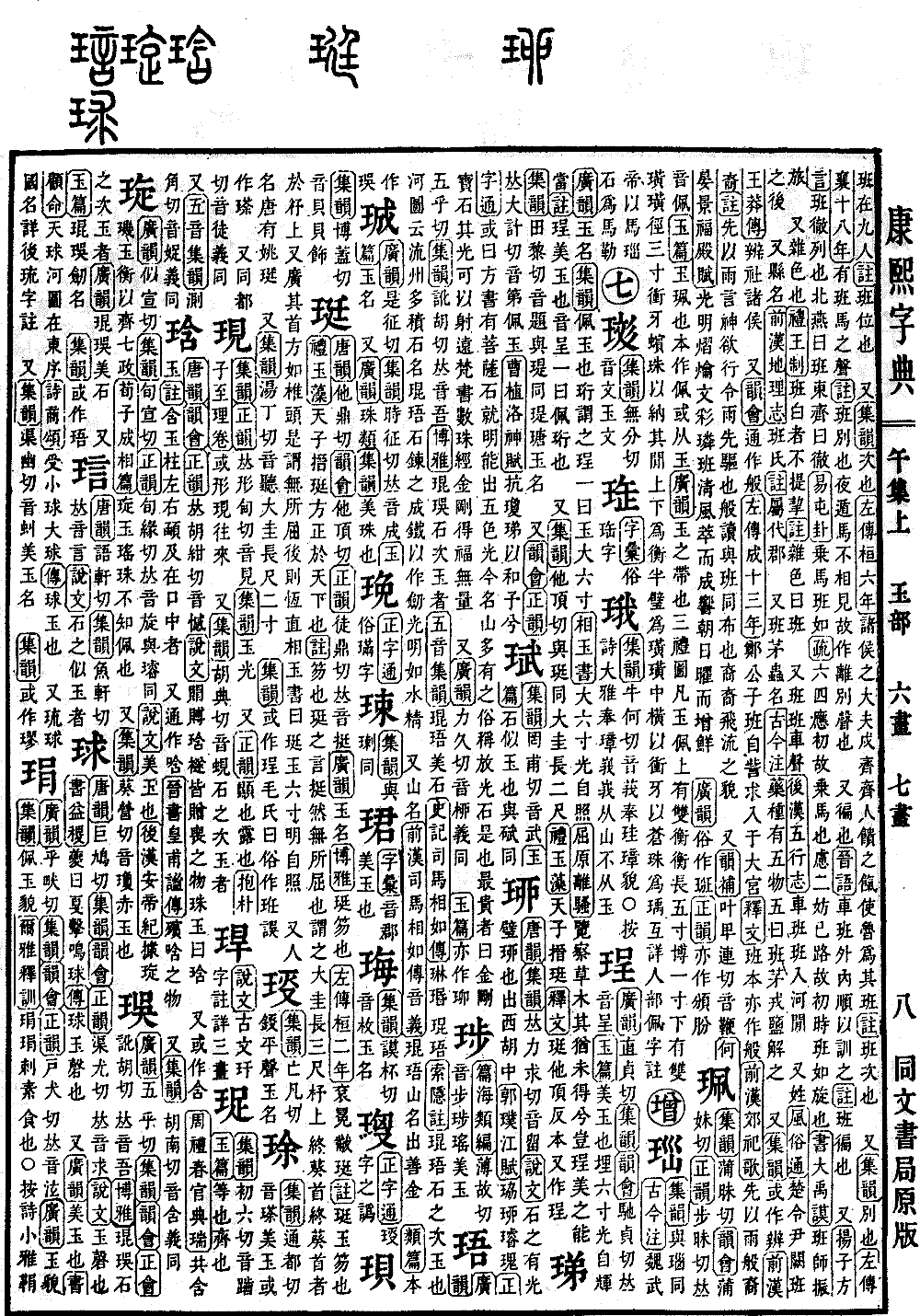
珽
Kangxi stroke count: 12
Page 732, Entry 19
Pronounced tǐng.
Pronounced tǐng.
Pronounced tǐng.
In Tang Rhymes (Tangyun), the sound is ting. In Rhyme Meetings (Yunhui), the sound is ting. In Correct Rhymes (Zhengyun), the sound is ting. All are pronounced tǐng.
According to Broad Rhymes (Guangyun), a type of jade.
According to Extensive Elegance (Boya), a tablet held by officials during court audiences.
According to Commentary of Zuo (Zuozhuan), under the second year of Duke Huan: Robes, ceremonial caps, embroidered garments, and tablets.
The commentary states: A jade tablet.
According to Book of Rites (Liji), in the Jade Bead section: The Son of Heaven tucks the jade tablet into his belt, signifying rectitude before the world.
The commentary states: A tablet. The word ting implies standing upright without bending. It is called a great jade, three feet in length, with a head shaped like a wooden hammer. The head is wider than the shaft, square like a pestle, which is why it is said to never bend and always remain straight. The Book of Examining Jade (Xiangyushu) states: The jade tablet is six inches long and clear enough to reflect one's image.
Also used as a personal name. During the Tang dynasty, there was Yao Ting.
Also, according to Collected Rhymes (Jiyun), pronounced tīng. A great jade, one foot two inches in length.
According to Collected Rhymes (Jiyun), sometimes written as a variant form (chéng).
Mr. Mao states: The common form written with the characters for king and mission is incorrect.