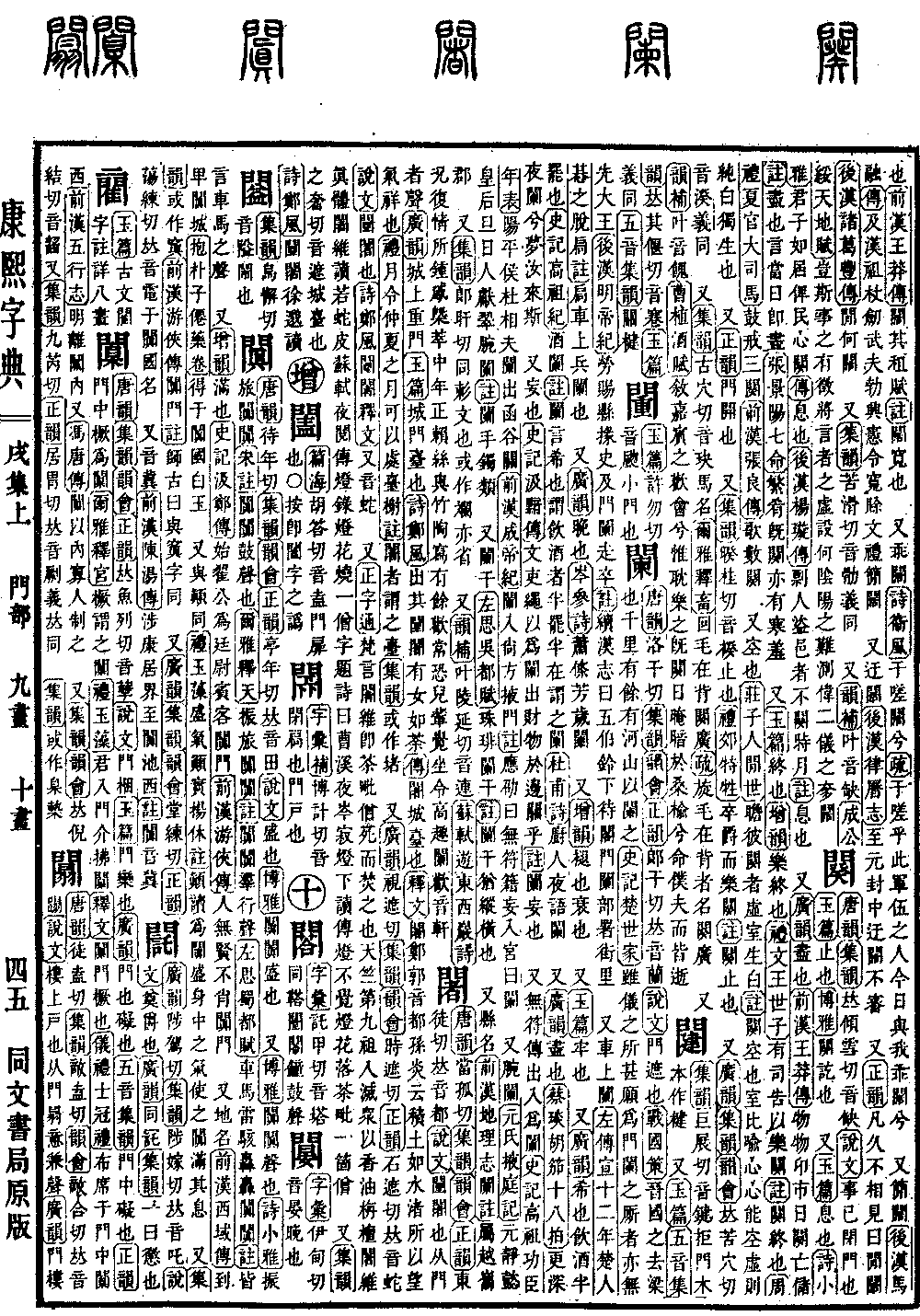
Xu Collection, Upper Volume
Radical: Gate (mén)
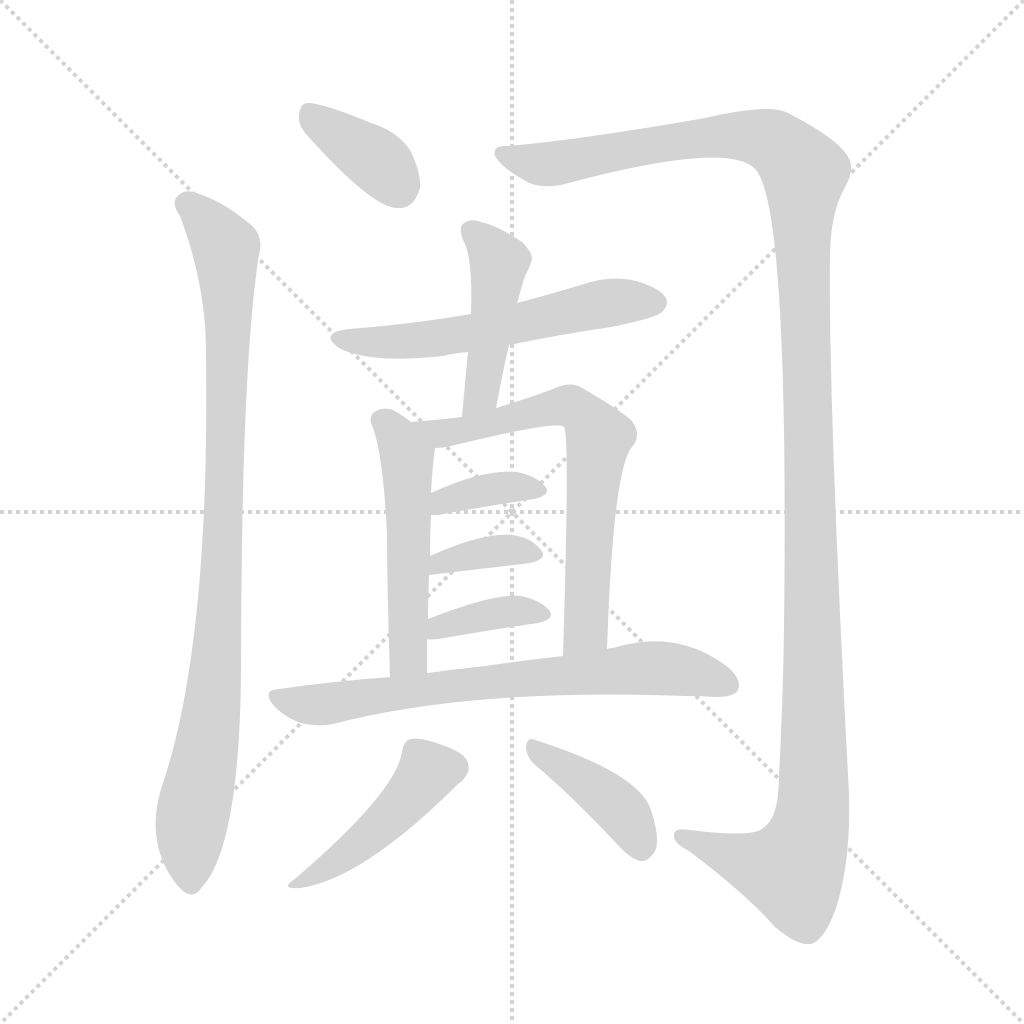
Tian
Kangxi strokes: 18
Page 1339, Entry 01
Pronounced tian
Shuowen Jiezi (Explanation of Simple and Compound Characters): Abundant.
Guangya (Expanded Glossary): Tian-tian means abundant.
Also from Guangya: Tian-tian refers to sound.
Book of Odes (Shijing), Lesser Odes: The troops march in order, tian-tian.
Zhu Xi’s commentary: Tian-tian refers to the sound of drums.
Erya (Approaching Elegance), Interpretation of Heaven: The troops march in order, tian-tian.
Commentary: Tian-tian is the sound of a group marching.
Zuo Si, Rhapsody on the Capital of Shu (Shu Du Fu): Chariots and horses thunder in alarm, rumbling and tian-tian.
Commentary: Both refer to the sound of chariots and horses.
Zeng Yun (Supplementary Rhyme Dictionary): To fill.
Records of the Grand Historian (Shiji), Biography of Ji and Zheng: When Di Gong was minister of justice, guests filled the doorway.
History of the Former Han (Qian Hanshu), Biography of Knights-Errant: People, whether worthy or unworthy, filled the doorway.
Place name.
History of the Former Han (Qian Hanshu), Account of the Western Regions: Arrived at Tian City.
Baopuzi (Master Who Embraces Simplicity), Scroll on Immortal Medicines: Obtained white jade from the country of Yutian.
Also used interchangeably with the character dian.
Book of Rites (Liji), Jade Pattern: Controlling the spirit and filling the body, raising the graceful. Commentary: Dian is read as tian. It means to fill the body with breath, causing one's breath to be full and satisfied.
Jiyun (Collection of Rhymes): Sometimes written as a variant form.
History of the Former Han (Qian Hanshu), Biography of Knights-Errant, commentary on tian-men: Shigu said it is the same as the character.
Pronounced dian
Yutian, a country name.
Also pronounced ji
History of the Former Han (Qian Hanshu), Biography of Tang: Crossed the border of Kangju and arrived west of Tianchi.
Commentary: Tian is pronounced ji.