Wei Collection, Middle Volume
Radical: Silk (mì)
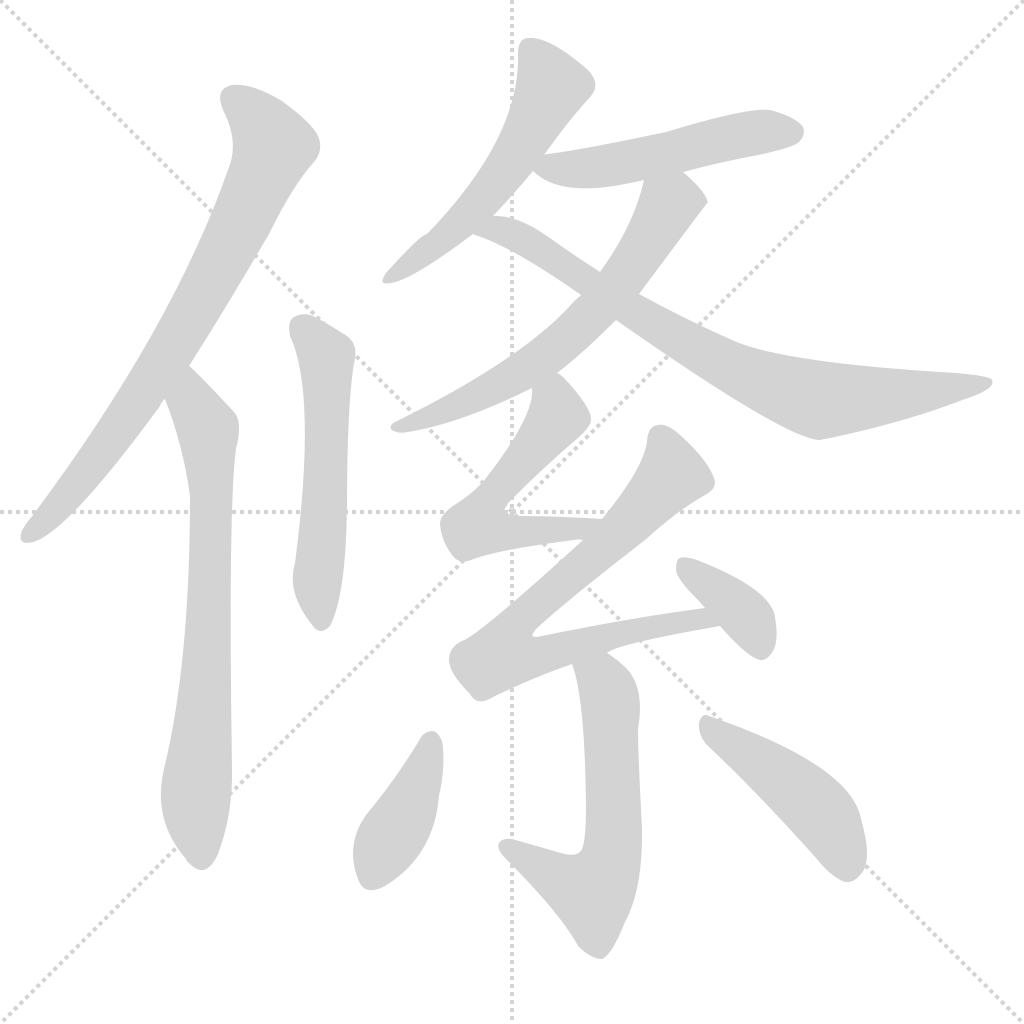
Tao
Kangxi strokes: 12
Page 922, Entry 16
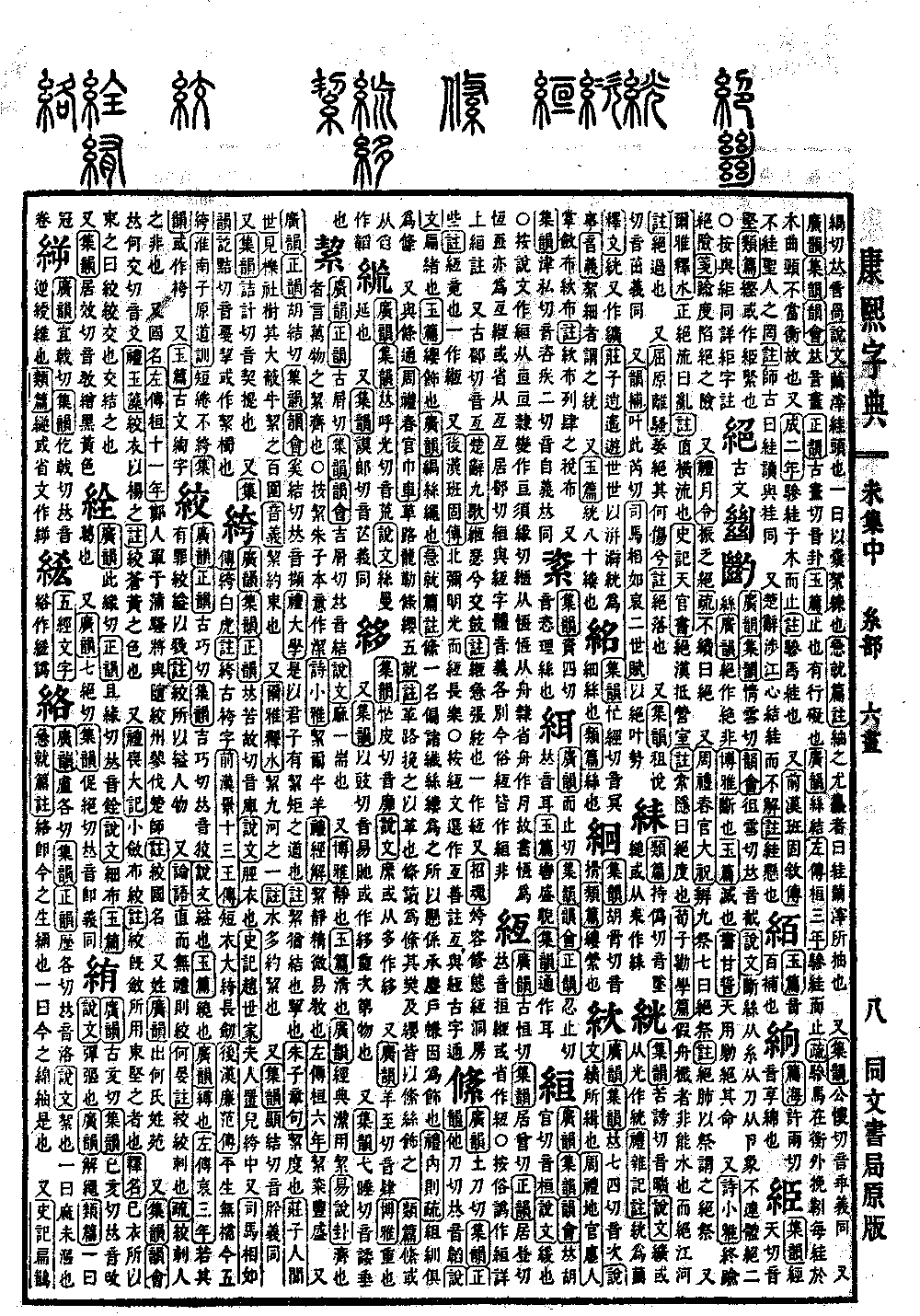
Guangyun (Broad Rhymes) says it is pronounced tao. Jiyun (Collected Rhymes) and Zhengyun (Standard Rhymes) say it is pronounced tao. Shuowen (Discussion of Writing) defines it as a flat cord. Yupian (Jade Compendium) defines it as a decorative tassel. Guangyun (Broad Rhymes) defines it as a braided silk cord. The commentary to the Jijiupian (Urgent Lessons) states that the tao is also called a pianzhu, made by weaving silk threads, and is used for hanging decorations on ceilings or doors as an ornament. The commentary to the Book of Rites (Liji), specifically the Internal Regulations section, notes that bands and cords are both forms of the tao. It is also used interchangeably with the character for branch or strip. The Rites of Zhou (Zhouli), specifically the section on the Ministry of Rites and the carriage official, mentions leather carriages with dragon-patterned bridles and tao-style tassels in five folds. The commentary explains that leather carriages were pulled by leather straps and that the character for branch should be read as tao, referring to the side straps and tassels, which were all decorated with silk tao cords. The Leipian (Classified Dictionary) notes that the character tao is sometimes written in a variant form using the element for scoop.