Wu Collection, Lower Volume
Radical: Grain (hé)
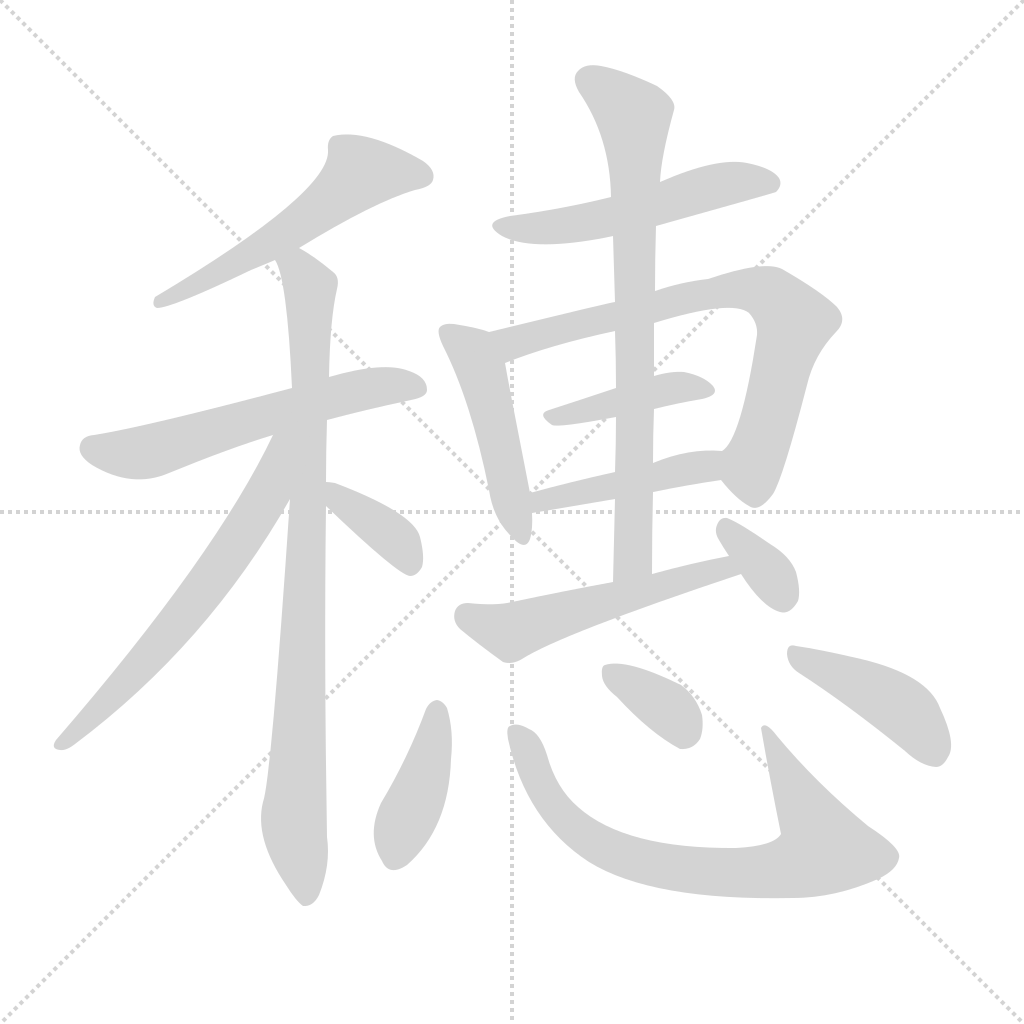
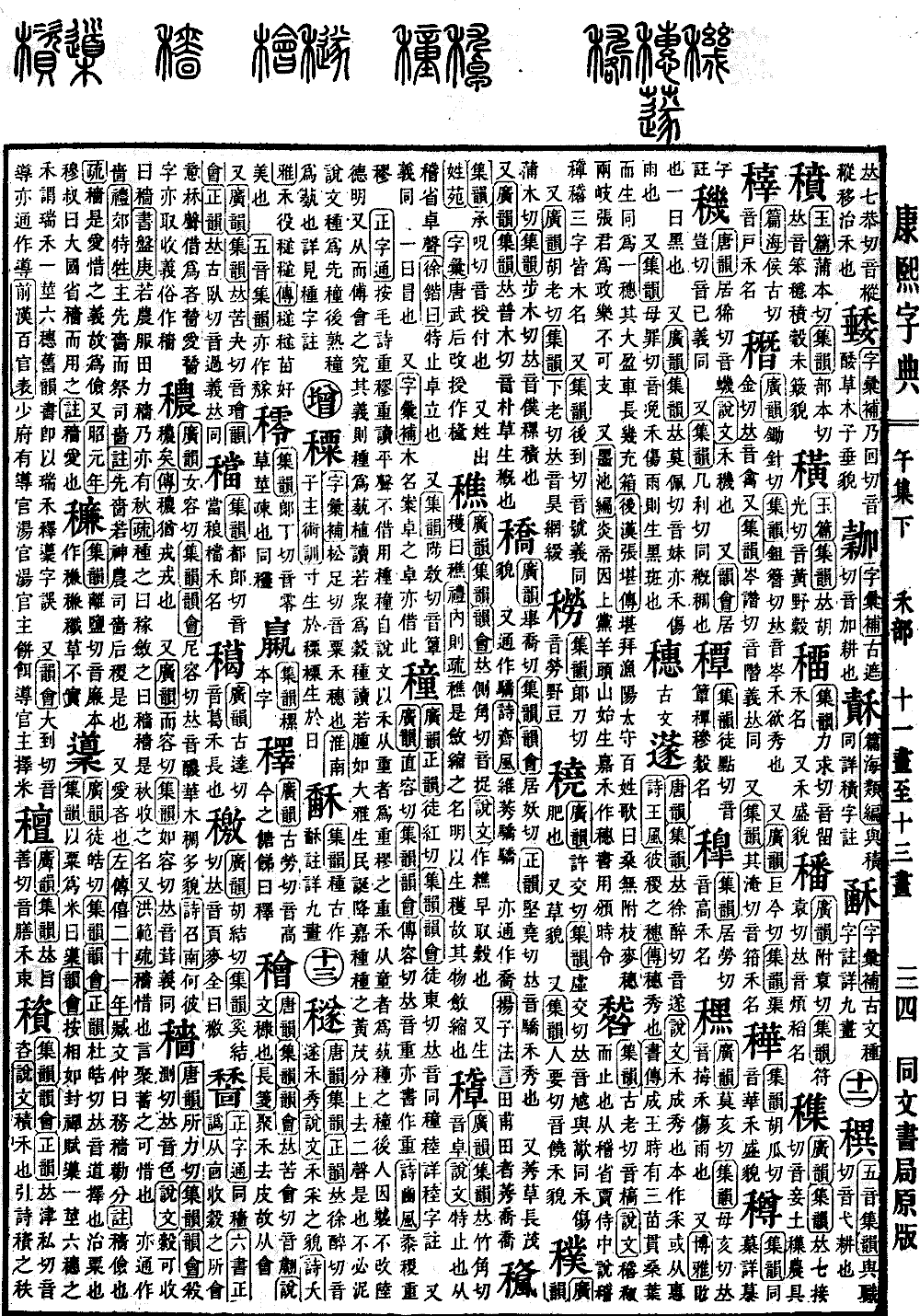
穗
Kangxi Dictionary strokes: 17
Page 860, Entry 19
Ancient form:
Tang Rhyme (Tangyun) and Collected Rhymes (Jiyun) state: pronounced sui (falling tone).
Shuowen Jiezi states: the maturation of grain ears. Originally written as the variant form. Sometimes also written with the character for benefit (hui).
Book of Odes (Shijing), Odes of Wang: That millet has ears. Commentary states: An ear (sui) is the flowering of the plant.
Book of Documents Commentary (Shuzhuan): During the time of King Cheng, there were three sprouts that grew through a mulberry leaf and formed a single ear; its size was large enough to fill a cart, and its length nearly filled a storage chest.
History of the Later Han (Hou Hanshu), Biography of Zhang Kan: When Kan was appointed Governor of Yuyang, the common people sang: The mulberry branches have no offshoots, the wheat ears are double-forked, Lord Zhang governs, and our joy is boundless.
Ink Pool Compilation (Mochi Bian): Emperor Yan (Yandi), because auspicious grain first grew on Mount Yangtou in Shangdang, created the ear-script (sui shu) to issue seasonal decrees.