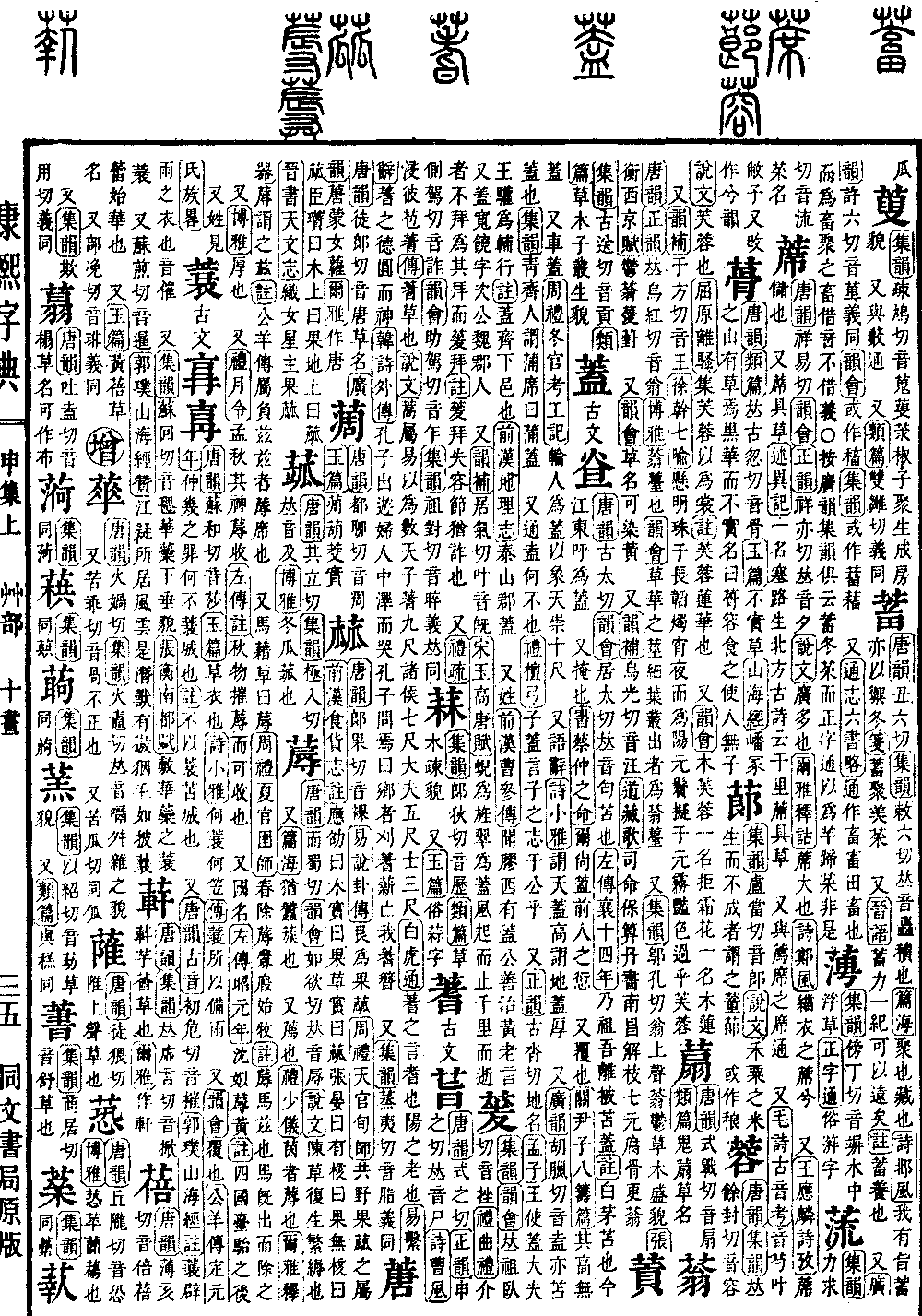
Shen Collection, Upper Volume
Radical: Grass (cǎo)
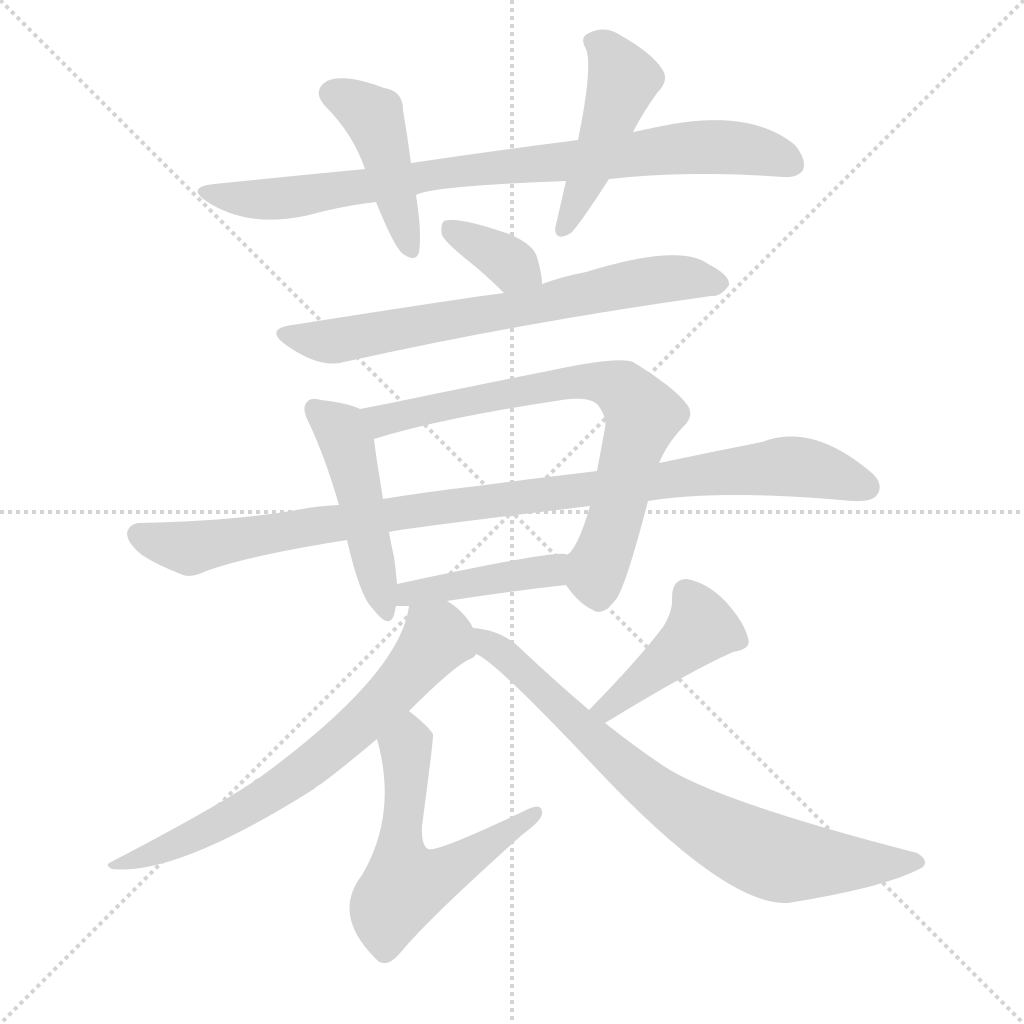
Suo; Kangxi stroke count: 16; Page 1051, Entry 23
Archaic form
Pronounced sha
Jade Collection (Yupian) refers to a raincoat woven from grass.
Book of Odes (Shijing), Lesser Odes of the Kingdom: Carrying a grass raincoat and a hat.
Commentary: A grass raincoat is an item used to protect against rain.
Also, Dictionary of Rhymes (Yunhui): It carries the meaning of covering.
Gongyang Commentary (Gongyang Zhuan), First Year of Duke Ding: Why was Zhongji's offense not covered like a city wall.
Note: Refers to not using a grass raincoat or straw mat to cover a city wall.
Also, Ancient Pronunciations of Tang Rhymes (Tangyun Guyin): Pronounced cui, same sound as cui.
Guo Pu, Commentary on Classic of Mountains and Seas (Shanhaijing): A grass raincoat is an item used to avoid rain; it is pronounced cui.
Also, Collection of Rhymes (Jiyun): Pronounced sai. It describes the appearance of flower stamens hanging downward.
Zhang Heng, Rhapsody on the Southern Capital (Nandu Fu): Spreading flowers and hanging stamens.
Also, pronounced xian.
Guo Pu, Encomium on Classic of Mountains and Seas (Shanhaijing): Where the Jiangyi resides, wind and clouds lie hidden. There is a beast called the Ao, whose fur looks as if it is wearing a grass raincoat.