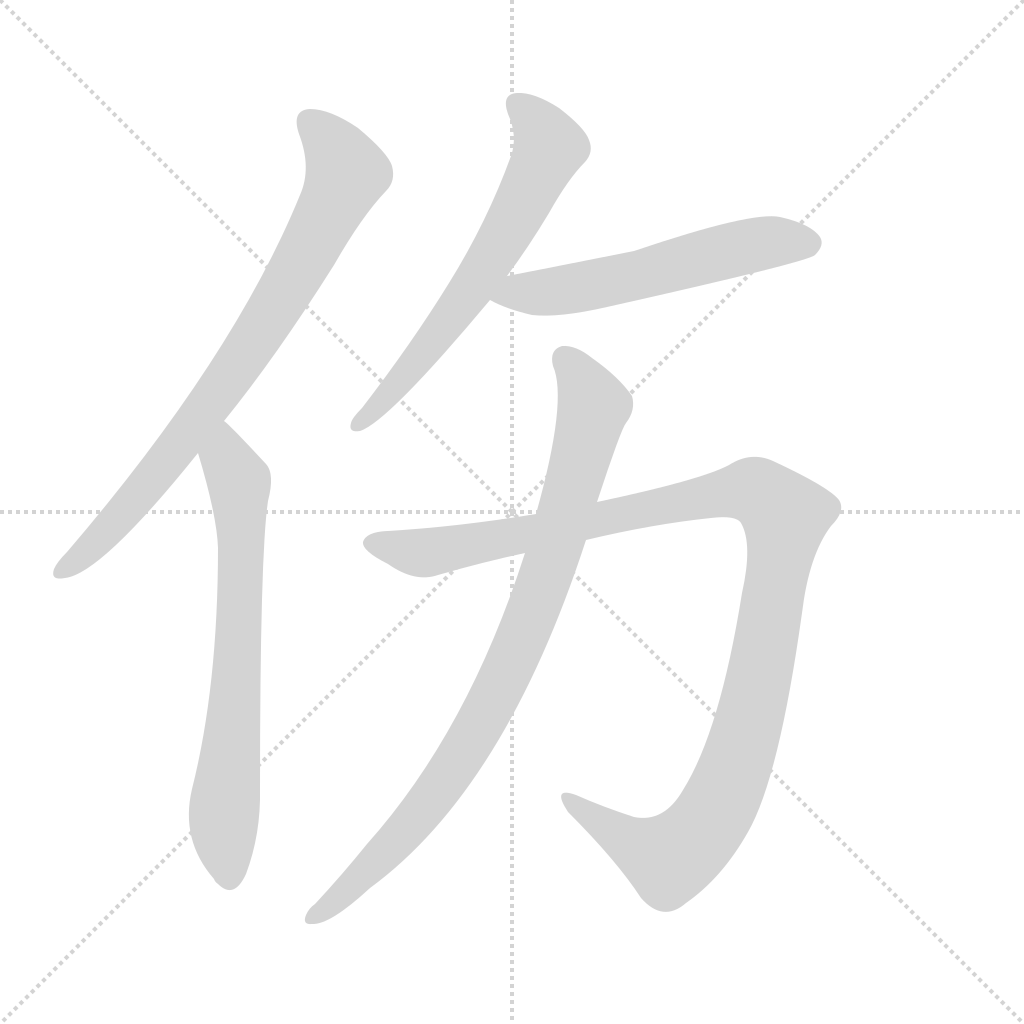
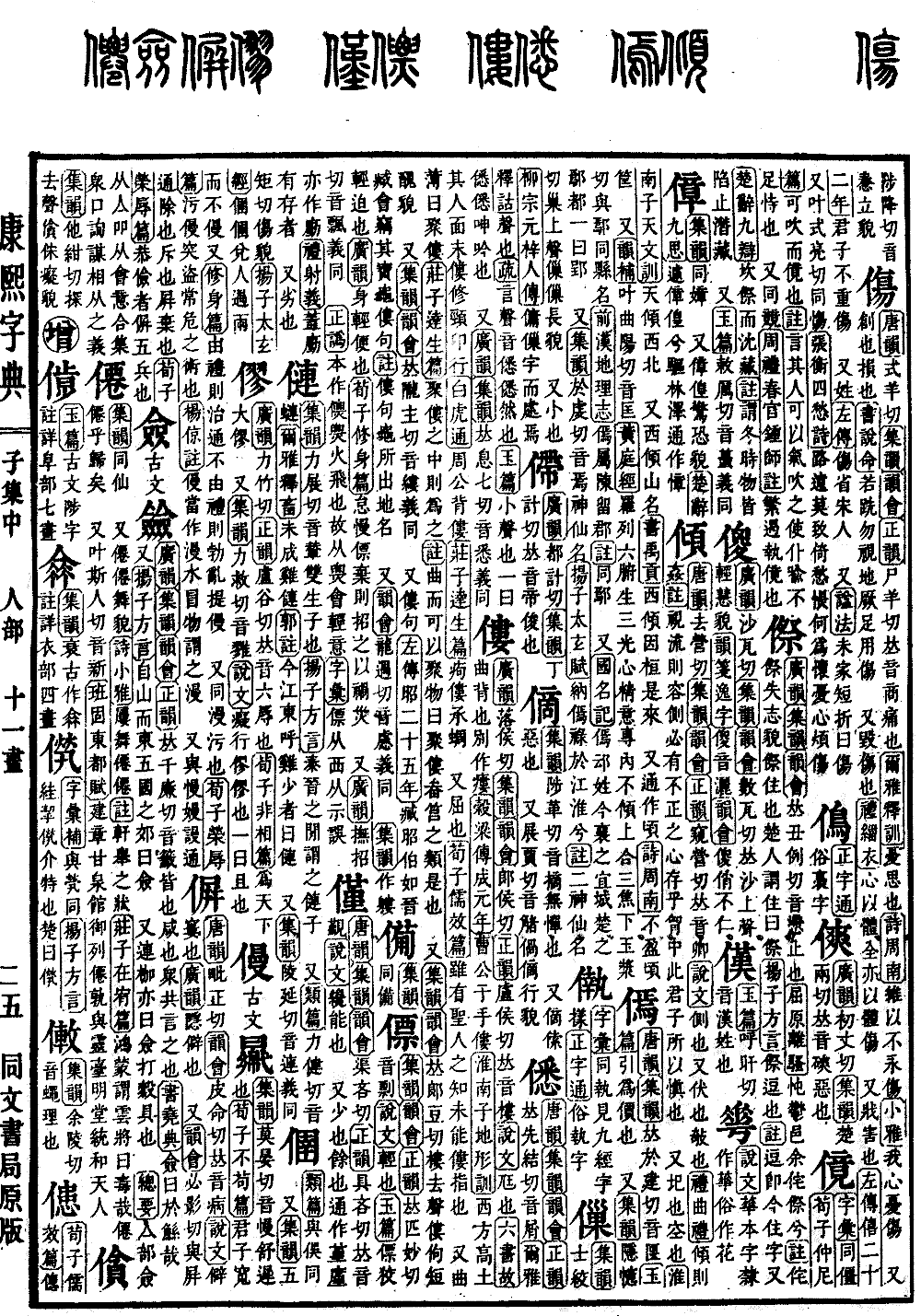
Zi Collection, Middle Volume. Radical: Person (rén). shāng. Kangxi strokes: 13. Page 115. According to the Tang Dictionary (Tangyun), the Collected Rhymes (Jiyun), the Rhyme Assembly (Yunhui), and the Correct Rhymes (Zhengyun), the pronunciation is shāng. The meaning is pain or aching. The Erya (Erya), in the section Explaining Ancient Words (Shigu), defines it as thinking with distress (shangsi). The Book of Odes (Shijing), in the section Odes of the South (Zhounan), states: only so as not to be distressed for long. The Minor Odes (Xiaoya) includes the sentence: my heart is grieved and distressed. It also refers to trauma, injury, or damage. The Book of Documents (Shujing), in the section The Charge to Yue (Yue Ming), states: if one goes barefoot without looking at the ground, his feet will be injured. It also has the meaning of to harm or defame. The Book of Rites (Liji), in the section The Black Robes (Ziyi), states: the mind is preserved by the body, and it is also harmed by the body. It also means to kill or inflict harm. The Commentary of Zuo (Zuozhuan), in the twenty-second year of Duke Xi, states: a gentleman does not wound an enemy twice. It is also a surname; the Commentary of Zuo records a person named Shang Xing from the State of Song. According to the Rules for Assigning Posthumous Names (Shifa): one who dies young before establishing a family is called shāng. It is also sometimes pronounced in a variant form (shì liàng), with the same meaning as distress (shāng). The Four Sorrows Poem (Sichou Shi) by Zhang Heng states: the road is long and I cannot reach her, leaning in disappointment; why should I harbor grief and a troubled mind? Textual research: In the section Explaining Instructions (Shixun) of the Erya, the definition was given as distressed thought (yousi); however, following the original text, the section is corrected to Explaining Ancient Words (Shigu) and the term is changed to thinking with distress (shangsi). In the Book of Documents, the section The Charge to Yue used the wording not looking (wù shì) at the ground; however, the original text is corrected to not looking (fú shì).