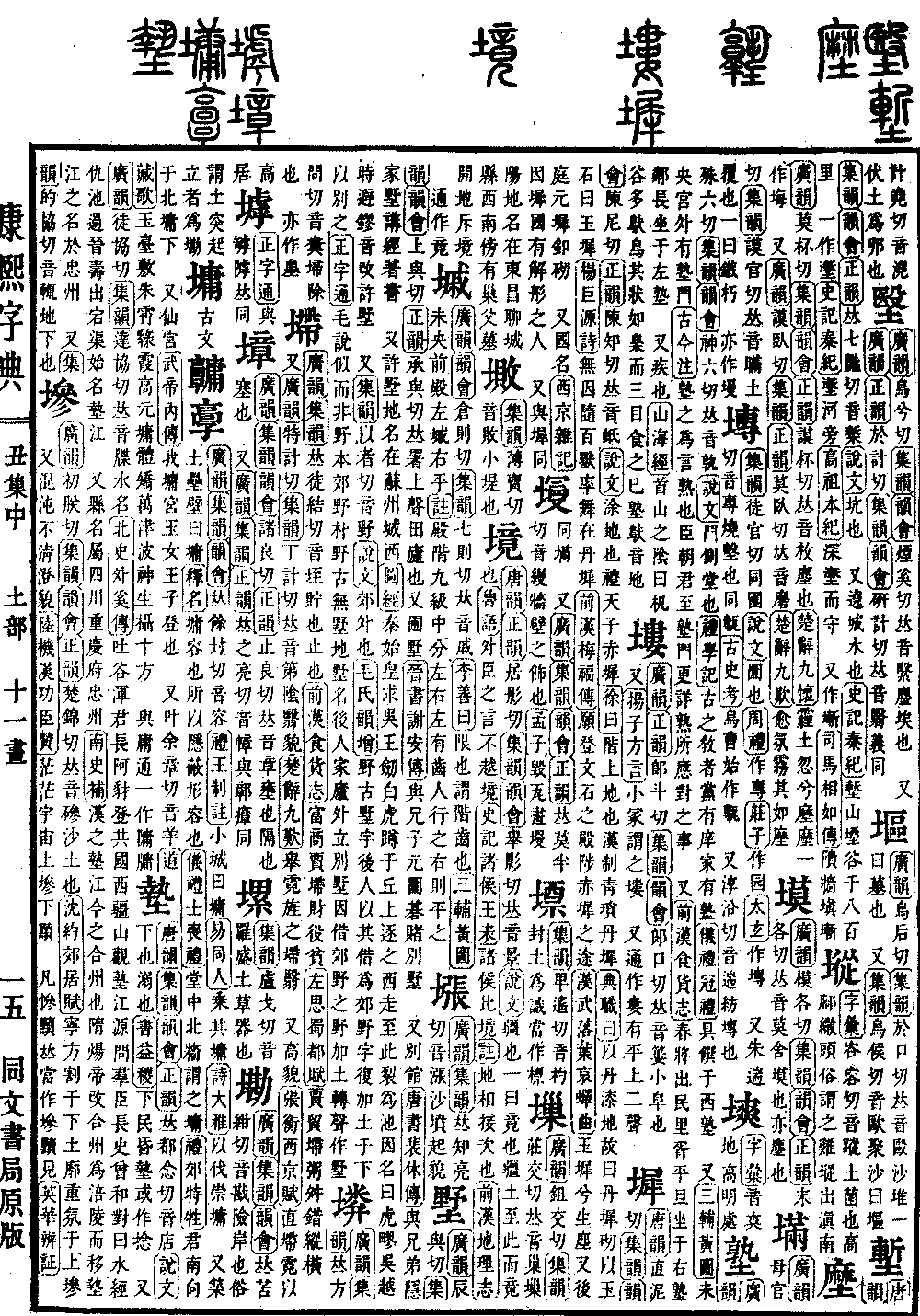
Chou Collection, Middle Volume
Radical: Earth (tǔ)
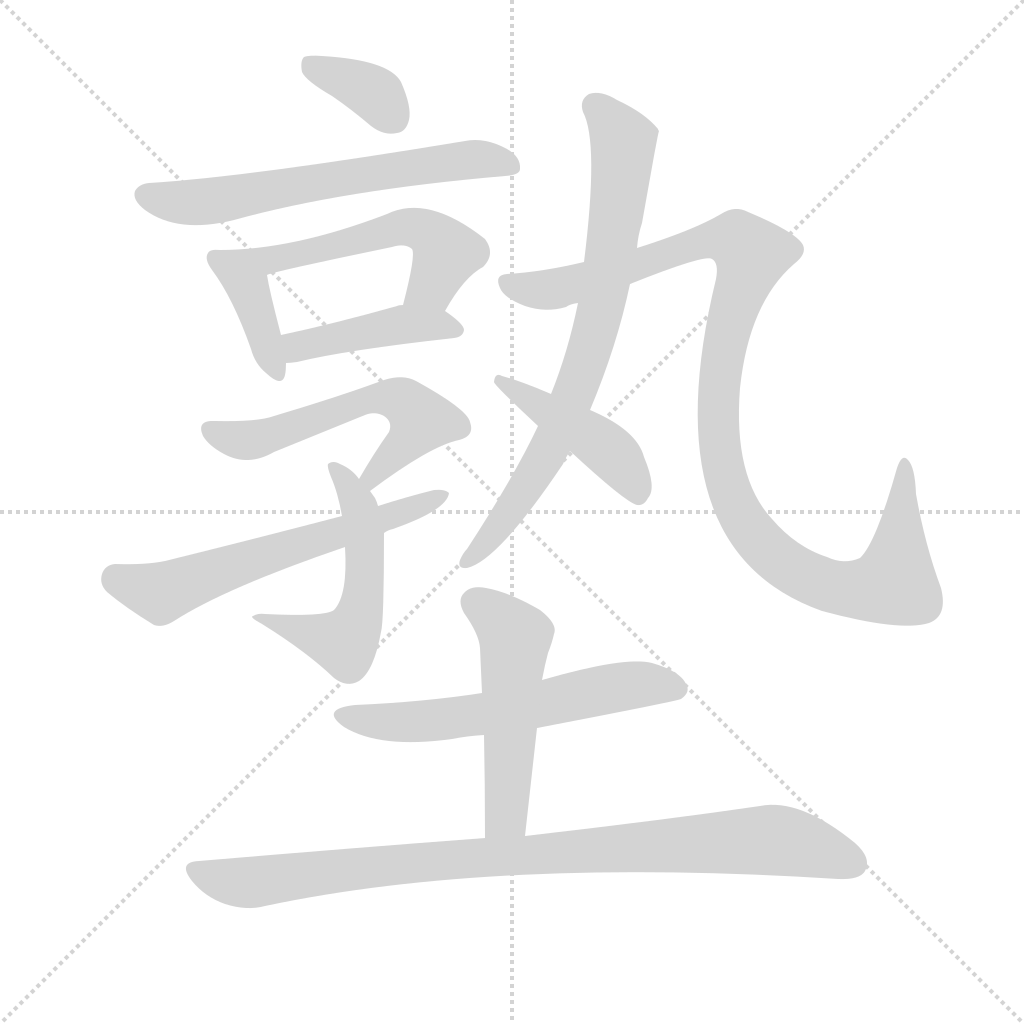
塾
Kangxi stroke count: 14
Page 237, Entry 10
Pronounced shu.
According to the Shuowen Jiezi (Analytical Dictionary of Characters), it refers to the halls located on either side of a main gate.
Book of Rites (Liji), Records on Education (Xueji): In ancient times, those involved in education had the xiang in villages and the shu in clan communities.
Book of Etiquette and Ceremonial (Yili), Rites of Capping (Guanli): Food was prepared in the western shu.
Also, in the Maps of the Three Capitals (Sanfu Huangtu): There was a shu gate outside the Weiyang Palace.
In the Ancient and Modern Records (Gujin Zhu): The meaning of shu is to be familiar (shu). When ministers arrived to have an audience with the ruler, they would arrive at the shu gate to once again carefully familiarize themselves with the matters they were to address.
Also, in the History of the Former Han (Qianhan Shu), Treatise on Food and Money (Shihuo Zhi): When spring was about to arrive and the people were to be mobilized, the village petty officials sat at the right-hand shu in the morning, and the neighborhood leaders sat at the left-hand shu.
It also refers to a type of illness.
Classic of Mountains and Seas (Shanhaijing): The northern side of Mount Shou is called Jigu, which contains many birds that resemble owls but have three eyes; eating them can cure the illness known as shu.
Pronounced di.