Si Collection, Middle Volume
Radical: Fire (huǒ)
Kangxi strokes: 15
Page 680, Entry 20
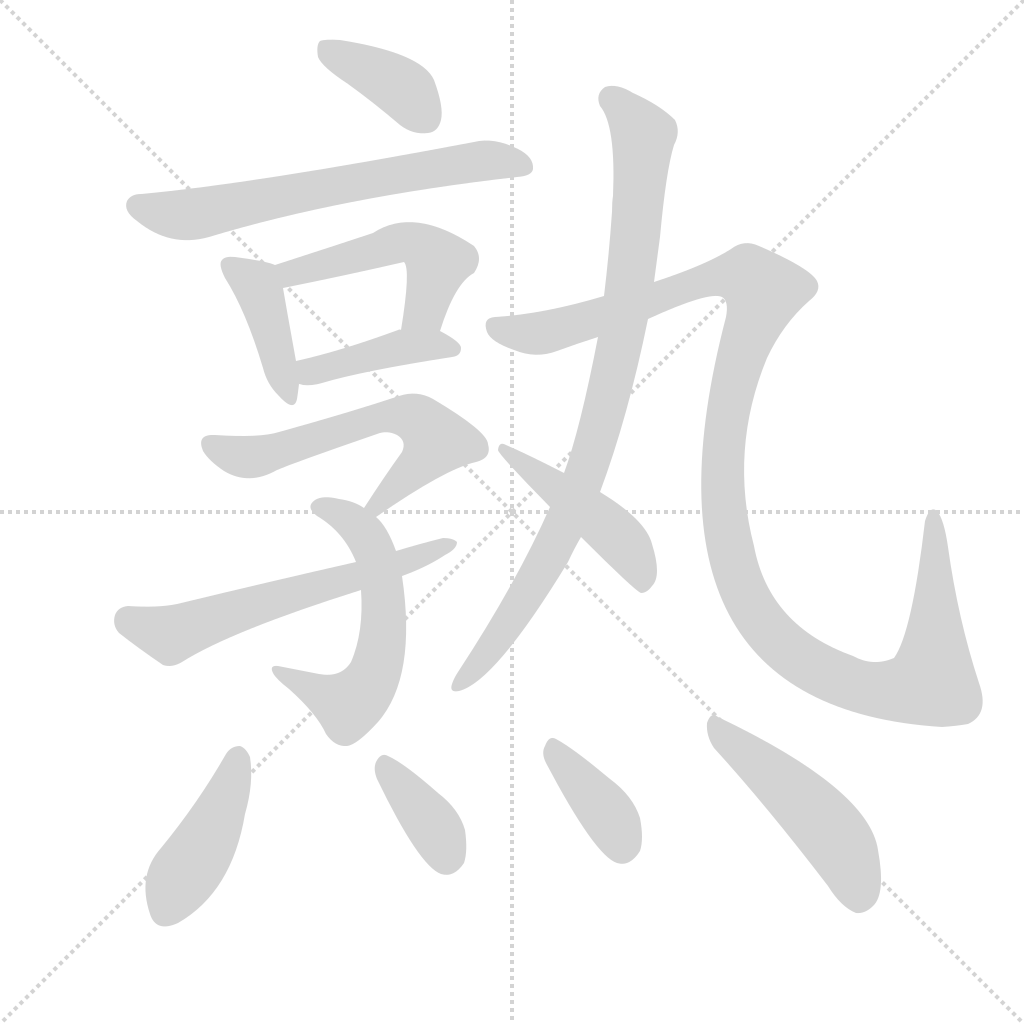
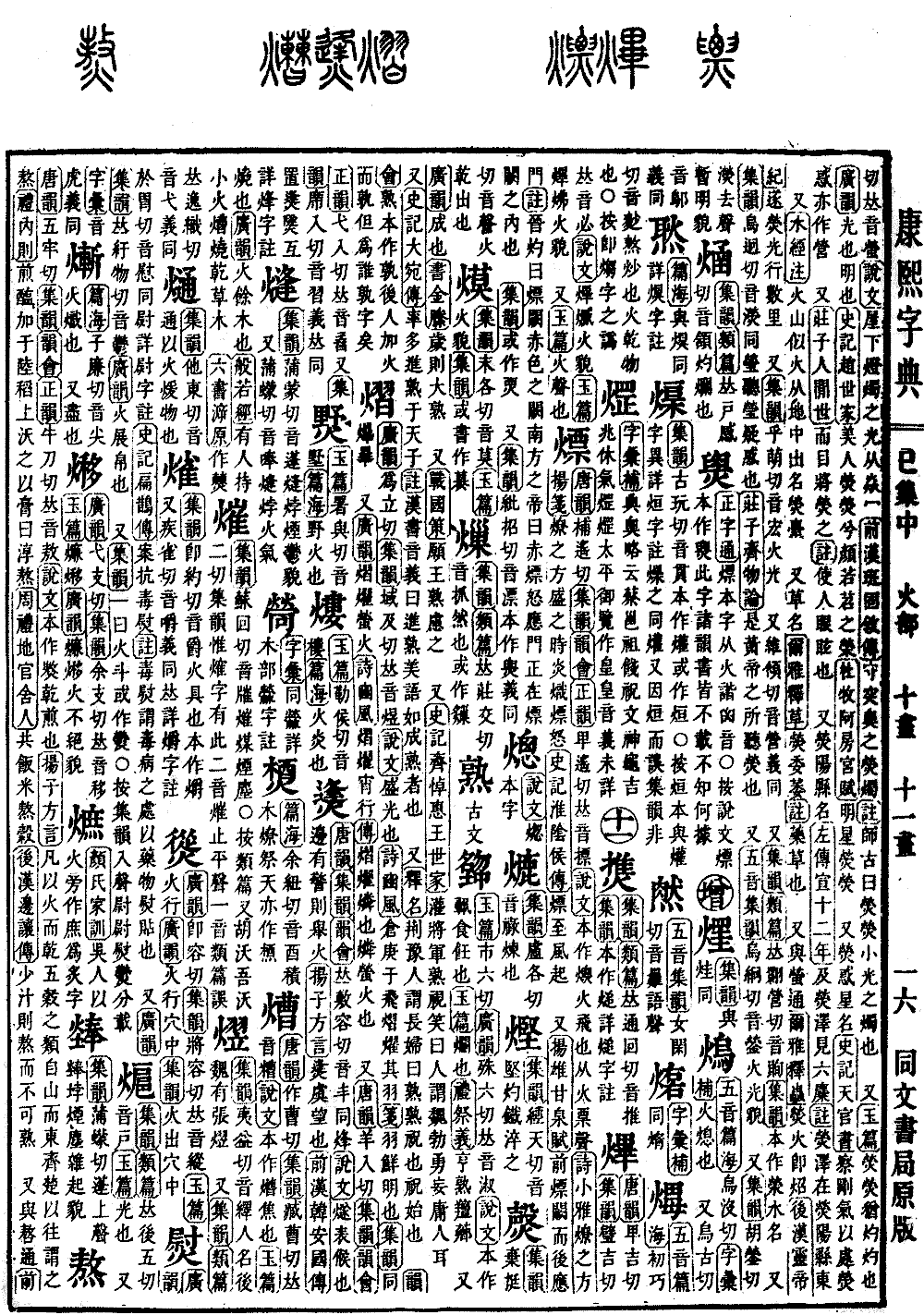
Ancient text. Jade Chapters (Yupian) says pronounced shu (rising tone). Broad Rhymes (Guangyun) says pronounced shu (rising tone). Pronounced the same as the character meaning kind/gentle (shu). Explaining Graphs and Analyzing Characters (Shuowen Jiezi) notes it was originally written as the character for who/which (shu). It refers to food being cooked to an edible state. Jade Chapters (Yupian) defines it as cooked until soft. Book of Rites (Liji), Sacrificial Meanings (Jiyi): Cooked food is prepared so that the aroma spreads far. Also, Broad Rhymes (Guangyun) refers to maturity or completion. Book of Documents (Shangshu), Metal-Bound Coffer (Jinteng): In this year the crops were fully mature. Also, Strategies of the Warring States (Zhan Guo Ce): Hope that your Majesty considers this matter carefully. Also, Records of the Grand Historian (Shiji), Hereditary House of Prince Daohui of Qi: General Guan looked carefully and laughed, saying: People all say Wei Bo is brave, but in reality, he is merely an arrogant and mediocre man. Also, Records of the Grand Historian (Shiji), Account of Dayuan: Most offered mature words to the Son of Heaven. The commentary, Meanings of Sounds in the Book of Han (Hanshu Yinyi), states: Offering maturity refers to speaking pleasing words, similar to how one speaks of things becoming ripe. Also, Explanations of Names (Shiming): People in the regions of Jingzhou and Yuzhou refer to a primary wife as mature. Mature has the meaning of to begin. Collection of Rhymes (Yunhui): Mature was originally written as the character for who/which. Later people added the fire radical, and the original character came to be used only for who or which.