Xu Collection, Upper Volume
Radical: Metal (jīn)
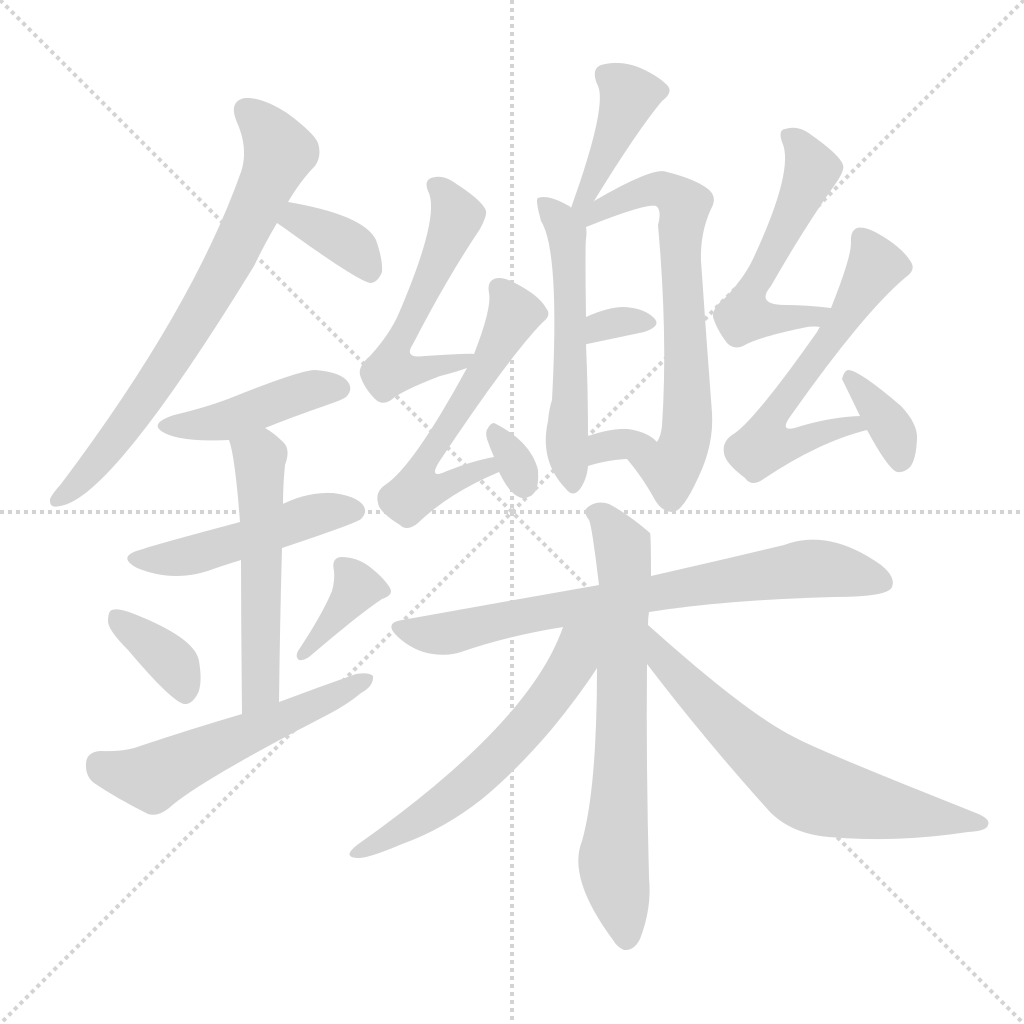
Shuo
Kangxi strokes: 23
Page 1326, Entry 06
Pronounced shuo
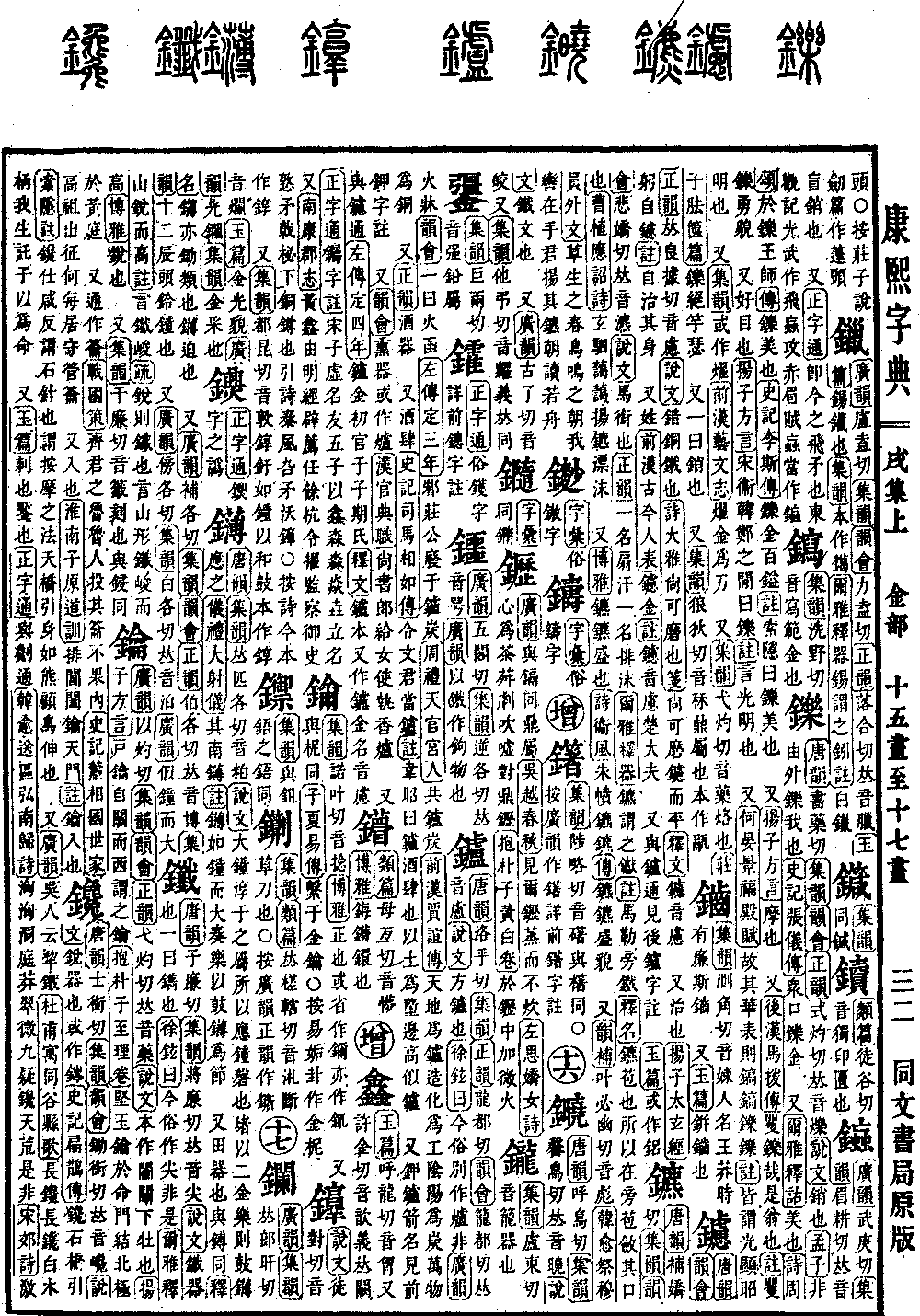
Shuowen Jiezi (Explanation of Graphs and Analysis of Characters) states: To melt.
Mencius: It is not melted into me from the outside.
Records of the Grand Historian (Shiji), Biography of Zhang Yi: The mouths of the many can melt metal.
Also, Erya (Approaching Elegance), Explanations of Ancient Words: Beautiful.
Book of Odes (Shijing), Zhou Odes (Zhousong): How beautiful is the royal army.
Commentary: Shuo means beautiful.
Records of the Grand Historian (Shiji), Biography of Li Si: A hundred yi of fine metal.
Note: Suoyin commentary says: Shuo means beautiful.
Also, Yangzi (Yang Xiong), Dialects (Fangyan): To rub or polish.
Also, Book of the Later Han (Hou Hanshu), Biography of Ma Yuan: How spirited and robust is this old man.
Note: Jueshuo describes the appearance of courage.
Also means bright-eyed.
Yangzi (Yang Xiong), Dialects (Fangyan): Between the regions of Song, Wei, Han, and Zheng, it is called shuo.
Note: Refers to light and brightness.
Also, He Yan, Rhapsody on the Jingfu Hall (Jingfu Dian Fu): Therefore its ornate pillars are brilliant and shining.
Note: Both refer to light, manifestation, and clarity.
Also, Jiyun (Compilation of Rhymes): Sometimes written as yao.
Book of the Former Han (Qian Hanshu), Treatise on Literature and Arts: To heat metal to make a blade.
Also, Jiyun (Compilation of Rhymes): Pronounced yao. To brand with a hot iron.
Zhuangzi, Section on Excavating the Trunks (Quqie): To melt or destroy the pipes and stringed instruments.
Also, one source says: To melt.
Also, Jiyun (Compilation of Rhymes): Pronounced li. A type of tripod vessel. Originally written as the character with the same phonetic component.