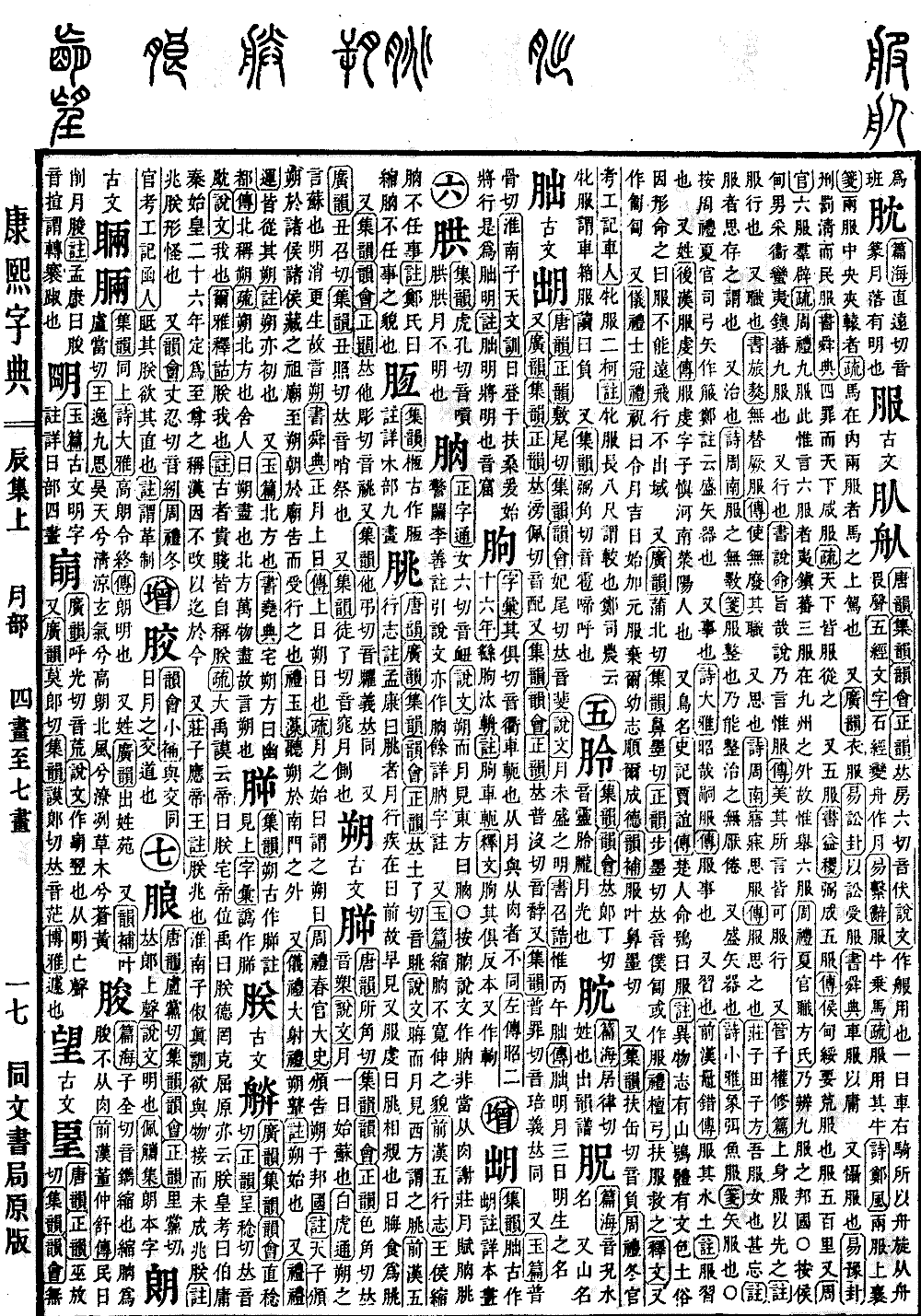
Chen Collection, Upper Volume
Radical: Moon (yuè)
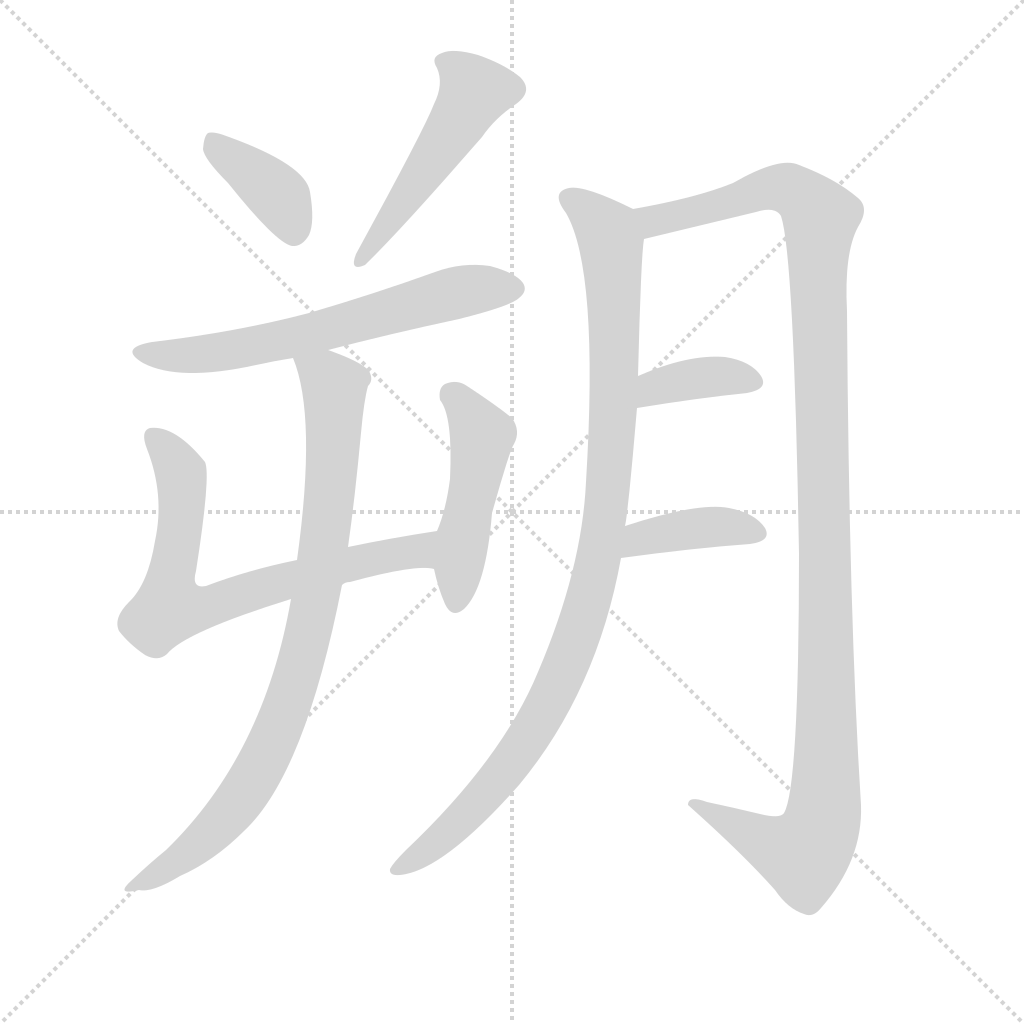
朔; Kangxi Strokes: 10; Page 505, Entry 16
Ancient text. Pronounced shuo.
According to the Explaining Graphs and Analyzing Characters (Shuowen), the moon begins to recover on the first day of the lunar month.
According to the Comprehensive Discussions in the White Tiger Hall (Baihu Tong), the meaning of shuo is recovery. The moonlight vanishes and then appears again, therefore it is called shuo.
Book of Documents (Shujing), Canon of Shun: On the first day of the first month.
Commentary: The first day is the shuo day.
Sub-commentary: The first day of a month is called the shuo day.
Rites of Zhou (Zhouli), Spring Officials, Grand Scribe: Promulgating the rituals of the shuo to the various feudal states.
Annotation: The Son of Heaven promulgates the calendar to the feudal lords, and the lords store the almanacs in their ancestral temples. On the shuo day, they hold an audience at the ancestral temple to report, receive, and implement the instructions.
Book of Rites (Liji), Jade Pattern: Listen to the administrative policies of the shuo outside the southern gate.
Also, Ceremonial Rites (Yili), Great Archery Rites: The shuo drum.
Annotation: Shuo means to begin.
Also, Book of Rites (Liji), The Conveyance of Rites: All following their shuo.
Annotation: Shuo also means the initial.
Also, Jade Chapters (Yupian): Refers to the north.
Book of Documents (Shujing), Canon of Yao: Residing in the north is called Youdu.
Commentary: The north is called shuo.
Sub-commentary: Shuo is the north. She Ren says: Shuo means the end. The north is where all things come to an end, therefore it is called shuo.