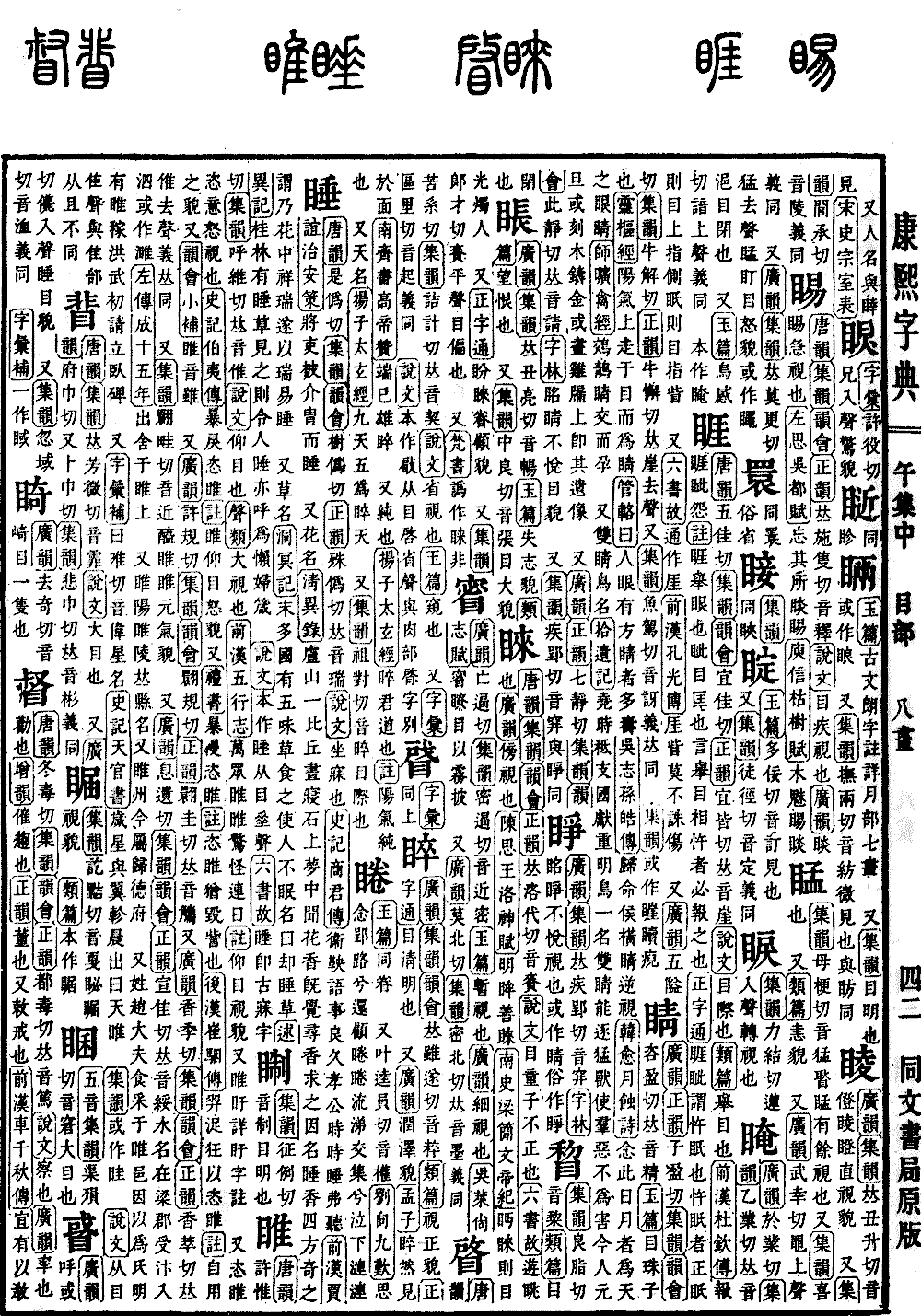
Wu Collection, Middle Volume
Radical: Eye (mù)
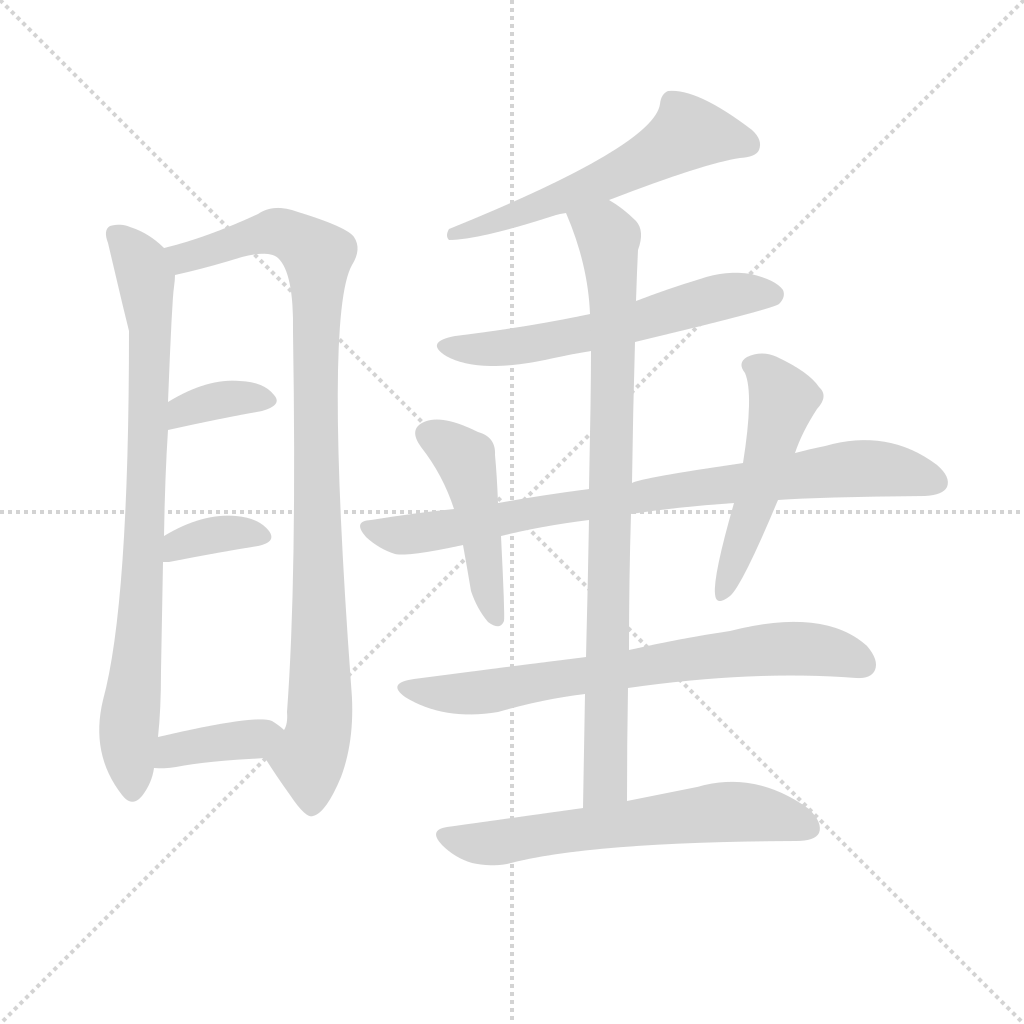
睡
Kangxi strokes: 13
Page 810, Entry 23
Pronounced shui
According to the Book of Tang (Tangyun), the Book of Rhymes (Jiyun), and the Collection of Rhymes (Yunhui), it is pronounced shui (falling tone). According to the Corrected Rhymes (Zhengyun), it is pronounced shui (falling tone).
According to the Explaining Graphs and Analyzing Characters (Shuowen), it means to doze while sitting.
In the Records of the Grand Historian (Shiji), Biography of Shang Yang: Wei Yang spoke of affairs for a long time, and Duke Xiao was dozing from time to time, not listening.
In the History of the Former Han (Qianhan), Jia Yi’s Policy on Peace and Stability: The generals and officers were wearing armor and sleeping.
Also the name of a flower. According to the Records of the Marvelous (Qingyilu), a monk at Mount Lu was sleeping on a rock during the day and smelled a fragrance in his dream. When he woke up, he searched for the source of the fragrance and named it sleep-fragrance. People from all directions considered it wonderful and called it a propitious omen among flowers, so they changed the character for sleep to the character for propitious.
Also the name of a plant. According to the Record of Penetrating the Mysterious (Dongmingji), the state of Moduo has a five-flavor herb; eating it prevents one from sleeping, so it is called the sleep-repelling herb.
According to the Records of Extraordinary Things (Shuyiji), Guilin has a sleep herb; seeing it makes people fall asleep. It is also called the lazy woman's needle.
According to the Explaining Graphs and Analyzing Characters (Shuowen), it was originally written with the component for eye and the sound component.
According to the Notes on the Six Writings (Liushugu), sleep is the ancient character for slumber.