Xu Collection, Middle Volume
Radical: Mound (fù)
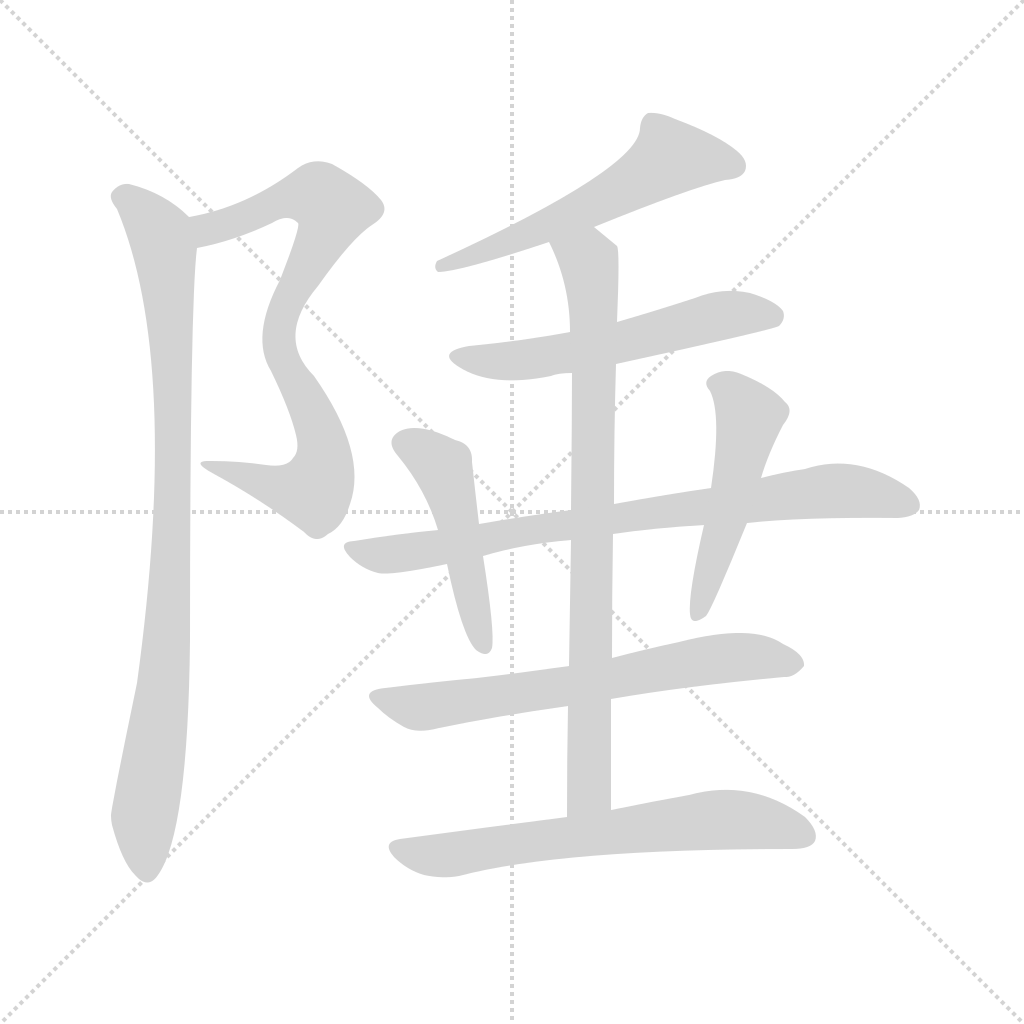
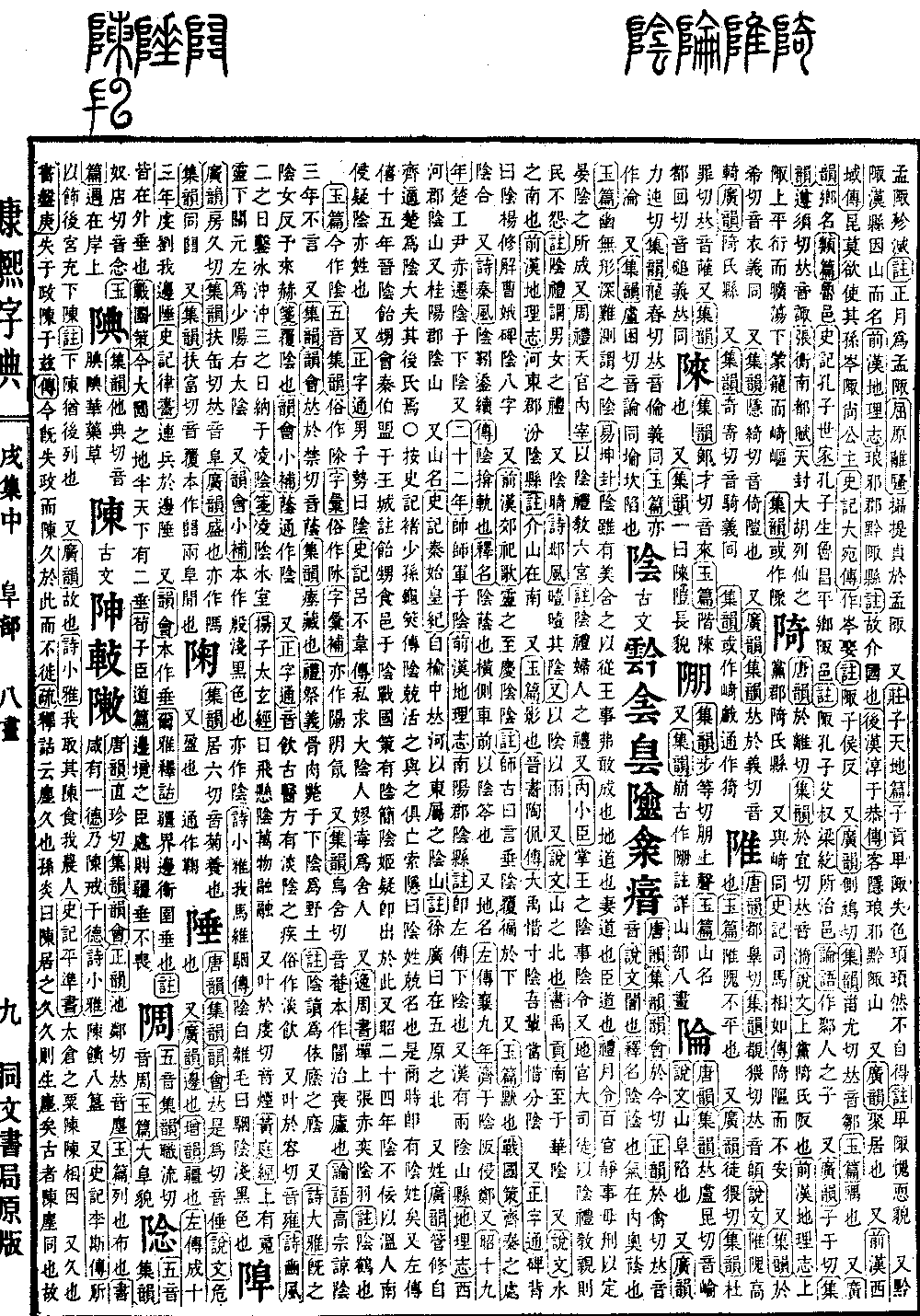
Chui; Kangxi strokes: 16; Page: 1353, entry 15
According to Tang Rhyme (Tangyun), Ji Rhyme (Jiyun), and Yun Hui (Yunhui), pronounced chui. Shuowen Jiezi (Shuowen) defines it as meaning danger. Also, Guangyun (Guangyun) defines it as meaning edge. Zengyun (Zengyun) defines it as meaning border. Book of Zuo (Zuozhuan), Cheng 13th year: "invading our borders." Records of the Grand Historian (Shiji), Treatise on the Calendar: "deploying troops at the border." Also, Yun Hui (Yunhui) states that it was originally written chuí. Erya (Erya), Explanation of Words: "border, boundary, or a guarded area, which is what chuí means." Annotation: "All refer to the outer periphery or edge." Strategies of the Warring States (Zhanguoce): "Today, the territory of the great states occupies half of the realm, possessing borders in two directions." Xunzi (Xunzi), On the Way of Ministers: "If there are ministers stationed at the borders, then the territorial integrity will not be lost."