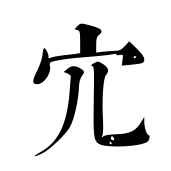
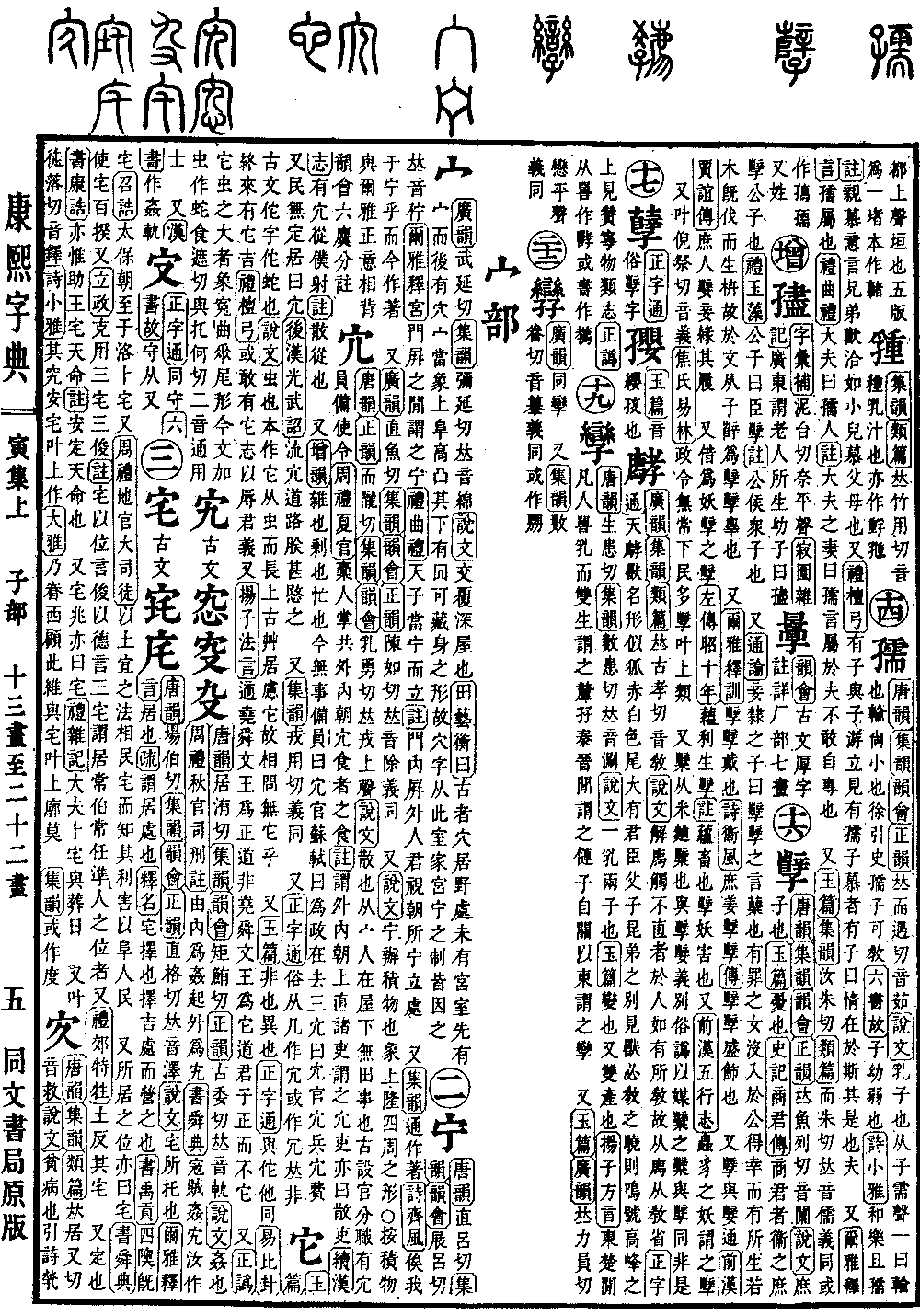
Yin Collection, Upper Volume
Radical: Roof (bù)
Kangxi stroke count: 5
Page 281, Entry 13
Tang Dynasty Rhymes (Tangyun) and Correct Rhymes (Zhengyun) state the pronunciation as rong (rising tone). Collected Rhymes (Jiyun) and Rhyme Collection (Yunhui) state the pronunciation as rong (rising tone), which is the same as the rising tone of the character rong.
Explanation of Writing and Definition of Characters (Shuowen Jiezi) defines it as scattered. The character structure is composed of the roof radical, representing a person under a roof with no agricultural duties to perform. In ancient times, when establishing official ranks and distributing duties, extra personnel were appointed to be available for errands and service.
The Rites of Zhou (Zhouli), Summer Official section, records: The officer in charge of grain manages the food and drink for those eating as extra personnel in the inner and outer courts. The commentary explains that various officials on duty in the inner and outer courts were called extra officials or scattered officials.
The Continuation of the Book of Later Han (Xu Han Zhi) contains the position of officer for extra attendants. The commentary explains this as scattered attendants.
Additionally, the Expanded Rhymes (Zengyun) defines it as mixed, surplus, or busy. Today, officials who are idle yet hold a position are called extra officials. Su Shi stated: Managing government affairs lies in removing three types of excess: extra officials, extra soldiers, and extra expenses.
Furthermore, commoners without a fixed residence are called displaced (rong). An edict by Emperor Guangwu in the Book of the Later Han (Hou Hanshu) states: I feel great pity for those displaced on the roads.
Additionally, Collected Rhymes (Jiyun) also provides the pronunciation of rong (falling tone). The meaning remains the same. The Comprehensive Collection of Characters (Zhengzitong) points out that the common variant written with the small table radical is incorrect, and the variant written as rong is also incorrect.