Mao Collection, Middle Volume
Radical: Hand (shǒu)
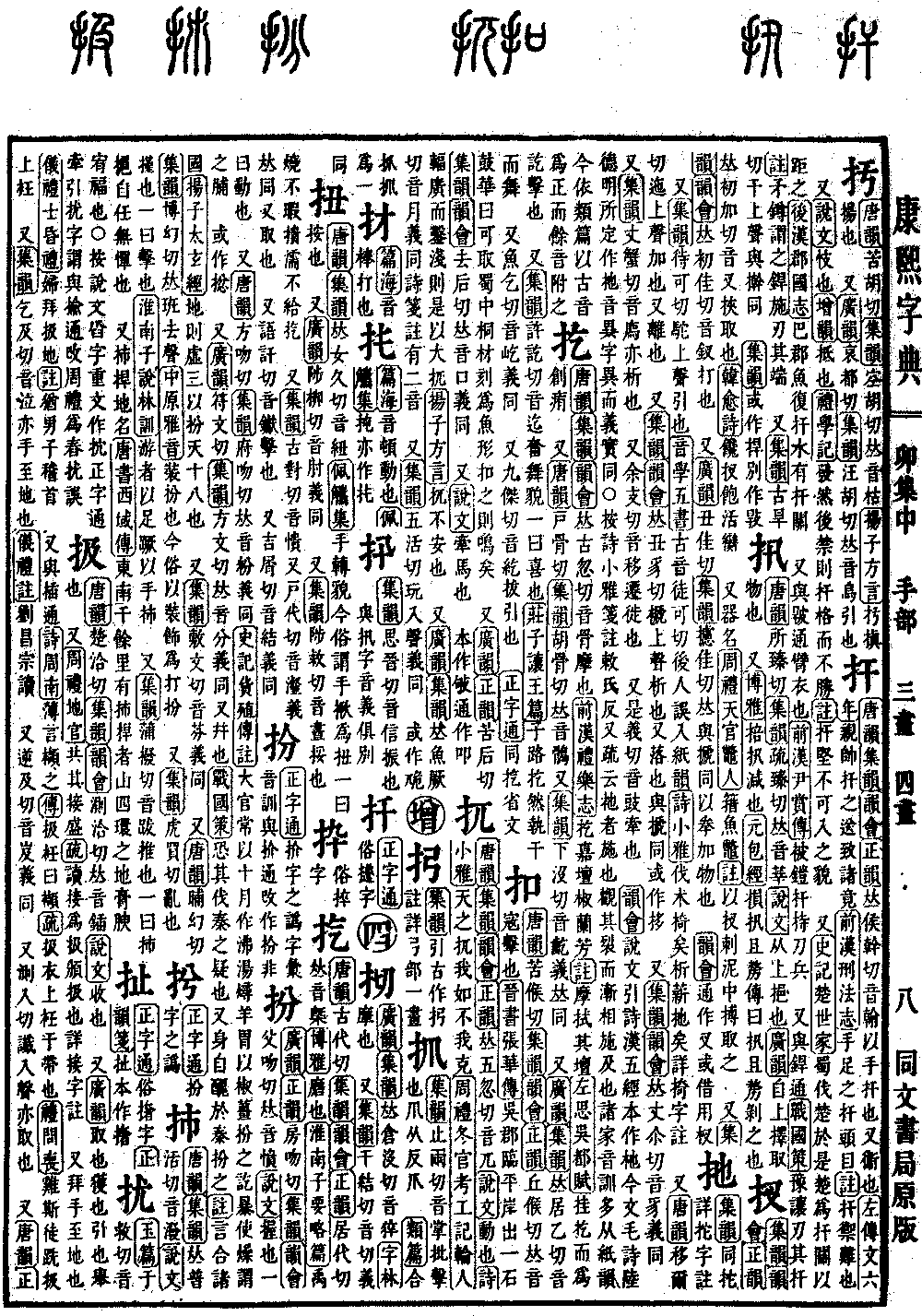
Page 418, Entry 24
Yu Pian (Jade Chapters): Pronounced you. To bless. Note: In the Shuo Wen (Explaining Graphs and Analyzing Characters), it is a variant form written as [variant graph]. The Zheng Zi Tong (Correct Character Mastery) links this character to the term [variant graph], claiming it is interchangeable with [variant graph], and that changing the Book of Rites (Liji) text to read [term] is an error.
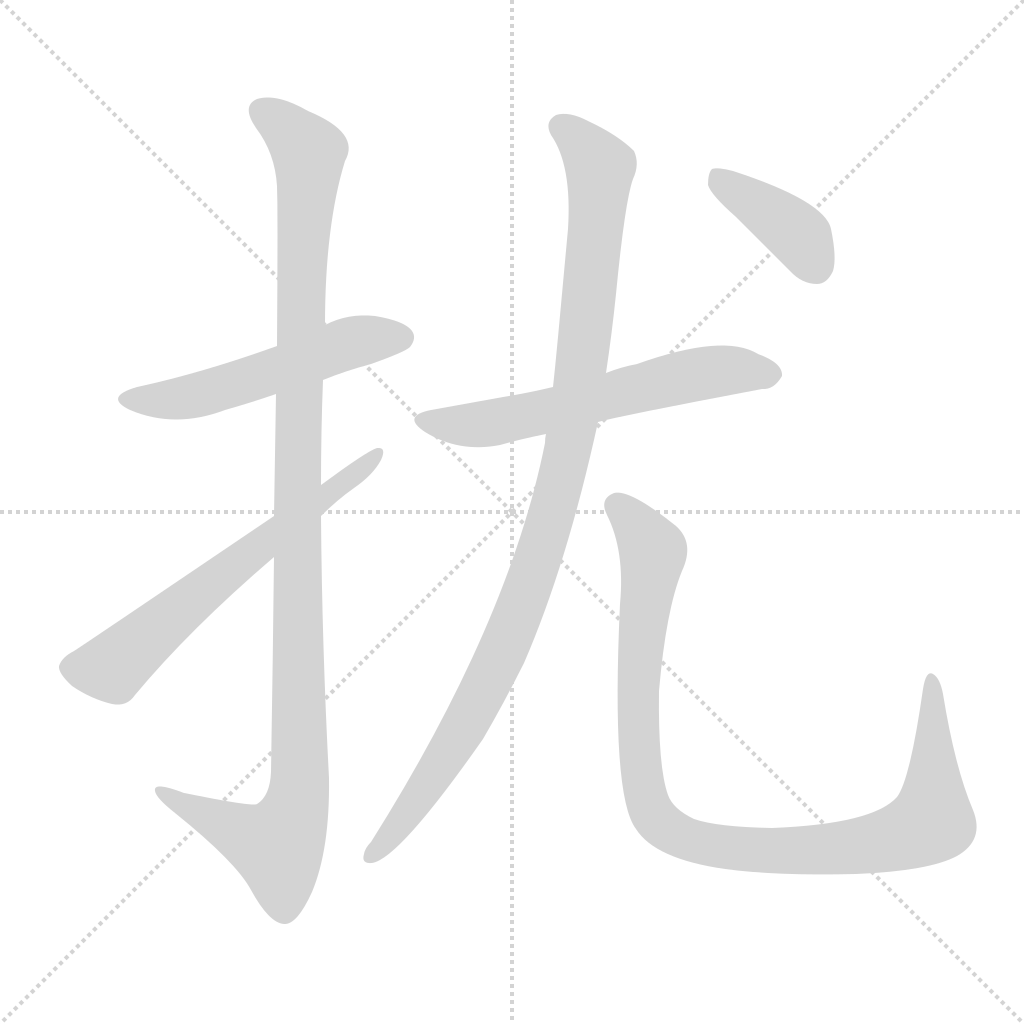
Rao: Tang Yun: Pronounced rao. Ji Yun, Yun Hui, Zheng Yun: Pronounced rao. Shuo Wen: To annoy. Guang Yun: To disorder. Book of Documents (Shujing), Yin Zheng: To begin to disturb the heavenly calendar and timing. History of the Former Han (Qian Hanshu), Biography of Cao Shen: Take the lawsuits and marketplace of the Qi region as a focus, and be extremely careful not to disturb or disorder them. Also, to tame; to be compliant; to be peaceful. Book of Documents (Shujing), Gao Yao Mo: To be tame, compliant, and resolute. Commentary: To be tame and compliant, yet resolute. Also, Zhou Guan: The Minister of Education (Si Tu) manages the transformation of the state, spreads the teachings of the five constant virtues, and pacifies the millions of people. Rites of Zhou (Zhouli), Earth Offices, Great Minister of Education: Used to assist the monarch in pacifying the state. Commentary: This means to be peaceful. It refers to being wealthy, abundant, and content. Also, Xia Offices, Functionary Records: The land south of the Yellow River is called Yu Province, where it is suitable to raise the six domestic animals. Commentary: The six domestic animals refer to horses, oxen, sheep, pigs, dogs, and chickens. Exegesis: The six domestic animals are the same as the six livestock in the Erya and the six sacrificial animals in the Rites of Zhou (Zhouli). Zuo Commentary (Zuozhuan), 29th Year of Duke Zhao: Dong Fu really loved dragons, so he tamed and raised them. Exegesis: To follow the inclinations of the dragon in order to raise it.
Also, Ji Yun, Yun Hui, Zheng Yun: Pronounced rao. The meaning is the same as [variant graph]. Rites of Zhou (Zhouli), Six Domestic Animals, Explanatory Text: Xu Miao and Liu Changzong read this as rao. History of the Former Han (Qian Hanshu), Eulogy of the Records of Emperor Gao: Liu Lei learned to tame dragons. Commentary: Shi Gu also reads this as rao.
Also, Ji Yun: Pronounced nao. Also means to annoy or disorder.
Also, rhyming with sounds of jiu, in the rising tone. Li You, Ode to the Ping Le Spectacle: Flying pellets and leaping swords, seething with clamor and swirling in disorder. The Bayu dance performance proceeds, as eyes and eyebrows meet and follow one another.
Originally derived from [original graph]. Shuo Wen writes it as [original graph]. Also [original graph].
Textual Research for Rao: Zuo Commentary (Zuozhuan), 29th Year of Duke Zhao: Dong Fu really loved dragons, so he tamed and raised them. Commentary: Followed the inclinations of the dragon to raise it. Corrected in accordance with the original book commentary and exegesis.