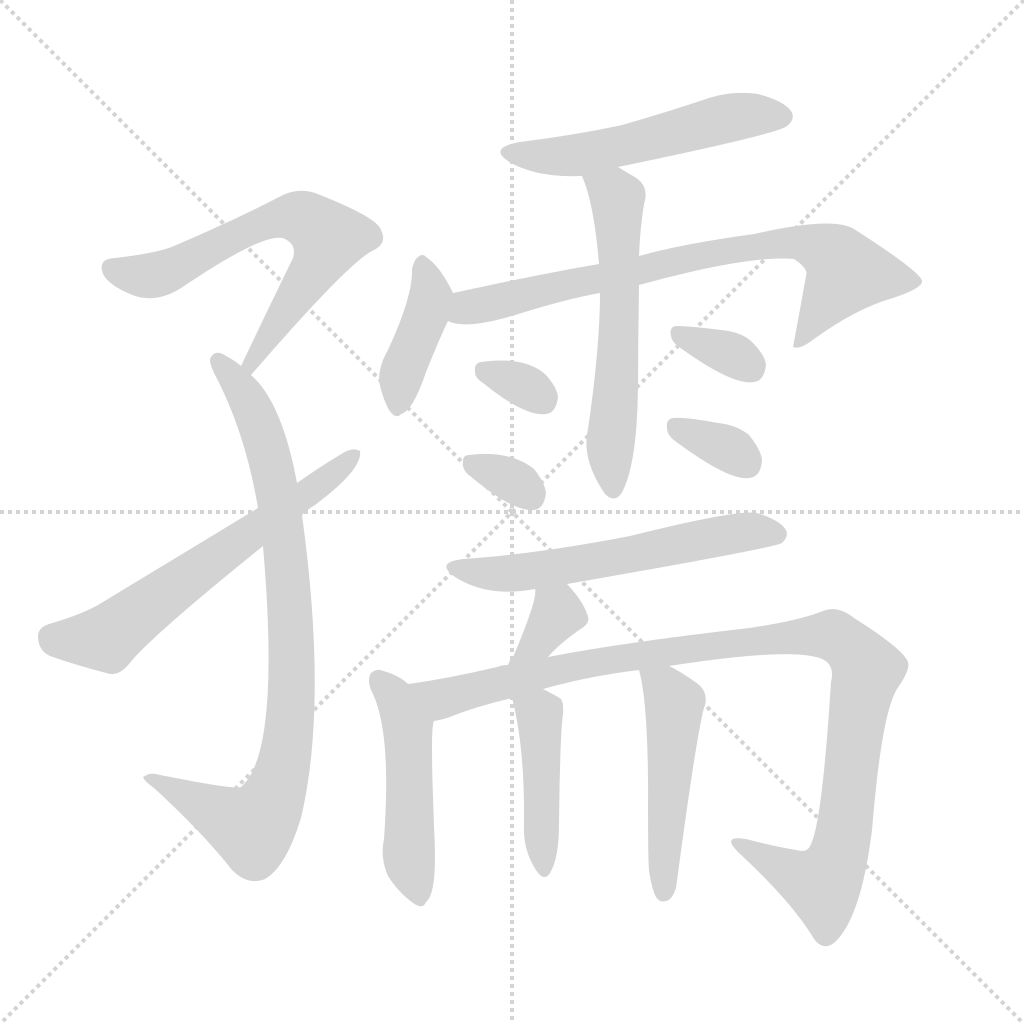
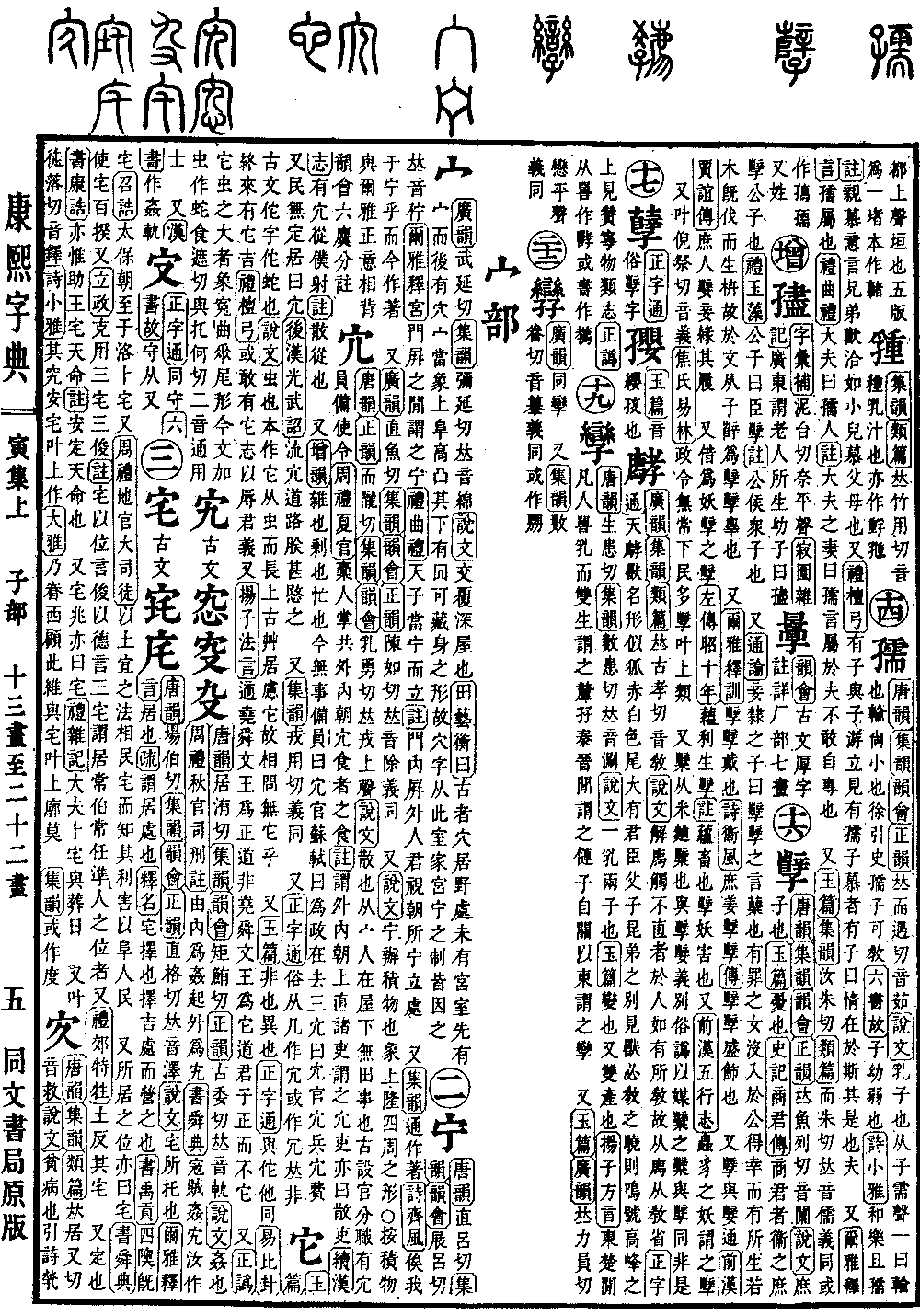
Yin Collection, Upper Volume
Radical: Child (zǐ)
Kangxi stroke count: 17
Page 281, Entry 02
Tang Rhymes (Tangyun), Collected Rhymes (Jiyun), Rhyme Compendium (Yunhui), Correct Rhymes (Zhengyun): Pronounced ru (falling tone), similar in sound to ru (rising tone).
Shuowen Jiezi (Shuowen): Refers to a nursing infant. The character is formed with Child as the radical and xu as the phonetic component. One interpretation suggests it implies being small and young. Xu quotes history books mentioning that a child can be taught.
Six Writings (Liushu Gu): Refers to a small and weak child.
Book of Odes (Shijing), Lesser Odes of the Kingdom (Xiao Ya): Happy and intimate. Commentary: Implies closeness and attachment, suggesting that the harmony between brothers is like a child attached to its parents.
Book of Rites (Liji), Tan Gong: Youzi and Ziyou were standing when they saw a child mourning its parents. Youzi said, The feeling is right here, it is likely just so.
Erya: Ru means to belong to.
Book of Rites (Liji), Qu Li: The wife of a grand master is called ru-ren (lady). Commentary: The wife of a grand master is called ru, implying she belongs to her husband and dares not act solely on her own authority.
Jade Pages (Yupian), Collected Rhymes (Jiyun): Pronounced ru (rising tone). Categorized Compendium (Leipian): Pronounced ru (level tone), same pronunciation as ru (level tone). The meaning is the same. Sometimes written in a variant form. Also used as a surname.
Textual research: In Book of Rites (Liji), Tan Gong, the text states Youzi and Ziyou were standing when they saw a child mourning. Following the original text, the word have is omitted after the word see.