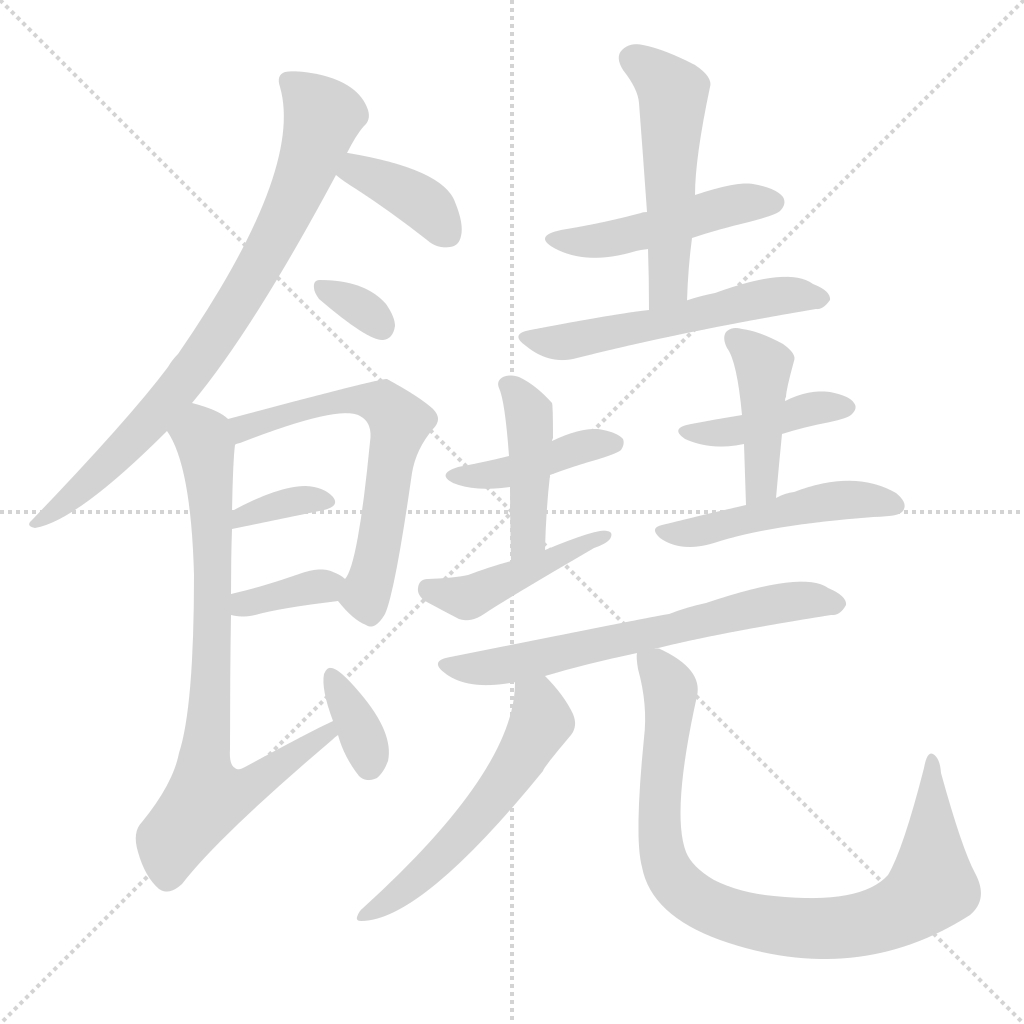
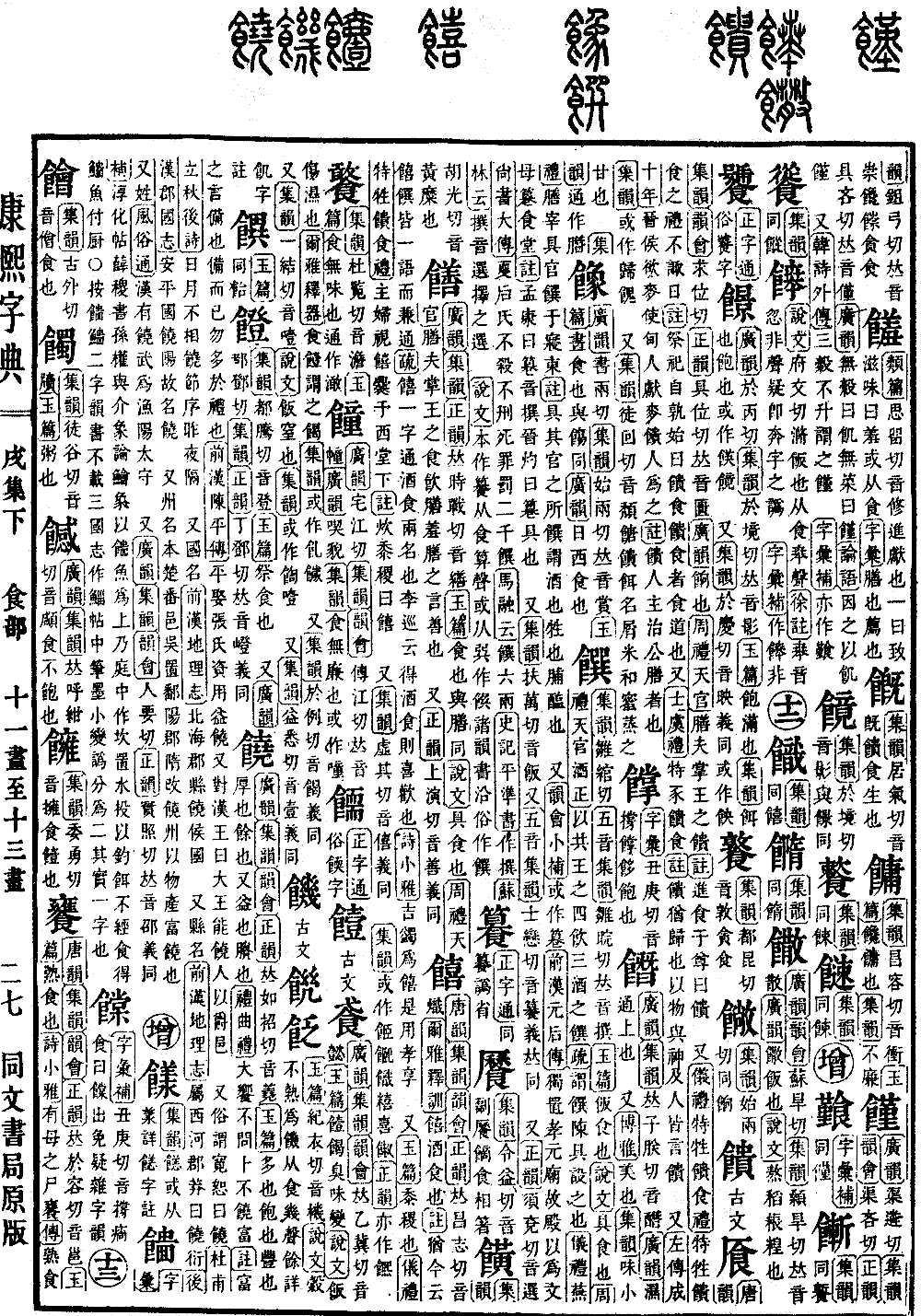
Xu Collection, Lower Volume
Radical: Food (shí)
Kangxi strokes: 21
Page 1425, Entry 40
Broad Rhymes (Guangyun), Collected Rhymes (Jiyun), Rhyme Meetings (Yunhui), and Orthodox Rhymes (Zhengyun): Pronounced rao.
Jade Chapters (Yupian): Many, satiated, abundant, thick, surplus. Also means to increase or to have left over.
Book of Rites (Liji), Section on Summary of Propriety (Quli): In a great feast, one does not consult divination, and one does not seek to be over-abundant. Commentary: The term abundant refers to preparation. It means to be prepared, and nothing more; do not exceed the proper ritual.
History of the Former Han (Qianhan): When Ping married into the Zhang family, his financial resources became increasingly abundant. He also said to the King of Han: Your Majesty is able to enrich others with titles and fiefs.
It is also commonly used to mean to forgive or to show leniency.
Du Fu, Poem after the Beginning of Autumn: The sun and moon do not grant any leniency, the seasons have changed since last night.
Also a name of a state. History of the Former Han (Qianhan), Treatise on Geography: There was a Rao Marquis state in Beihai Commandery.
Also a name of a county. History of the Former Han (Qianhan), Treatise on Geography: Belonged to Xihe Commandery; during the Wang Mang interregnum, it was renamed Raoyan. History of the Later Han (Houhan), Treatise on Commanderies and States: Anping Kingdom had Raoyang, formerly named Rao.
Also a name of a prefecture. Originally Fanyi of Chu, the Wu state established Poyang Commandery, and the Sui dynasty renamed it Rao Prefecture, because its products were rich and abundant.
Also a surname. Customs and Traditions (Fengsutong): During the Han dynasty, there was a Rao Wu who served as the Governor of Yuyang.
Also Broad Rhymes (Guangyun), Collected Rhymes (Jiyun), Rhyme Meetings (Yunhui), and Orthodox Rhymes (Zhengyun): Pronounced shao. The meaning is the same.