You Collection, Upper Volume
Radical: Speech (yán)
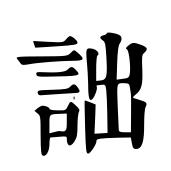
Qu
Kangxi Strokes: 12
Page 1155, Entry 13
Pronounced qu.
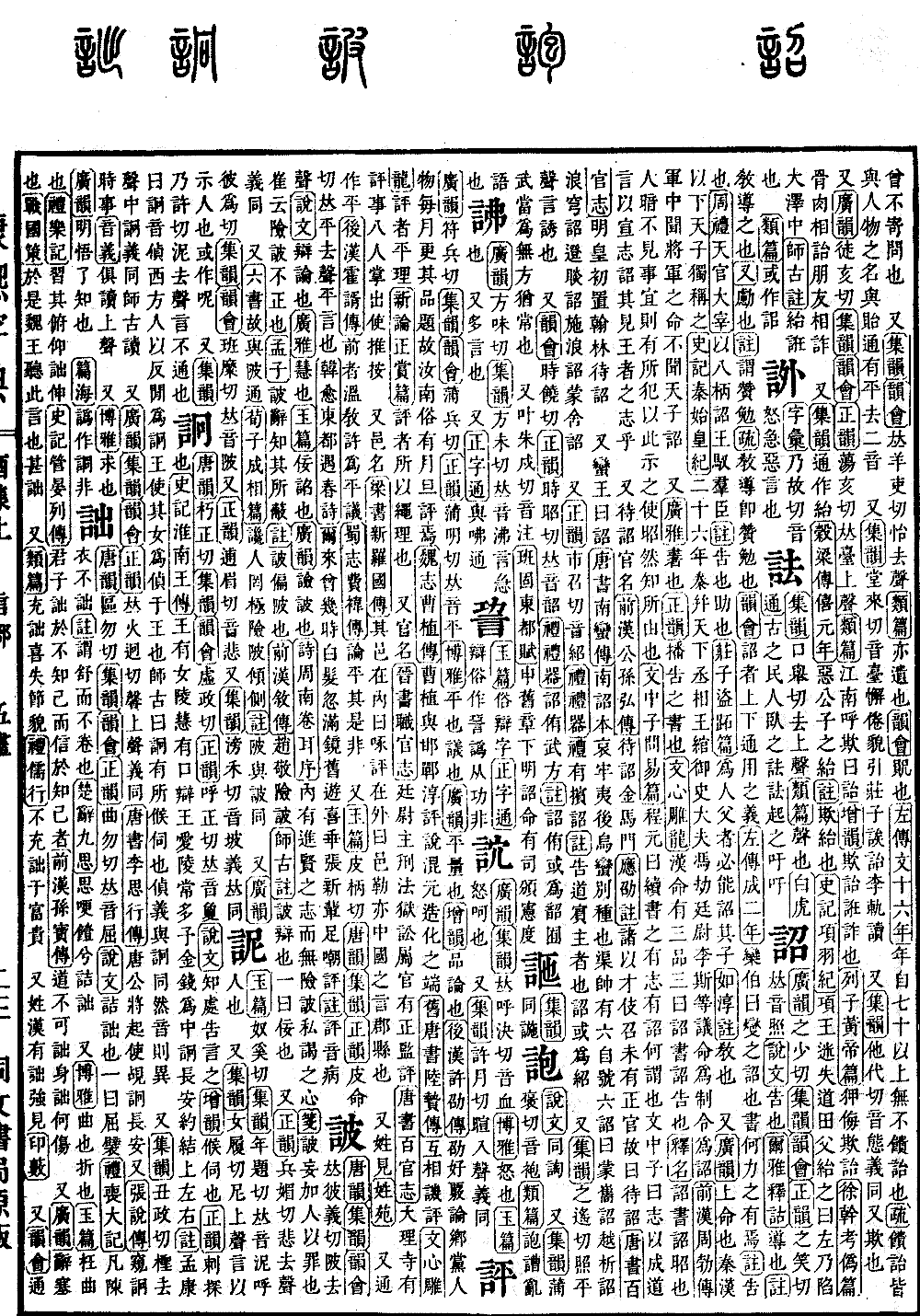
According to the Explaining Graphs and Analyzing Characters (Shuowen Jiezi), it means speech that is distorted and not smooth. It also refers to the folds or creases in clothing.
Book of Rites (Liji), Great Record of Mourning (Sangdaji): All clothing should not have creases.
Commentary: This refers to clothing being smooth and not curled.
Songs of Chu (Chuci), Nine Longings (Jiusi): My thoughts are choked and obstructed, my words are distorted and not smooth.
Also, according to the Broad Categorization (Guangya), it means to bend or to be tortuous.
According to the Jade Chapters (Yupian), it means to be wronged or bent.
Book of Rites (Liji), Record of Music (Yueji): To practice movements of bowing, looking up, bending, and stretching.
Records of the Grand Historian (Shiji), Biographies of Guan and Yan: A noble person may suffer wrong before those who do not understand them, but can realize their ambitions before those who do.
History of the Former Han (Qian Hanshu), Biography of Sun Bao: If moral principles cannot be bent, what harm is there in suffering a little wrong oneself?
Also, according to the Broad Rhymes (Guangyun), it means that one’s words are blocked and one cannot speak.
Strategies of the Warring States (Zhanguoce): Thereupon, the King of Wei heard these words and was completely at a loss for words.
Also, according to the Categorized Chapters (Leipian), chongqu means to be so happy that one loses one's composure.
Book of Rites (Liji), Conduct of Scholars (Ruxing): Do not lose composure due to happiness from wealth and rank.
It is also a surname. In the Han dynasty, there was a person named Jieqiang, found in the Collection of Seals (Yinsou).
Also, according to the Collection of Rhymes (Yunhui), its meaning is interchangeable with qu.
Xunzi, Exhortation to Learning (Quanxue pian): It is like lifting the collar of a fur coat and bending the five fingers to shake it.
Commentary: Qu and qu have the same meaning.
Also, according to the Collection of Rhymes (Jiyun) and Orthophony (Zhengyun), pronounced jue. It has the same meaning as chongqu.
Also, it describes the sound of something stopping.
Book of Rites (Liji), Meaning of Giving Gifts (Pinyi): When struck, the sound is clear and long, and when it ends, it stops abruptly, which is delightful.
Also, according to Orthophony (Zhengyun), it means to be exhausted.
History of the Former Han (Qian Hanshu), Biography of Sima Xiangru: Intercept and capture the exhausted beasts.
Commentary of Shigu: This refers to capturing and taking possession of beasts that have exhausted their strength.
Also, according to the Collection of Rhymes (Jiyun), pronounced chu. It has the same meaning as chu.
Strategies of the Warring States (Zhanguoce): That Gongzhong, the power of the Qin state can demote him.
Commentary: Qu means to demean or dismiss.
Also, according to the Collection of Rhymes (Jiyun), it is interchangeable with chu.
Book of Rites (Liji), Meaning of Archery (Sheyi): To promote in rank and reduce the fief.
Commentary: In the chapter of Internal Rules (Neize), it was previously written as chu, and in the chapter of Bright Hall Position (Mingtangwei), it is written as qu.
Also, according to the Collection of Rhymes (Jiyun), it is sometimes written as chu.
Zuo Tradition (Zuo Zhuan), Thirtieth Year of Duke Xiang: Making a sound like xi xi chu chu.
Rites of Zhou (Zhouli), Autumn Official (Qiuguan), Commentary of Zheng on the Court Officials (Tingshi): When cited, it is written as qu qu. Liu Changzong reads it as chu. Originally, it was also written as chu.
Also, according to the Collection of Rhymes (Jiyun), pronounced nen (entering tone). It has the same meaning as ne. See the detailed entry for ne.
Also, according to the Explaining Graphs and Analyzing Characters (Shuowen Jiezi), it is sometimes written as qu.
Long Annotations (Changjian): Written as qu.