Si Collection, Upper Volume
Radical: Water (shuǐ)
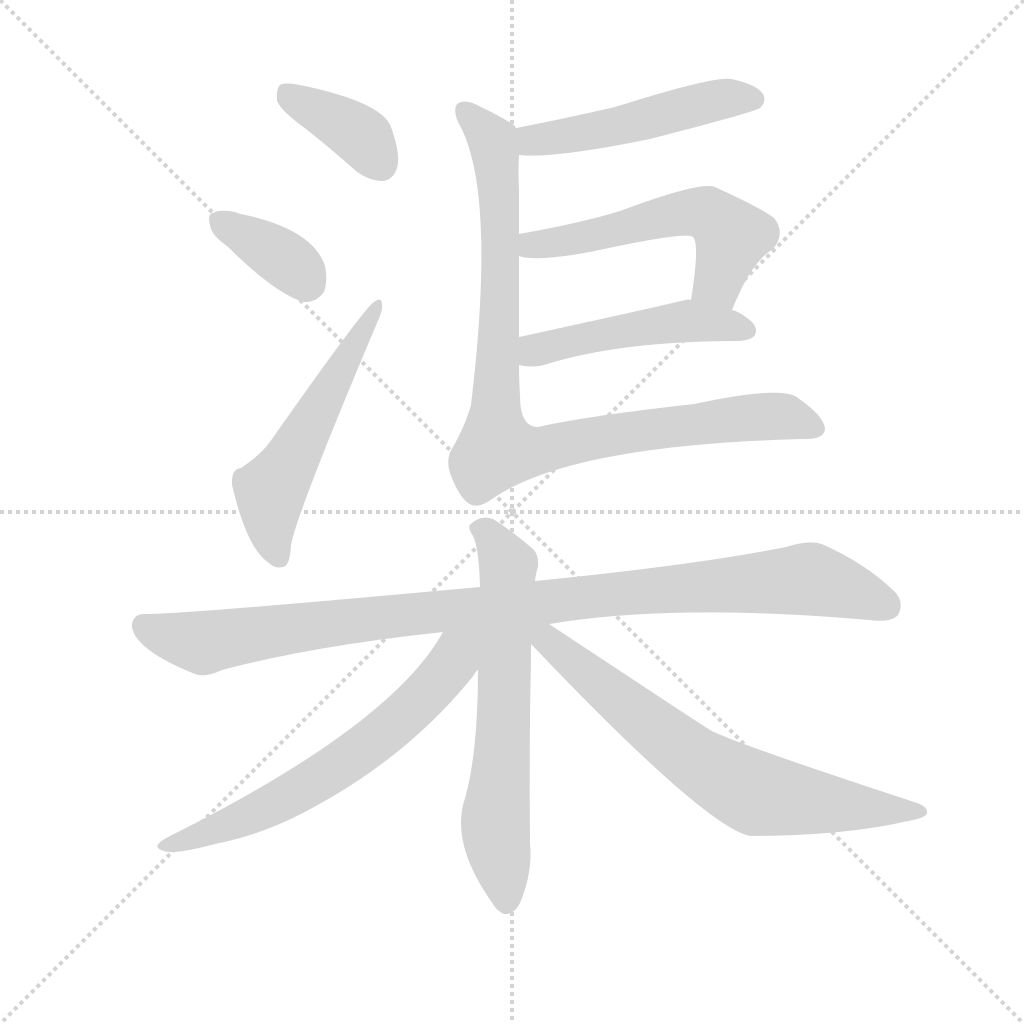
渠
Kangxi strokes: 13
Page 633, Entry 48
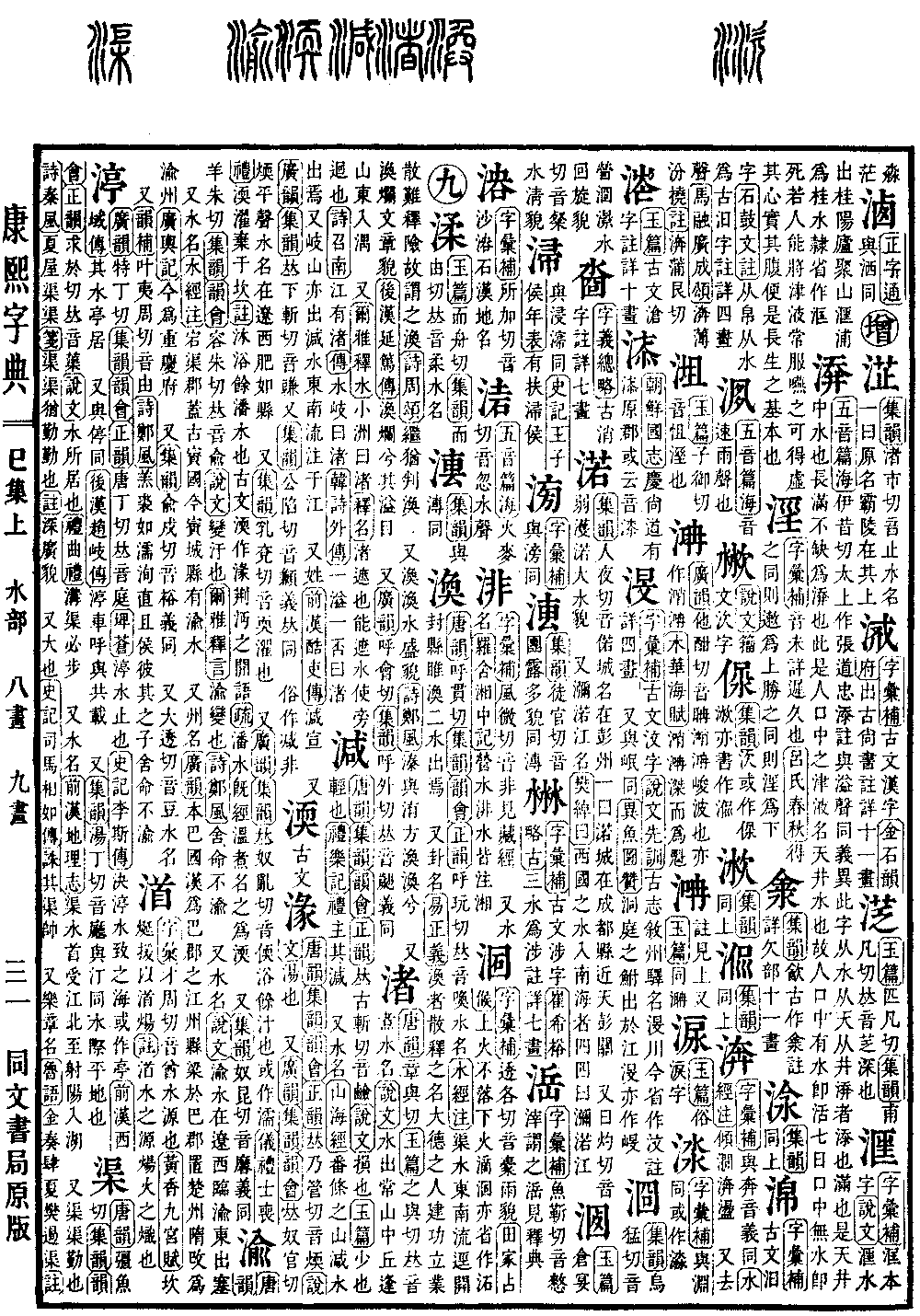
Pronounced qú. According to the Analytical Dictionary of Characters (Shuowen Jiezi), it refers to where water resides. In the Book of Rites (Liji), it is said that one must walk across ditches and canals.
Also the name of a river. According to the Treatise on Geography in the Book of Han (Hanshu), the Qu River originates from the Yangtze and flows north until it reaches Sheyang, where it enters the lake.
Also pronounced qú qú, meaning diligent. In the Book of Odes (Shijing), it mentions large houses that are qu qu. Commentary states that qu qu means diligent. Another note defines it as the appearance of being deep and wide.
Also means great or large. In the Records of the Grand Historian (Shiji), it mentions punishing their leaders or commanders.
Also the name of a musical piece. In the Discourses of the States (Guoyu), it mentions the metal instruments performing the Xia and the Fan E Qu. Commentary notes that the Naxia musical piece is also known as Qu.
Also means to immerse or saturate. In the Huainanzi, it uses the term qu chan to describe keeping watch. Commentary notes that qu means to immerse.
Also xuan qu, the appearance of laughing. In the Book of the Later Han (Hou Hanshu), it states he laughed at ease.
Also used colloquially to refer to another person as qu nong.
Also the name of a river. In the Commentary on the Classic of Water (Shuijing Zhu), the water originates from the southern Ba Ridge in Zheng County and flows past Dangqu County, known as the Dangqu River.
Also in the Rites of Zhou (Zhouli), it refers to the rim of a carriage wheel as qu. In the Classic of Mountains and Seas (Shanhaijing), it mentions the Hanliu, which has a qilin body and qu legs. Commentary notes that qu refers to the carriage rim, implying a bent shape.
Also xi qu, the name of a type of armor. Also a shield. In the Discourses of Wu (Wuyu), it mentions ten rows of shields made from rhinoceros hide.
Also yu qu. In the Guangcheng Song by Ma Rong, it mentions the aromatic ginger and yu qu.
Also fu qu, the name of the lotus flower. Sometimes written in a variant form (qú).
Also a surname. In the Records of the Grand Historian (Shiji), it mentions the Han family name of Qufuying.
Also pronounced jù. Same as jù. According to the Dictionary of Characters (Zilin), it indicates words that are not yet known. In the Records of the Grand Historian (Shiji), it asks: If Su Jun is here with me, how could he possibly be able to do it?
Also interchanged with jù. In the Records of the Grand Historian (Shiji), it asks: If I were to live in the Central Plains, how would I not be like the Han?
Also pronounced jù. The meaning is the same.