Chen Collection, Middle Volume
Radical: Tree (mù)
Kangxi strokes: 17
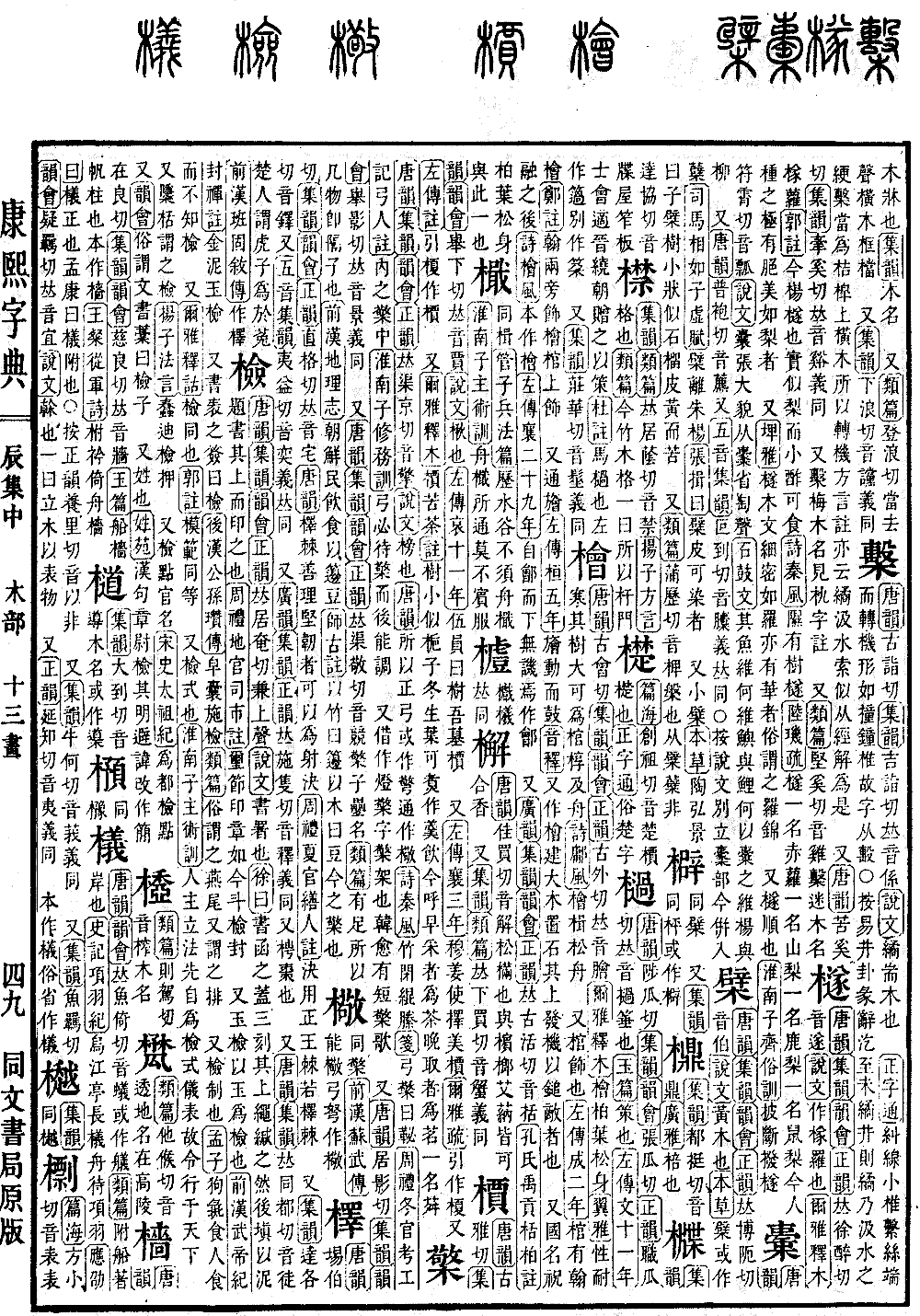
Page 557, Entry 16
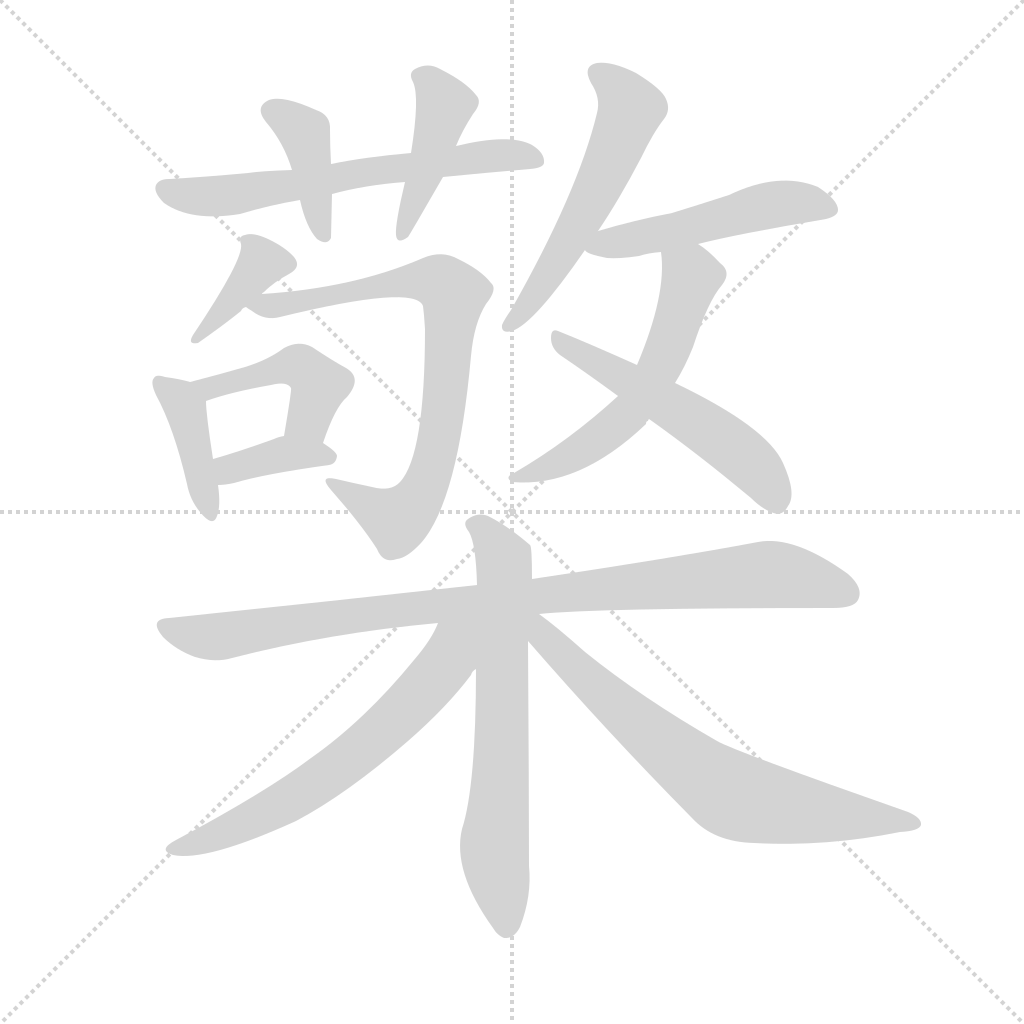
Pronounced qing.
According to the Shuo Wen Jie Zi (an early dictionary of Chinese characters), it refers to a press or frame. According to the Tang Yun (a rhyme dictionary), it is a tool used to straighten a bow. Sometimes written in a variant form. It is also commonly written as a variant. In the Book of Odes (Shijing), Qin Wind section, there is a mention of bamboo used with bindings. The Explanation of Text (Shiewen) states that a bow press is called a form of this tool. In the Rites of Zhou (Zhouli), Winter Officials, Artificer's Record, it is noted that the bow is placed into the press. In the Huainanzi (a philosophical collection), it is stated that a bow must rely on a press to be adjusted. It is also used as a loanword for a lamp stand. A lamp stand is a type of rack. Han Yu wrote the Song of the Short Lamp Stand.
Also pronounced jing. The meaning is the same.
Also pronounced jing (falling tone). A name for a type of utensil. According to the Lei Bian (a categorized dictionary), it is a stand with legs used for holding items, which is a shelf. In the Book of Han (Hanshu), Geographical Treatise, it is noted that the people of Korea used bian and dou vessels for eating and drinking. The commentary by Yan Shigu states that those made of bamboo are called bian, and those made of wood are called dou, which is what is now called this tool.
Textual research: In the Book of Odes (Shijing), Qin Wind section, there is a mention of bamboo used with bindings. The original commentary noted that a bow press is called this tool. We have corrected the commentary to read as the Explanation of Text (Shiewen) according to the original source.