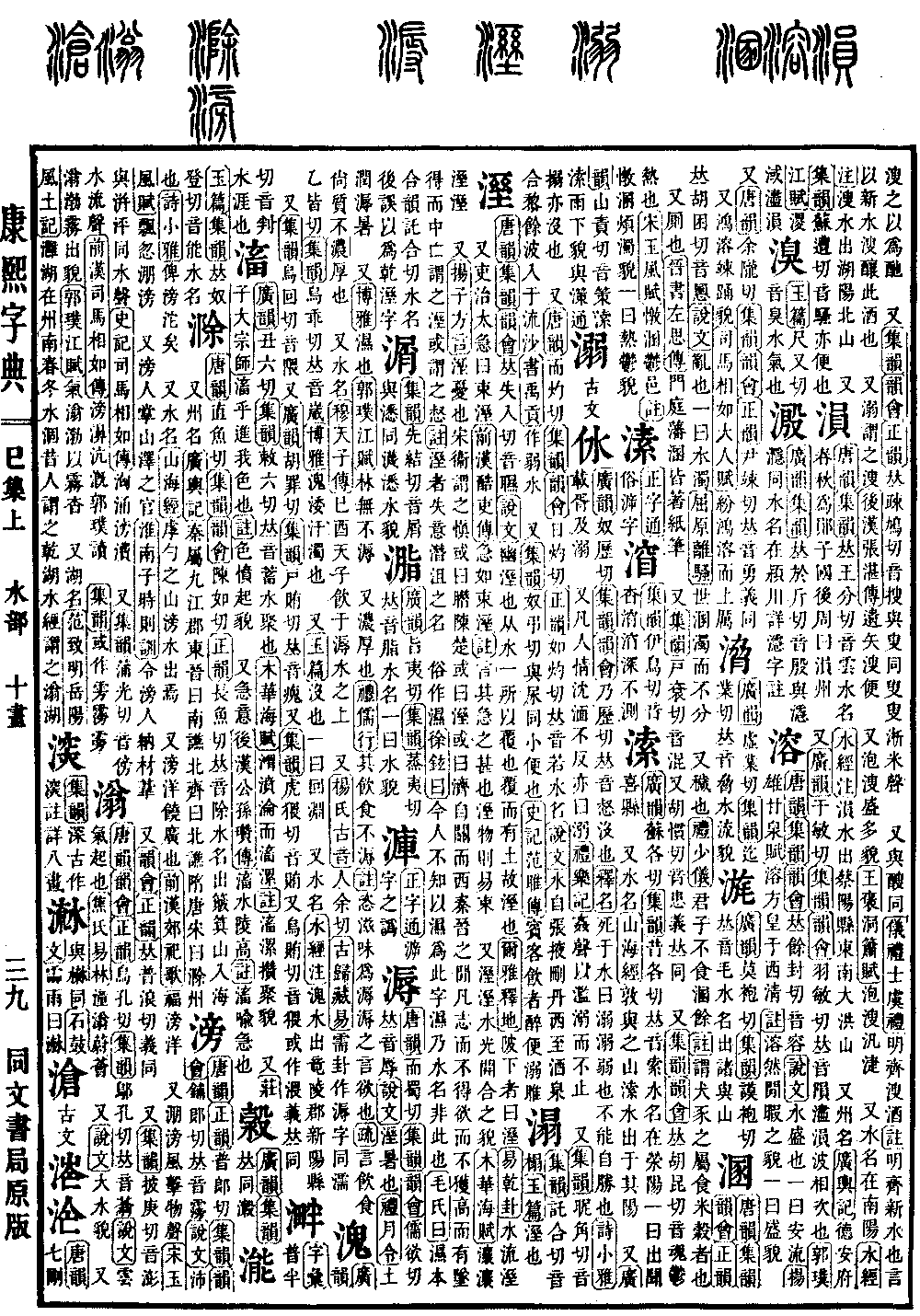
Si Collection, Upper Volume
Radical: Water (shuǐ)
Pang
Kangxi strokes: 14
Page 641, Entry 25
Pronounced pang.
According to the Explaining Graphs and Analyzing Characters (Shuowen Jiezi), it refers to a great volume of water.
Book of Odes (Shijing), Lesser Odes: To cause heavy rain to pour down.
Also, a name of a body of water. Classic of Mountains and Seas (Shanhaijing): Hu-shao Mountain, the Pang River originates here.
Also, pangyang, describing something abundant and vast. Former Han Dynasty (Qianhan), Hymns for the Suburban Sacrifices: Blessings and benefits are abundant and vast.
Also, pengpang, the sound of wind striking objects. Song Yu, Rhapsody on the Wind (Fengfu): The sound of the wind is swift and striking.
Also, Pang-ren, an official in charge of mountains and marshes. Huainanzi, Seasonal Regulations (Shize Xun): Ordered the Pang-ren to collect timber and reeds.
Also, pronounced pang (falling tone), with the same meaning.
Also, pronounced peng, same sound as peng. The same as pengpeng, referring to the sound of water. Records of the Grand Historian (Shiji), Biography of Sima Xiangru: The water surges and crashes.
Also, pronounced pang, same sound as bang, referring to the sound of flowing water. Former Han Dynasty, Biography of Sima Xiangru: The sound of the water is rushing and surging. Guo Pu reads it this way.
Collected Rhymes (Jiyun) notes that it is sometimes written as pang or pang.