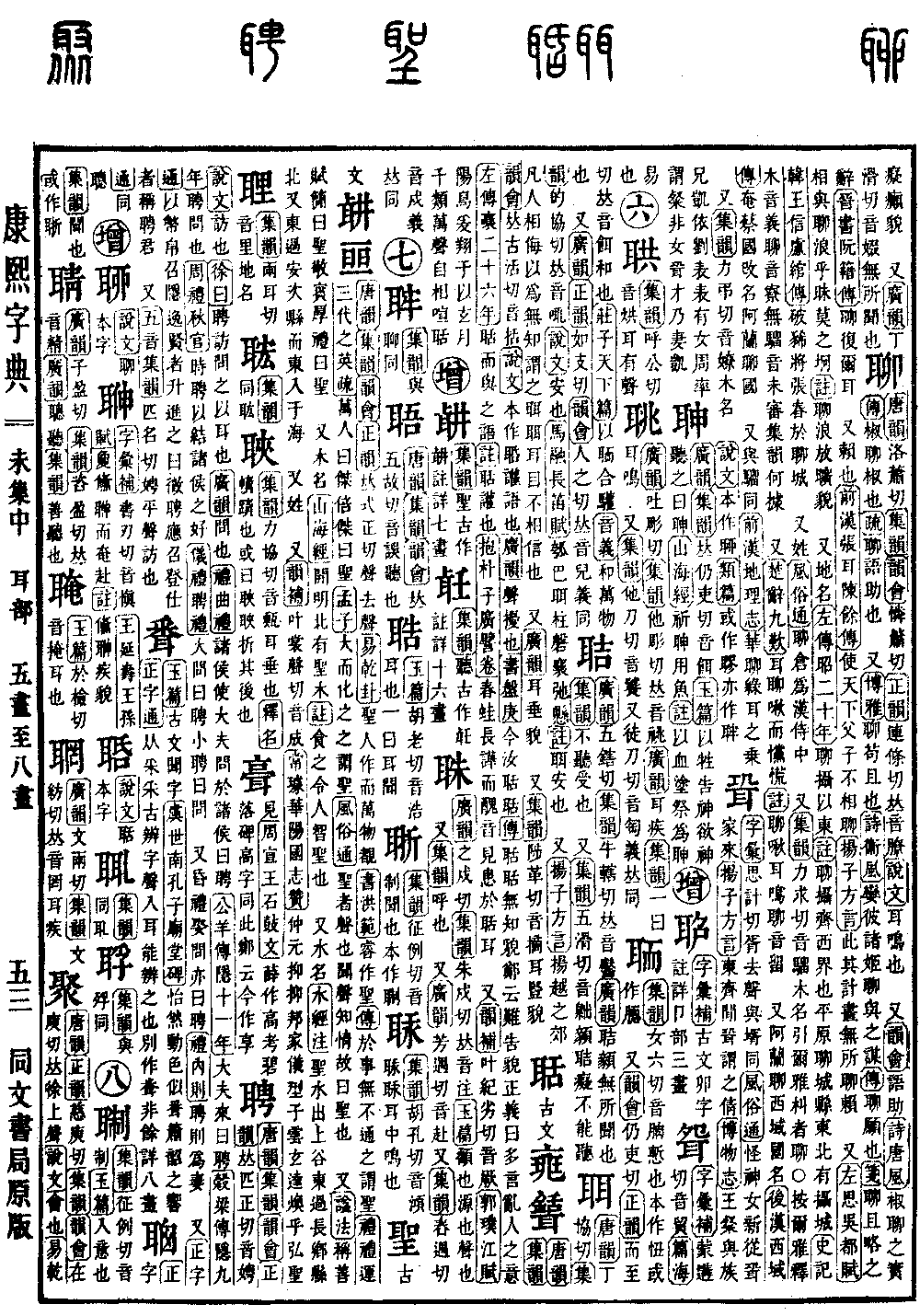
Wei Collection, Lower Volume
Radical: Ear (ěr)
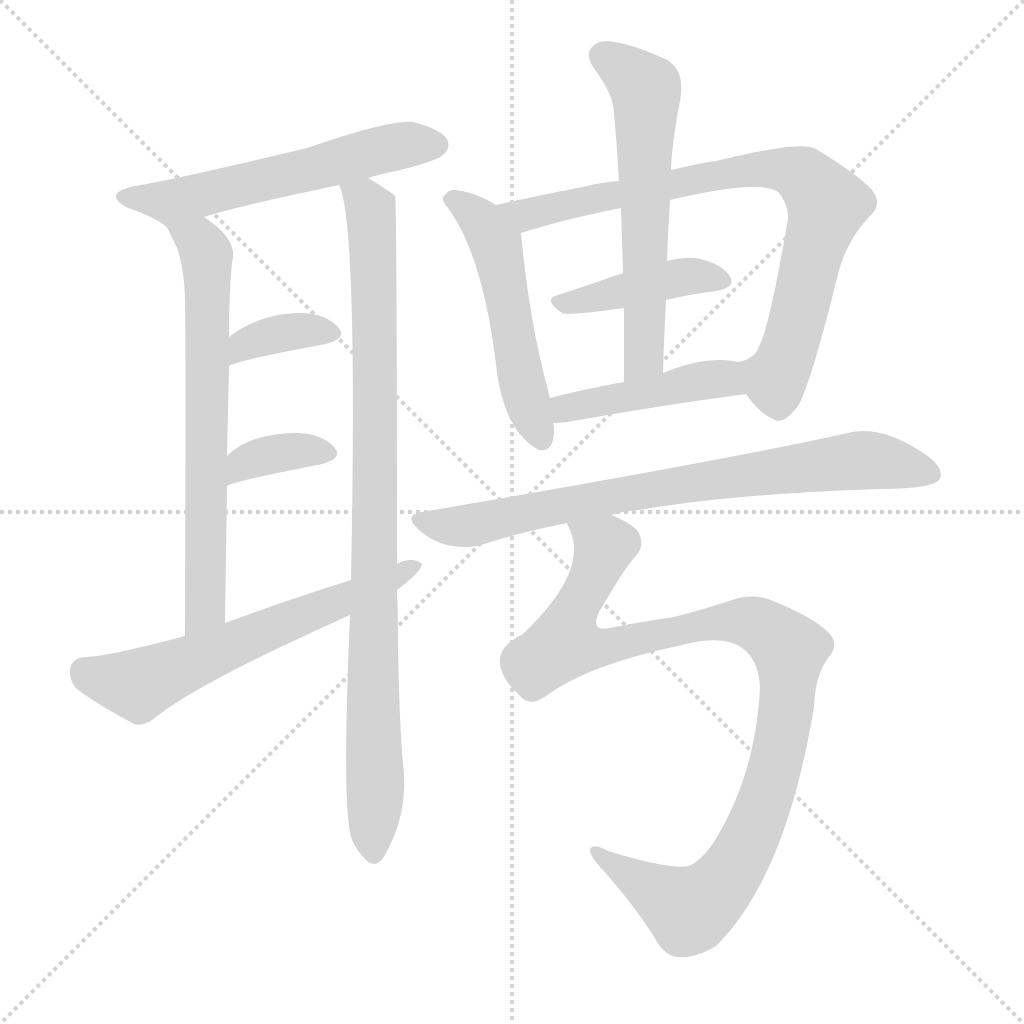
Pin
Kangxi stroke count: 13
Page 967, Entry 29
Pronounced pin.
According to the Shuowen Jiezi (Shuowen), it means to visit. Xu Shen says: Pin means to visit by using one's ears to inquire.
According to the Guangyun, it means to inquire.
Book of Rites (Liji), Quli: When a feudal lord sends an officer to inquire of another lord, it is called a pin visit.
Gongyang Zhuan (Gongyang Zhuan), 11th Year of Duke Yin: When a grand master comes, it is called a pin.
Guliang Zhuan (Guliang Zhuan), 9th Year of Duke Yin: Pin means to inquire.
Rites of Zhou (Zhouli), Autumn Bureau: Seasonal pin visits are used to consolidate the bonds of friendship between feudal lords.
Book of Etiquette and Ceremonial (Yili), Pin Rituals: A major inquiry is called a pin, a minor pin is called a wen.
Also, in marriage ceremonies, the act of making inquiries for a marriage is also called pin.
Book of Rites (Liji), Neize: If the betrothal is completed, then she becomes a wife.
According to the Zhengzitong, using silk and fabrics to summon a reclusive scholar and promote them to office is called zhengpin. Those who accept such a summons to enter official service are referred to as pinjun.
Also pronounced ping, level tone. It means to visit.