Wu Collection, Middle Volume
Radical: Eye (mù)
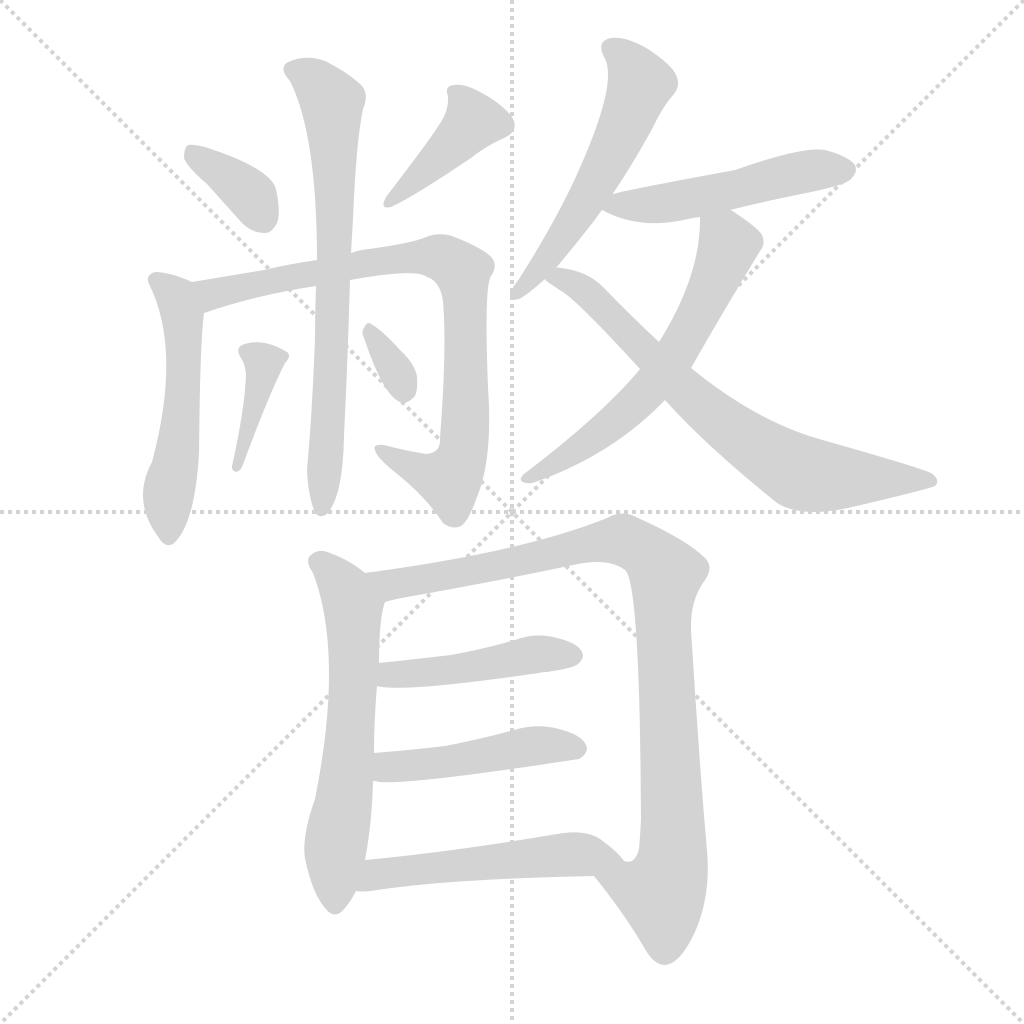
Character: Pie
Kangxi strokes: 17
Page 817, Entry 01
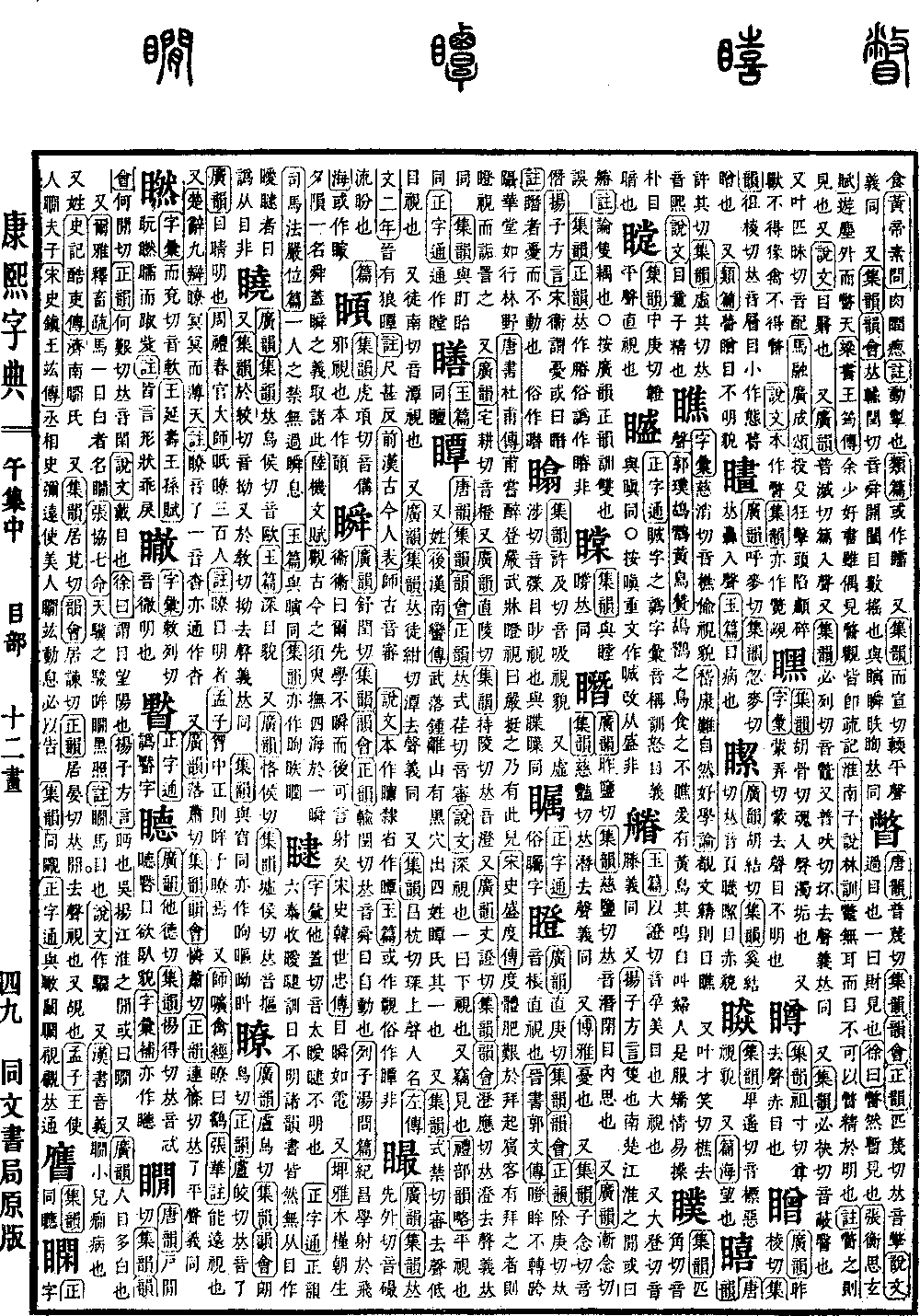
Pronounced pie. According to the Tang Rhyme (Tangyun), the Collected Rhymes (Jiyun), the Rhyme Collection (Yunhui), and the Correct Rhymes (Zhengyun), it is also pronounced pie. According to the Explanations of Characters (Shuowen), it means to pass over with the eye. Another definition is to see briefly. Xu states it means a brief glimpse. In the Thinking Rhapsody (Si Fu) by Zhang Heng: Roaming outside the mundane world, one glimpses the heavens. In the Biography of Wang Yun from the Book of Liang (Liangshu): In my youth I loved books; though I only caught a brief glimpse or a casual look, I immediately noted them down. In the Huainanzi, Training on Forests of Sayings (Shuolin Xun): Without ears, the eyes cannot glimpse, but the essence is in brightness. The commentary states: To glimpse is to see.
Also according to the Explanations of Characters (Shuowen), it means an eye ailment (cataract). According to the Extended Rhymes (Guangyun), it is pronounced pie, entering tone. Also, according to the Collected Rhymes (Jiyun), it is pronounced bie. Also, it is pronounced pei, departing tone. The meaning is the same. According to the Collected Rhymes (Jiyun), it is pronounced bi. This means cataract. It also rhymes as pei. In the Ode to Guangcheng (Guangcheng Song) by Ma Rong: Throwing spears in wild strikes, heads are split and skulls crushed; the beasts cannot flee, the birds cannot escape.
The Explanations of Characters (Shuowen) notes the original form is written this way. The Collected Rhymes (Jiyun) notes it is also written as a variant form (bie).