Wu Collection, Lower Volume
Radical: Grain (hé)
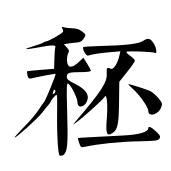
Character: Pī
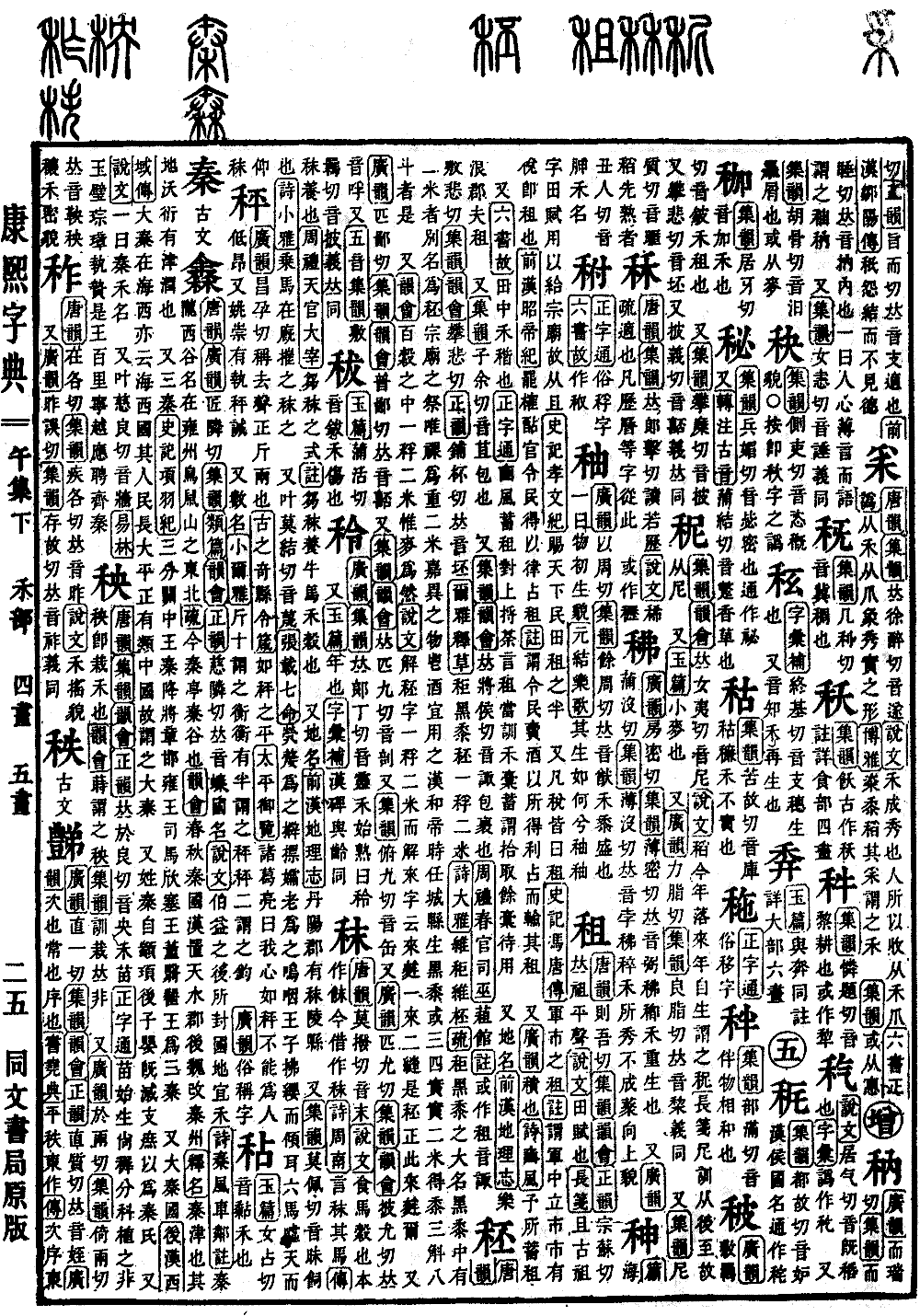
Kangxi Dictionary Strokes: 10
Page 851, Entry 24
Pronounced pī.
Book of Erya (Erya), Explanation of Grasses: Jǔ is black millet. Pī refers to a single husk containing two grains of rice.
Book of Odes (Shijing), Greater Odes: Both the black millet and the pī are present.
Commentary: Jǔ is the general term for black millet. Within black millet, a variety where one husk contains two grains is specifically called pī. In ancestral temple sacrifices, the libation ritual is the most important; this precious grain of one husk and two kernels is most suitable for brewing fragrant sacrificial wine. During the reign of Emperor He of Han, Ren Cheng County produced black millet, some ears bearing three or four clusters of grains, with each grain containing two kernels of rice. Three hu and eight dou of such millet were obtained.
Dictionary of Rhymes (Yunhui): Among all grains, only wheat is characterized by one husk containing two grains.
Analytical Dictionary of Characters (Shuowen): The character pī is defined as one husk with two grains. The explanation for the character lái says: Lái-móu (wheat) has one wheat husk with two seams. Pī is exactly this type of wheat.
Pronounced pǐ.
Pronounced pǒu.
Pronounced fǒu.
Pronounced fū.
Pronounced pī. Meaning is the same.
Textual verification: Book of Odes (Shijing), Greater Odes: Both the black millet and the pī are present. Corrected in accordance with the original text, changing the character to pī.