Yin Collection, Lower Volume
Radical: Bow (gōng)
Kangxi Strokes: 8
Page 358, Entry 03
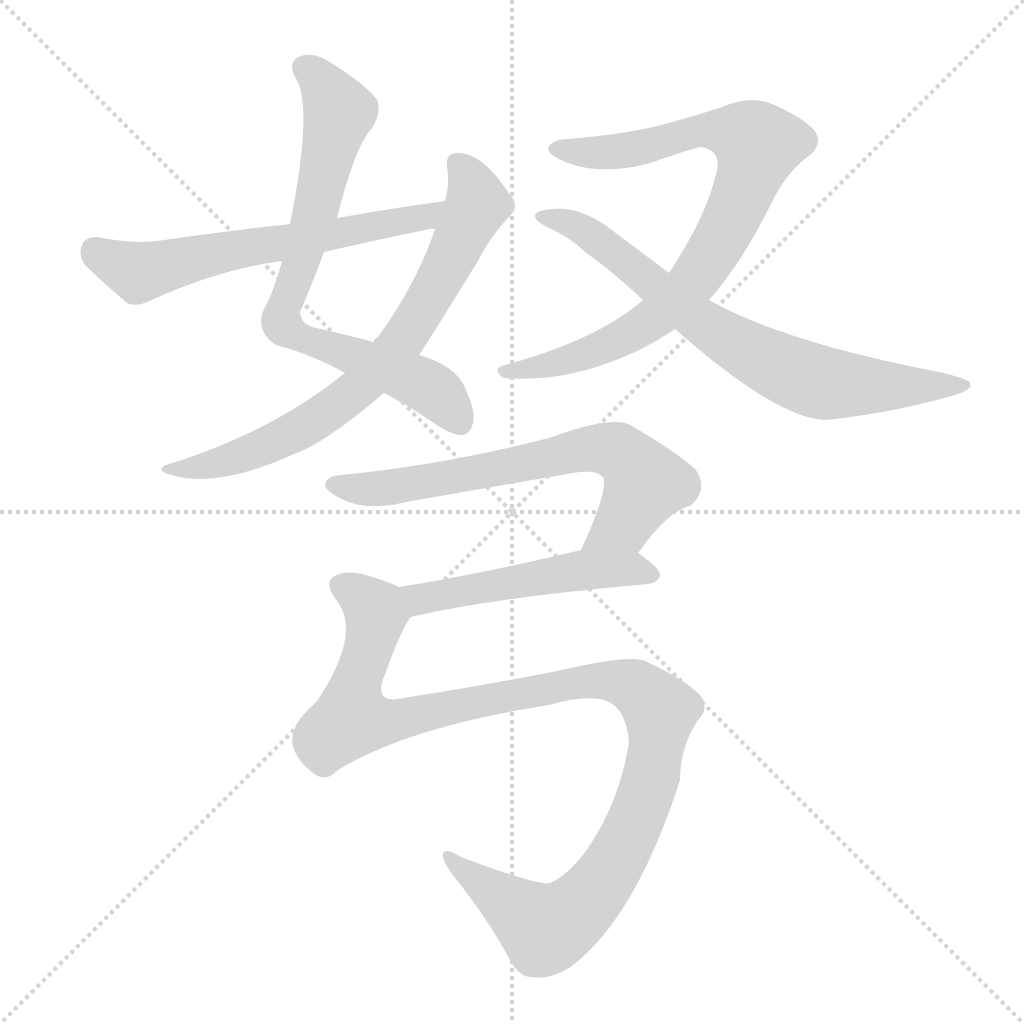
Pronounced nǔ.
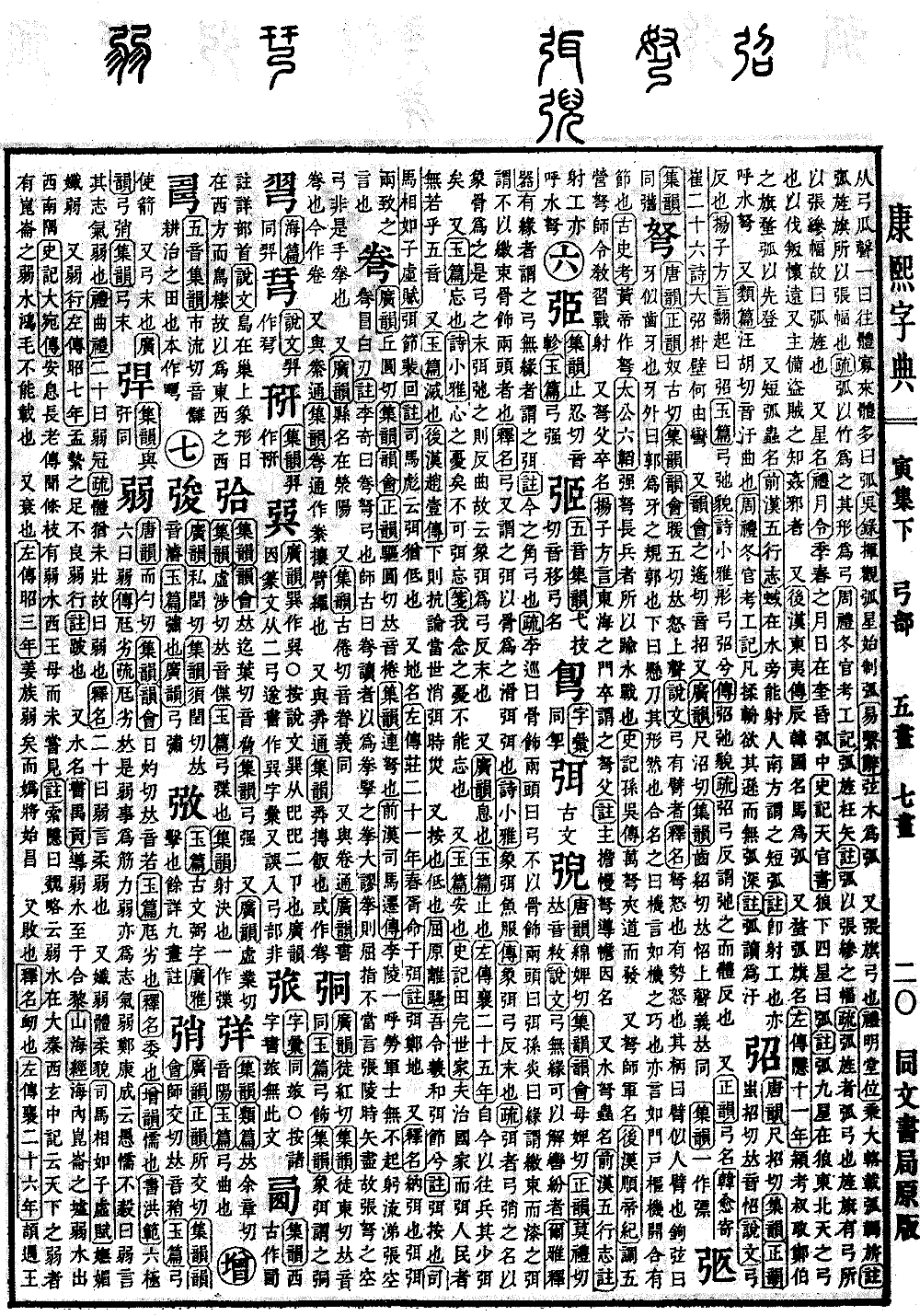
According to the Explaining Graphs and Analyzing Characters (Shuowen Jiezi), it is a bow equipped with a stock. According to the Definitions of Names (Shiming), the term nu implies anger, representing a forceful, angry posture. Its handle is called an arm, resembling a human arm. The part that hooks the bowstring is called a tooth, resembling a tooth. The outer perimeter of the tooth is called a casing, which forms the outer outline of the tooth. The part below is called a hanging knife, named for its shape. Together, these parts are called the mechanism, suggesting that it is as ingenious as a machine and acts like the pivot of a door, controlling the opening and closing.
According to the Examination of Ancient History (Gushikao), the Yellow Emperor invented the crossbow. According to the Six Secret Teachings (Liutao) of Taigong, strong crossbows and long-handled weapons are used for crossing rivers during battle. According to the Biography of Sun Wu in the Records of the Grand Historian (Shiji), ten thousand crossbows were fired simultaneously from both sides of the road.
There is also the term crossbow master, which is a military title. According to the Annals of Emperor Shun in the History of the Later Han (Hou Hanshu), five battalions of crossbow masters were deployed and ordered to practice archery and combat. There is also the term crossbow father, which is a title for soldiers. According to the Regional Speech (Fangyan) by Yang Xiong, the soldiers who guarded the gates in the Eastern Sea region were called crossbow fathers. The commentary notes that they were primarily responsible for carrying curtains, guiding vehicles, and managing crossbows, hence the name. There is also the water crossbow, which is the name of an insect. According to the commentary on the Treatise on the Five Elements in the History of the Former Han (Qian Hanshu), the archer insect is also known as the water crossbow.