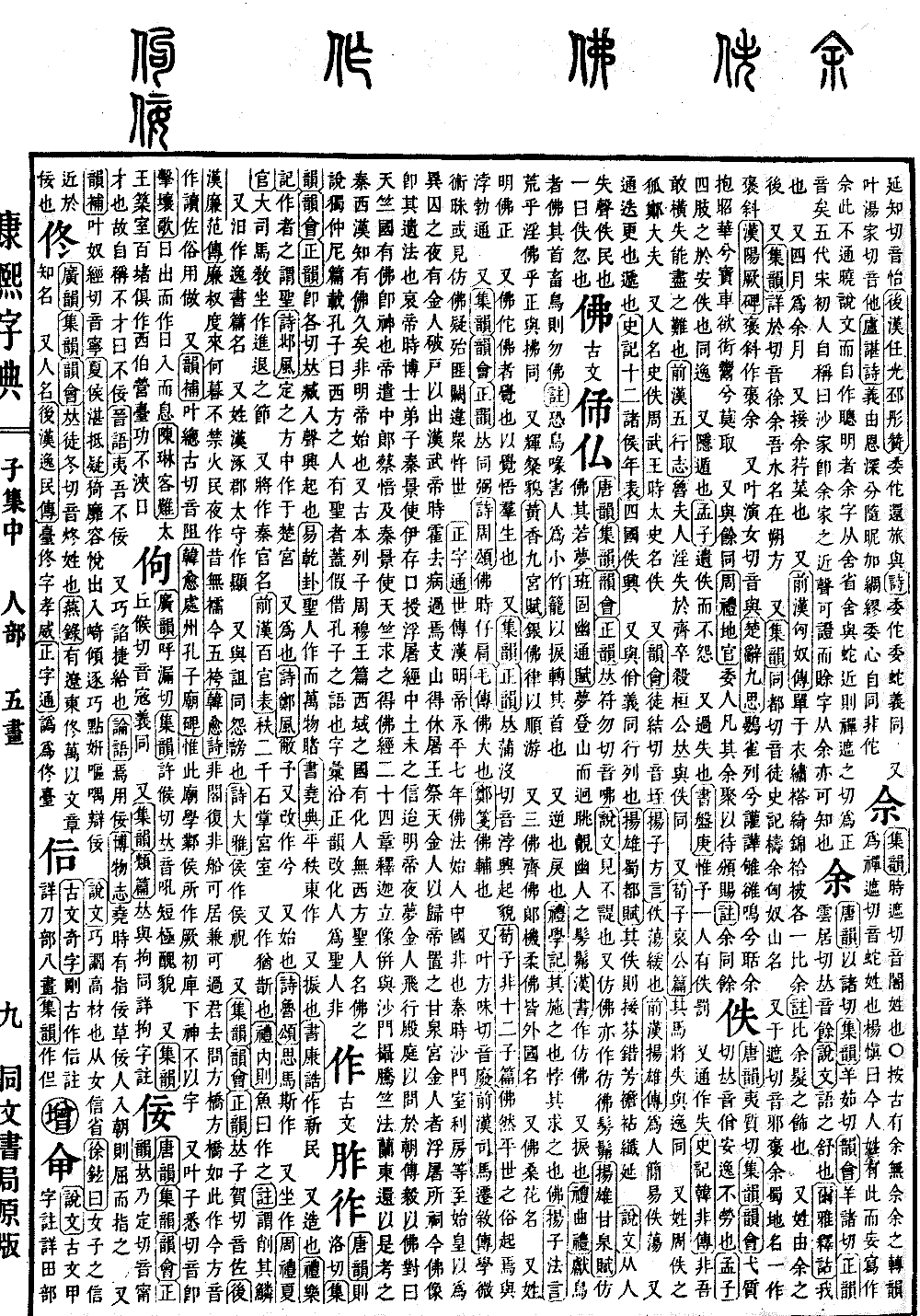
Zi Collection, Middle Volume. Radical: Person (rén). Kangxi stroke count: 7. Page 99, entry 11. According to the Tang Rhymes (Tangyun), Collected Rhymes (Jiyun), Rhyme Assembly (Yunhui), and Correct Rhymes (Zhengyun), the pronunciation follows the initial n- and the final -ing, pronounced the same as nìng. It refers to talent. For this reason, a humble way to refer to oneself as lacking talent is bùnìng. I, Yiwu, am not talented — Discourses of Jin (Jinyu). It also refers to artful speech, flattery, or being quick-witted in speech. Why use artful speech? — Analects (Lunyu). In the time of Emperor Yao, there was a grass that could point out flatterers; when a sycophantic person entered the court, it would bend and point at him — Encyclopedia of Curiosities (Bowuzhi). In the Rhyme Supplement (Yunbu), it is also read with the phonetic sound of níng. Fawning and seeking to please, maneuvering in and out. Chasing artfulness and embellishing beauty, whispering and arguing with flattery — Xiahou Zhan's Resolving Doubts (Di Yi). Artful flattery; high talent — Explaining Graphs and Analyzing Characters (Shuowen Jiezi). The character structure follows the element for woman and a simplified form of sincerity (xìn). Xu Xuan says that the sincerity of a woman is close to artful flattery.