Si Collection, Upper Volume
Radical: Water (shuǐ)
Entry: Ni
Kangxi stroke count: 14
Page 641, Entry 11
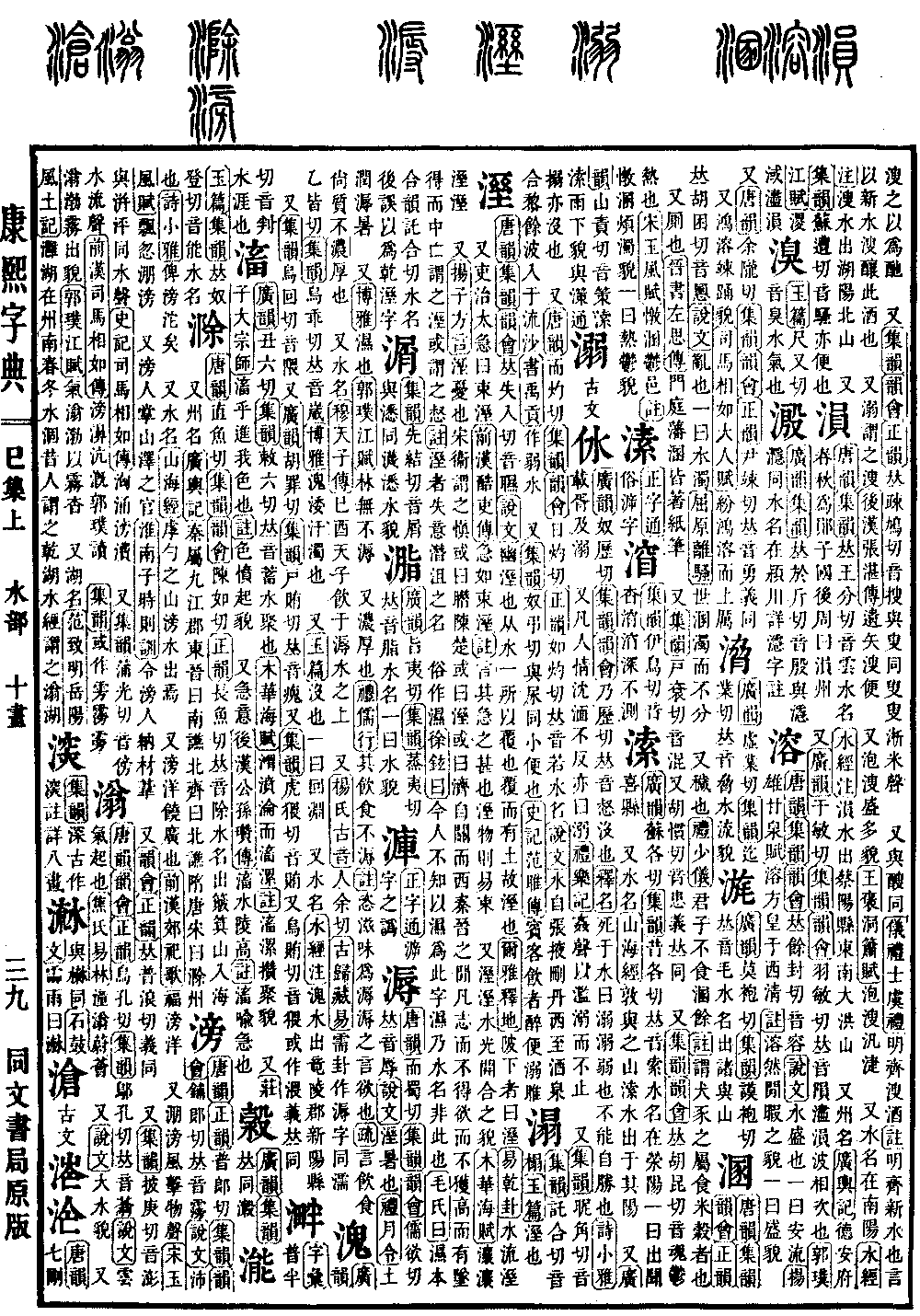
Ancient form. According to the Expanded Dictionary of Sounds and Meanings (Guangyun), it is pronounced ni. According to the Collected Rhymes (Jiyun) and the Compendium of Rhymes (Yunhui), it is pronounced ni. Both sources state it is pronounced ni. It means to sink or drown. According to the Explanation of Names (Shiming), to die in water is called ni. Ni implies weakness, referring to the inability to support oneself. In the Book of Odes (Shijing), it is said that all follow one another in sinking and drowning. It is also used when a person is addicted to something and cannot extricate themselves. In the Book of Rites (Liji), it is said that lewd and depraved sounds flood the senses, causing one to sink into indulgence without stopping.
Additionally, according to the Collected Rhymes (Jiyun), it is pronounced nuo. It also means to sink.
Additionally, according to the Tang Dynasty Dictionary (Tangyun), the Collected Rhymes (Jiyun), the Compendium of Rhymes (Yunhui), and the Corrected Rhymes (Zhengyun), it is pronounced ruo. It is the name of a river. According to the Explaining Graphs and Analyzing Characters (Shuowen), this river originates in Shandan, Zhangye, flows west to Jiuquan, and its remaining waters flow into the desert. In the Book of Documents (Shujing), it is written as the Ruo River.
Additionally, according to the Collected Rhymes (Jiyun), it is pronounced niao. It is the same as urine, referring to urination. In the Records of the Grand Historian (Shiji), in the Biography of Fan Ju, it is said that when the guests were drinking and became drunk, they urinated on Fan Ju.