Xu Collection, Middle Volume
Radical: Short-tailed bird (zhuī)
Kangxi Strokes: 19
Page 1370, Entry 05
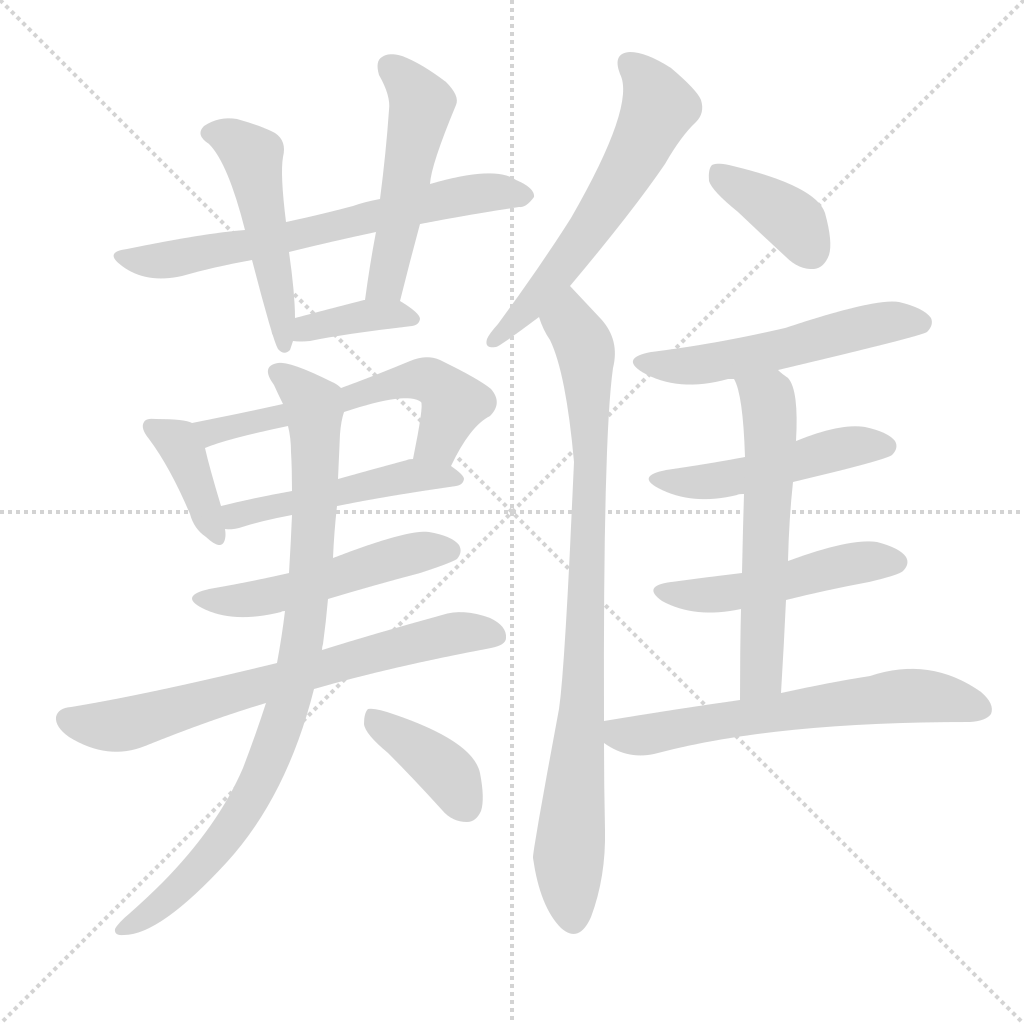
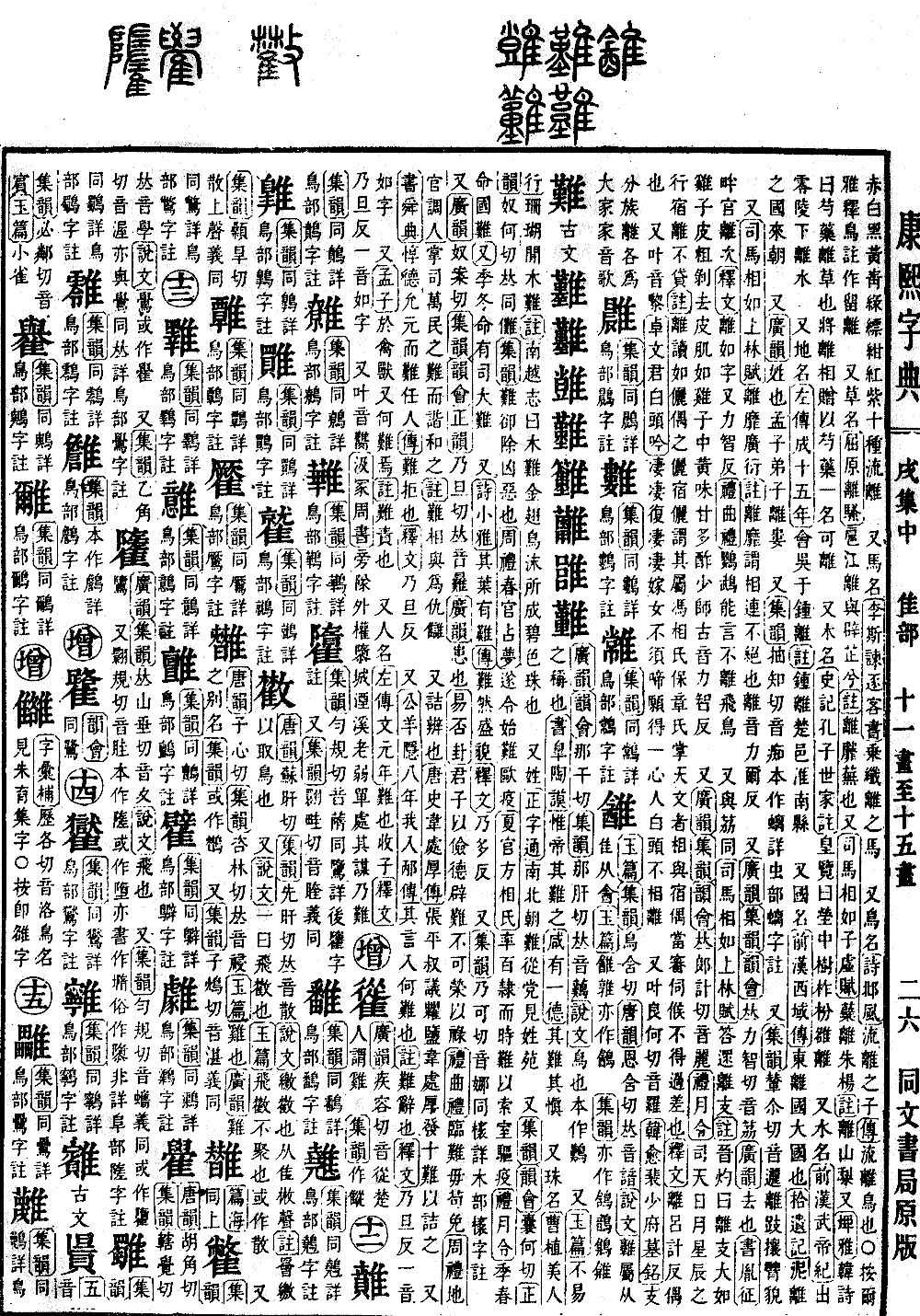
Ancient script. According to the Expanded Dictionary of Sounds and Meanings (Guangyun) and the Dictionary of Rhymes (Yunhui), pronounced nan. According to the Collected Rhymes (Jiyun), pronounced nan. Pronounced nan. According to the Explaining Graphs and Analyzing Characters (Shuowen), it refers to a bird. Originally written as the character for bird.
Also, according to the Jade Compendium (Yupian), it is a term for something not easy. In the Book of Documents (Shujing), Chapter on the Counsels of Gao Yao: The Emperor finds this difficult. In the Chapter on Possessing Pure Virtue: Be difficult, be cautious.
Also, a type of pearl. In the poem Beauty by Cao Zhi: Coral interspersed with munan. Commentary: The Record of Southern Yue states that munan is a green-colored pearl formed from the spittle of the golden-winged bird.
Also, a surname. According to the Guide to Standard Characters (Zhengzitong), during the Northern and Southern Dynasties, the Nan family descended from the Dang clan. See the Anthology of Surnames (Xingyuan).
Also, according to the Collected Rhymes (Jiyun) and the Dictionary of Rhymes (Yunhui), pronounced nang, and according to the Correct Rhymes (Zhengyun), pronounced nuo. Same as the character nuo. According to the Collected Rhymes, nan means to drive away evil and bad omens. In the Rites of Zhou (Zhouli), Office of Spring, Divination of Dreams: Command the beginning of the exorcism to drive away plague. In the Office of Summer, the Chief of the Square: Lead the hundred officials to perform the exorcism, searching the rooms to drive away plague. In the Book of Rites (Liji), Monthly Ordinances: In the last month of spring, command the state exorcism. Also: In the last month of winter, command the officials to perform the great exorcism.
Also, in the Book of Odes (Shijing), Lesser Odes: Its leaves are lush. Commentary: Nan describes a lush appearance. Pronunciation glossary: Pronounced duo.
Also, according to the Collected Rhymes, pronounced na. Same as the character nuo. See the entry for the character nuo under the Wood Radical.
Also, according to the Expanded Dictionary of Sounds and Meanings (Guangyun), pronounced nan. According to the Collected Rhymes, the Dictionary of Rhymes, and the Correct Rhymes, pronounced nan. According to the Expanded Dictionary of Sounds and Meanings, it means misfortune. In the Book of Changes (Yijing), Hexagram of Obstruction: The noble man practices frugal virtue to avoid misfortune, and cannot be honored with a salary. In the Book of Rites (Liji), Summary of the Rules of Propriety: In the face of misfortune, do not seek survival dishonorably. In the Rites of Zhou (Zhouli), Office of Earth, The Mediator: Responsible for managing the disputes among the people and harmonizing them. Commentary: Nan means to become enemies with one another.
Also, to question or dispute. In the History of the Tang Dynasty (Tangshi), Biography of Wei Chuhou: Zhang Pingshu proposed the sale of salt, and Wei Chuhou raised ten difficult questions to challenge him.
Also, in the Book of Documents (Shujing), Canon of Shun: Respect virtuous people and do not reject those entrusted with responsibilities. Commentary: Nan means to reject. Pronunciation glossary: Pronounced nan.
Also, in the Commentary of Gongyang (Gongyangzhuan), Eighth Year of Duke Yin: Why is the phrase I entered Bing considered a difficult point? Commentary: Nan means a verbal objection. Pronunciation glossary: Pronounced nan; one reading is as written.
Also, in the Works of Mencius (Mengzi): Regarding birds and beasts, what is there to blame? Commentary: Nan means to blame.
Also, a personal name. In the Commentary of Zuo (Zuozhuan), First Year of Duke Wen: Nan held the son. Pronunciation glossary: Pronounced duo; one reading is as written.
Also, rhyming sound ni. In the Bamboo Annals (Jizhu Zhoushu): Beside the squad and external authority, destroy walls and fill streams. The old and weak remain alone; their plans are indeed difficult.
Textual research: In the Commentary of Zuo (Zuozhuan), First Year of Duke Wen: Nan held the son. The pronunciation glossary states: Pronounced nan. Following the original text, the erroneous pronunciation has been corrected to duo.