Wei Collection, Middle Volume
Radical: Silk (mì)
Kangxi Strokes: 10
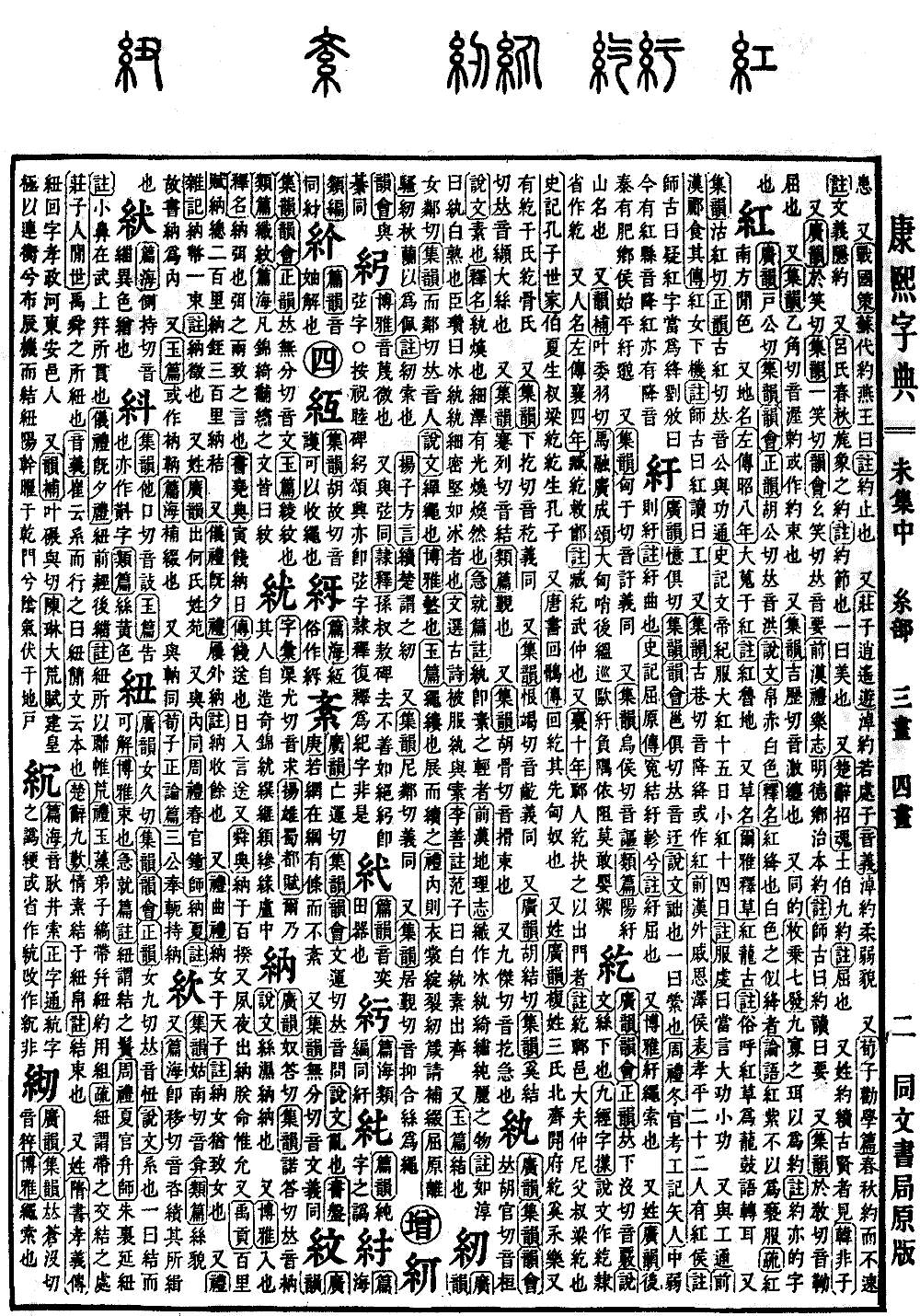
Page 916, Entry 18
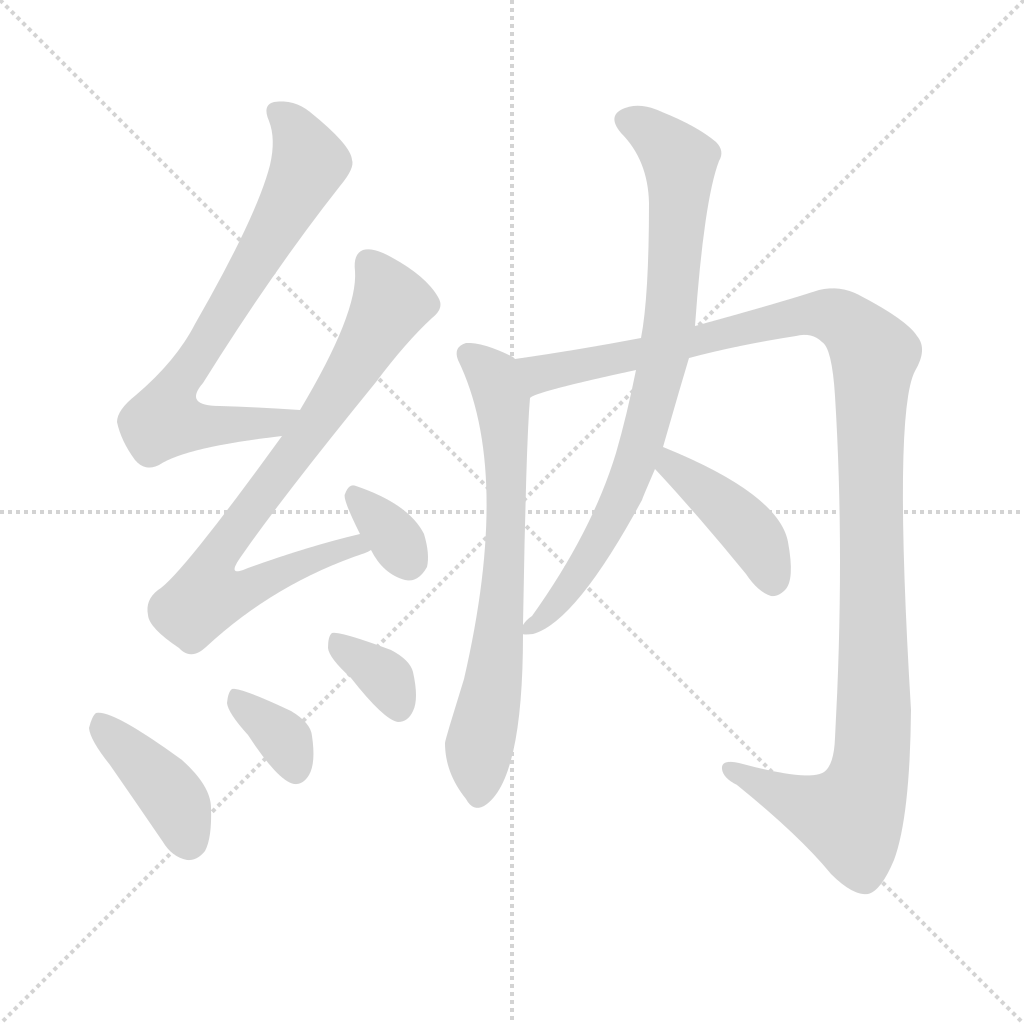
Pronounced na. According to the Shuo Wen Jiezi (Shuowen), it describes the appearance of silk being damp and heavy.
Also, to enter.
According to the Shi Ming (Shiming), na means to appease; it refers to bringing two things together.
In the Book of Documents (Shujing), Yao Dian, it says to respectfully send off the setting sun. The commentary explains that to send off means to see off; to speak of the sun setting is to speak of sending it off.
Also, in the Shun Dian, it refers to receiving into the administration of the hundred offices.
Also, to issue and receive orders day and night, ensuring my commands are sincere.
In the Tribute of Yu (Yu Gong), the first hundred li provide general tribute, the second hundred li provide ears of grain, and the third hundred li provide straw.
In the Book of Etiquette and Ceremonial (Yili), in the Ritual for the Deceased, it mentions putting on shoes. The commentary explains that na means to collect or gather up.
In the Book of Rites (Liji), Qu Li, it mentions presenting a woman to the Son of Heaven. The commentary explains that presenting a woman is the same as bringing a woman forward.
In the Book of Rites (Liji), Za Ji, it mentions presenting a bundle of silk as a betrothal gift. The commentary explains that na means to demand or levy.
Also a surname. Appears in the He Shi Xing Yuan (He Family Register of Surnames).
Also the same as the character for inside. In the Rites of Zhou (Zhouli), Spring Offices, Master of Bells, it mentions performing the Xia music. The commentary notes that in the ancient text, na was written as the character for inside.
According to the Yu Pian (Yupian), it is also written in variant forms (nà) and (nà).
According to the Pian Hai (Pianhai), it means to mend or patch.
Also the same as the character for the yoke strap (na). In the Xunzi (Xunzi), Zheng Lun, it refers to the Three Excellencies holding the yoke and maintaining the strap.