Shen Collection, Upper Volume
Radical: Grass (cǎo)
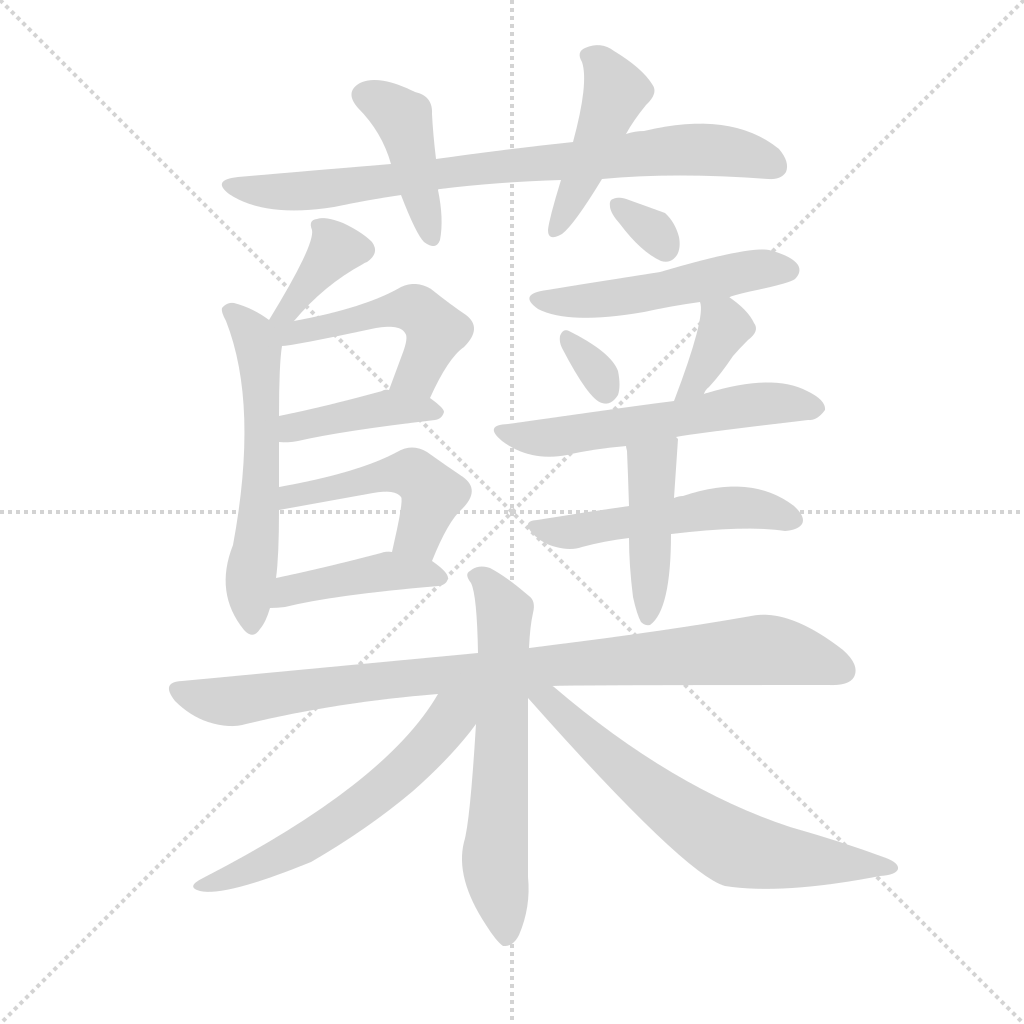
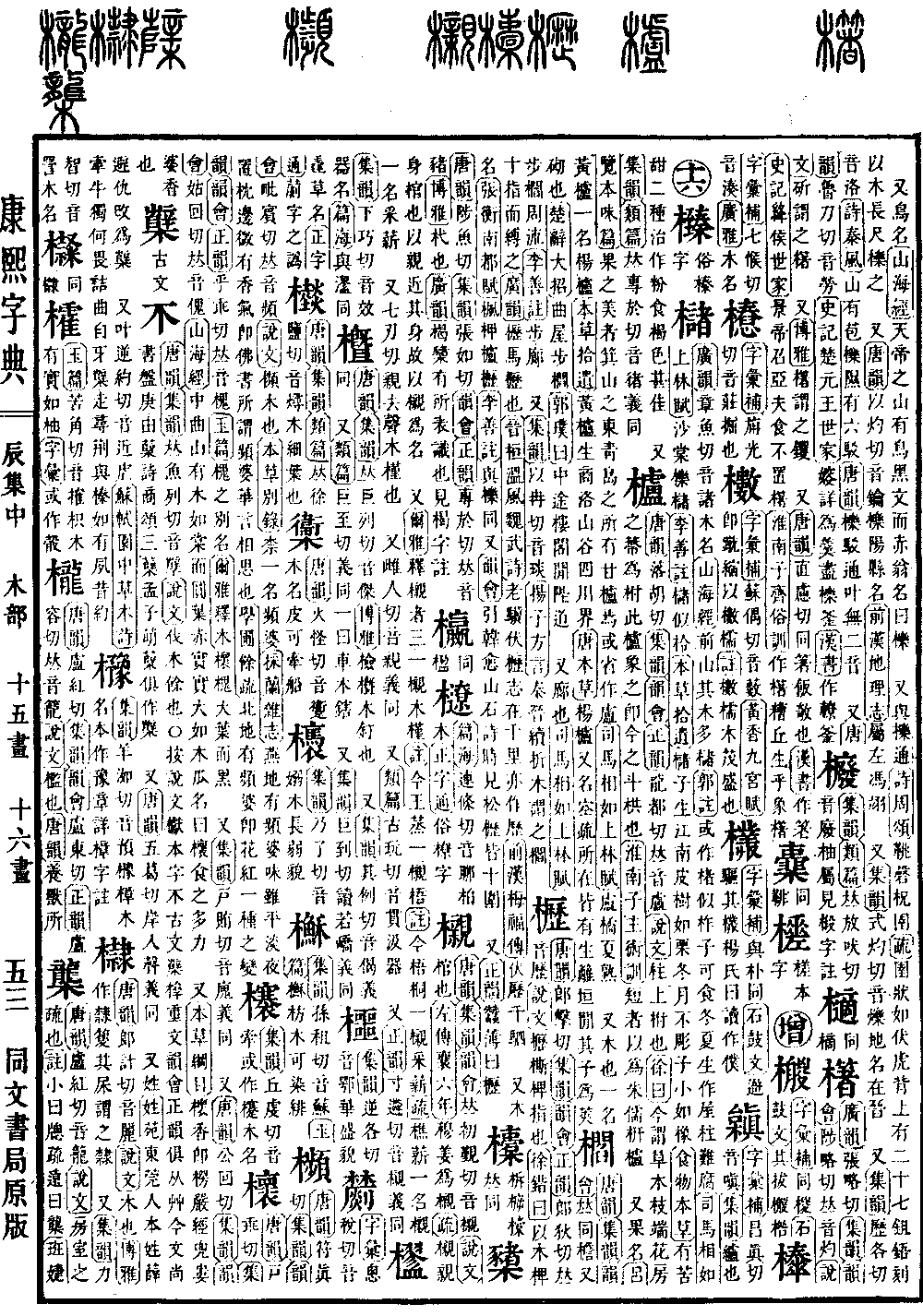
蘖; Kangxi strokes: 23; Page 561
Zheng Yun (Phonological Dictionary of Standard Rhymes) states it is pronounced lie. It is pronounced the same as nie. It refers to the branches that grow back after a tree has been cut down. It also refers to new shoots growing from the side of a plant.
Zi Hui Bu (Supplement to the Collection of Characters) records this as a surname. He Shi Xing Yuan (He Family Surname Garden) states that the original surname was Xue, and it was changed by people from Dongguan to avoid an enemy.
Zi Hui (Collection of Characters) points out that the word nie (referring to wood shoots) was originally written with a sprouting grass top component rather than the standard grass radical top. Using the standard grass radical top today appears to be incorrect. According to Zheng Yun, the standard spelling also features a different lower component than wood. It is suspected to be a corrupt form of the character nie.
Ji Yun (Collection of Rhymes) states it is pronounced bo. It is pronounced the same as bo.
Tang Yun (Tang Dynasty Rhyme Dictionary) states that this is a vulgar form of the character bo.
Shuowen (Explaining Characters and Analyzing Compounds) defines it as a yellow wood. Some versions are written with the xue component.
Ben Cao (Compendium of Materia Medica) by Li Shizhen states: Nie is the name of a tree. The specific meaning is unclear. It is commonly written as huangbo, which is a corrupt form caused by omitting parts of the character.
Bao Zhao, in his poem Traveling the Road, writes: Cut the wood to dye the yellow silk, the yellow silk is tangled and cannot be managed.
It is also interchangeable with the character xue. For further details, see the entry for the character bi.